What Stove Temp to Cook Burgers: A Practical Guide
Discover exact stovetop temperatures for delicious, safe burgers. From pan choice to resting, learn how to hit 160°F internal and golden-brown crust every time.


Cook burgers on the stove at medium-high heat, aiming for a surface temperature around 375°F and an internal temperature of 160°F for safe dining. Start with patties about 3/4 inch thick, minimize pressing, and let the crust form before flipping. Use a cast-iron skillet if possible; preheat 5–7 minutes and adjust heat to maintain a gentle, consistent sizzle.
The Core Temperature Benchmark
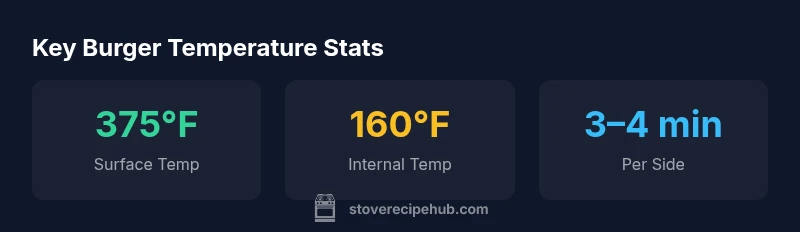
Safe cooking starts with internal temperature. For ground beef patties, the widely accepted target is 160°F (71°C), which ensures pathogens are eliminated while keeping in mind fat content and patty composition. On the stovetop, the crust color and char are governed by surface heat; aim for a consistent medium-high sizzle rather than an aggressive flare. A practical way to think about it is to set the pan to roughly 375°F surface temperature before you place the patties. This allows a fast sear to form a flavorful crust while the interior approaches the target temp without overcooking. Always use a reliable meat thermometer inserted into the center of the patty to verify doneness. If you’re new to burgers, estimate about 3–4 minutes per side for a 3/4 inch patty at this heat, then rest briefly before serving. According to Stove Recipe Hub, this balance between surface heat and internal temperature yields consistent results across beef blends and fat contents.
Surface Temperature and Pan Type
The choice of pan dramatically affects temperature management. A heavy skillet like cast iron distributes heat evenly and maintains a steadier surface temperature, which is crucial for a even crust. If you use stainless steel or nonstick, monitor the surface with a thermometer or a quick water droplet test: if droplets dance and evaporate quickly, you’re near 350–375°F. Preheating is essential—aim for a solid 5–7 minutes before you add patties. Regular oil with a high smoke point (like canola or refined peanut oil) can help prevent sticking without overpowering the beef flavor. For thicker blends, you may need a touch more surface heat initially, then a slight reduction to finish without scorching.
Practical Stovetop Techniques for Even Browning
Searing on a hot surface is about balance. Do not press the patty down; it squeezes out juices and dries the center. Leave space between patties so the heat circulates and crusts form evenly. Flip only once for best crust development—use a wide spatula and wait for a deep brown crust to appear on the bottom before turning. Maintain a steady sizzle, adjusting the burner down if the surface cooks too fast. If you’re adding cheese, place it during the last 30–60 seconds and allow it to melt without overcooking the patty. A light brushing of oil on the pan’s surface can help, but avoid pooling fat which can lead to flare-ups.
Patty Thickness and Cooking Time
Thickness drives timing. Standard burgers sit well at 1/2 to 3/4 inch. For 1/2 inch patties, 2–3 minutes per side may suffice at 350–375°F; for 3/4 inch, 3–4 minutes is typical. If patties are thicker (1 inch or more), you’ll want a two-stage approach: sear at 375°F first for crust, then reduce heat and finish with indirect heat or finish in a preheated oven at a lower temperature. Always monitor with a thermometer to reach an internal 160°F, and consider a brief rest to reabsorb juices.
Safety and Resting Burgers
After removing patties from the pan, allow them to rest for about 5 minutes. Resting helps redistribute juices and finish cooking through carryover heat. During resting, patties should be kept warm but not steaming hot, to avoid overcooking the center. This step is critical for juiciness and flavor retention. If you’re making burgers for a crowd, hold cooked patties above 140°F and serve within 10–15 minutes for best texture. Remember to wash your hands and sanitize surfaces after handling raw ground beef.
Common Mistakes and Fixes
Here are common missteps and how to fix them:
- Pressing the patty: reduces juiciness. Fix by letting the meat self-moisture and form a crust.
- Crowding the pan: lowers surface temperature. Remedy by cooking in batches and using enough oil.
- High heat: burns outside before inside cooks. Try medium-high and adjust as needed.
- Not preheating: crust won’t form. Preheat 5–7 minutes for a stable surface.
- Flipping too soon: crust isn’t ready. Wait for a deep brown crust before turning. Each mistake costs flavor; precision with time and temperature matters.
Flavor Variations While Keeping Temp in Check
You can vary the burgers with mix-ins or toppings without altering the safe cooking temp. For example, add a tablespoon of finely chopped onions or mushrooms to the patty for moisture, or finish with a slice of cheese during the last minute of cooking. For stronger flavor, consider a light salt crust before cooking and finish with fresh toppings. Mild fats in the patty help with browning, but keep the internal temp in the 160°F range for safety.
How Fat Content Alters Temperature Needs
Fat content influences heat tolerance and juiciness. Lean blends (90% lean) may dry quicker and benefit from a slightly lower surface heat to prevent overcooking, whereas higher-fat blends (80% or 70%) brown more readily and forgivingly. Practically, adjust the pan heat by 25–50°F depending on fat content and patty thickness to maintain the same internal target of 160°F. This approach helps you achieve a reliable crust with a juicy center.
Quick Serve Timelines and Prep Notes
For efficient weeknight burgers, prep patties the night before and refrigerate to firm the shape. Remove excess moisture with a light pat-dry to promote better searing. Preheat the pan, then cook; many cooks finish with a quick rest and assemble buns and toppings while the patties rest. Planning around a 5–15 minute prep window aligns with the cooking and resting times, ensuring hot, flavorful burgers at the table.
Stove-top burger cooking guidelines
| Aspect | Guideline | Rationale |
|---|---|---|
| Surface Temp | 375°F (approx) | To achieve browning and crust without scorching |
| Internal Temp | 160°F | Food safety standard for ground beef |
| Patty Thickness | 1/2–3/4 inch | Standard for even cooking on stovetop |
| Cook Time per Side | 3–4 minutes | Depends on thickness and pan heat |
| Rest Time | 5 minutes | Juices redistribute for juiciness |
Common Questions
What is the safe internal temperature for ground beef burgers?
The USDA recommends 160°F internal for ground beef; use a food thermometer to verify. Allow for carryover cooking after resting.
The safe internal temperature is 160 degrees Fahrenheit; check with a thermometer.
Can I cook thicker burgers on the stove?
Yes, but expect longer cooking times and a gentler heat to avoid burning the crust. Consider finishing thicker patties in a shallow oven or by lowering the heat and extending the cook time.
Thicker burgers need more time; lower heat and finish in the oven if needed.
Should I press the patty while cooking?
No. Pressing squeezes out juices and can dry the burger. Let the patty sear and flip once when a crust has formed.
Don’t press the patty; let it sear and flip once.
What pan type is best for stovetop burgers?
A heavy skillet like cast iron or thick stainless performs best for even heat and fond formation. Preheat well before adding patties.
Cast iron is great; preheat it well.
How can I tell when burgers are done without a thermometer?
Look for firm texture and a slight spring; juices may appear clear. However, thermometer use is the most reliable method for safety.
If you don’t have a thermometer, check firmness and color, but use a thermometer when possible.
How long should burgers rest after cooking?
Rest for about 5 minutes after cooking to redistribute juices and finish carryover cooking.
Rest them for around five minutes to keep them juicy.
“Achieving the perfect burger on the stove is about balancing surface heat with internal safety, not chasing a single number.”
Top Takeaways
- Cook to 160°F internal for safety
- Preheat pan to ~375°F for best crust
- Resist pressing patties to keep juices
- Rest burgers 5 minutes before serving