Can You Close the Oven Door While Broiling? A Practical Guide
Explore whether to close the oven door during broiling, why door position matters for browning and safety, and practical steps for safe, effective results on common ovens. A Stove Recipe Hub educational guide.


Yes, you can generally close the oven door while broiling, and in most modern ovens that’s recommended for even browning and safer operation. Always check your owner’s manual for model-specific guidance, since a few older or specialty units may call for a partial opening. If you’re unsure, start with the door fully closed, watch the first minute of broiling, and adjust if you see excessive smoke or uneven browning.
Understanding Broiling Basics
Broiling is a high-heat cooking method that uses radiant heat from the oven's top element to sear food quickly. Unlike baking or roasting, broiling exposes food to intense heat from above, which creates browning on the surface while maintaining moisture inside. The door position can influence heat intensity and air flow. In many modern ovens, the broil element reaches its maximum temperature almost immediately, so small adjustments matter. Broiling performance depends on several factors: the heating element type (gas or electric), the presence of a convection fan, rack height, and the composition of the food (fat content, thickness, moisture). For home cooks, understanding these basics helps you control browning and avoid scorching. According to Stove Recipe Hub, the default safety guidance is to match door position to the manufacturer's instructions because door position can affect thermal cycling and the risk of overheating. With the right approach, you can achieve crisp exteriors and juicy interiors in a manner that fits your equipment.
The Door Position Dilemma: Closed vs Open
The age-old debate about closing the door during broiling centers on heat consistency, browning speed, and cleanliness. Keeping the door closed generally helps maintain a steady heat, reduces splatter, and minimizes the risk of accidental contact with extreme heat. An ajar door can slightly alter heat circulation, which some cooks use to temper browning or to prevent fat from smoking. Most home ovens are designed to operate effectively with the door closed for broiling, but there are exceptions based on model and age. If you have a high-fat food or a long broil time, starting with the door closed is a sensible default. Remember that door position can influence heat cycling and the chance of scorching, so observe the first broil closely and be ready to adjust. Stove Recipe Hub’s guidelines emphasize honoring your appliance’s specific instructions to avoid unintended heat spikes.
Reading Your Manual and Oven Differences
Oven make, model, and year can change how broiling behaves. Some brands recommend a closed-door approach at all times for safety and even browning, while others allow a brief crack for better control of high-fat drips or to reduce smoke. The key is to locate the broil section in your manual and note any warnings about door position, airflow, or maximum distance between the food and the heating element. If the manual is unavailable, look up the model online and check the FAQ or safety section. Remember that general kitchen safety—such as keeping flammable items away from the oven and using heat-resistant gloves—applies regardless of door position. The Stove Recipe Hub analysis underscores that following the manufacturer’s guidance minimizes the risk of damage or uncontrolled browning, especially when cooking delicate proteins or marinated items.
Practical Scenarios: When to Close the Door
For most common foods—steak, fish fillets, and vegetables—a closed door provides reliable browning and better temperature control. A closed door helps preserve the high heat necessary for a crisp exterior while keeping moisture inside the food. When you’re aiming for a quick sear and a juicy interior, start with the door closed and monitor browning visually. If you notice excessive smoke or uneven browning, consider adjusting ingredient thickness, rack height, or the door position in small increments consistent with your manual. This approach reduces the risk of undercooking the interior or burning the exterior. In practice, many cooks rely on a fully closed door for the majority of broiling tasks to maintain safety and predictable results. For thicker cuts that resist browning, you might rotate the pan or switch to a higher rack briefly to finish, always keeping an eye on the process to avoid scorching.
Practical Scenarios: When You Might Leave the Door Slightly Open
Some scenarios may benefit from a slightly open door to temper heat and reduce scorching on particularly fatty foods or when using very high temperatures. A small crack can gently increase air exchange, which helps with smoke management and browning balance. Before attempting this, confirm with your oven’s manual whether a controlled open position is recommended for broiling. If permitted, use a minimal opening—just a finger’s width—and stay very close to the oven to monitor browning. This approach is not universal; many ovens perform best with the door fully closed. Always default to the manual and only use open-door practice if explicitly advised by the manufacturer. If you’re unsure, start closed and adjust only after several trials with careful observation.
Safety Protocols for Broiling
Broiling involves extreme heat and fast cooking. Wear heat-resistant gloves, use long-handled tongs, and keep a sturdy pan with a rim to catch drips. Keep flammables away from the oven and avoid leaving the kitchen unattended during broiling. If you notice smoke, a burning odor, or overheating, turn off the oven, step back, and allow it to cool before inspecting the cookware and food. Regularly cleaning the oven and broiler pan reduces smoke risk from built-up grease. By following manufacturer guidance and maintaining a clean cooking environment, you reduce the likelihood of fires or smoke-related hazards. The Stove Recipe Hub team emphasizes safety as the overarching rule for broiling, regardless of door position.
How to Test and Adjust Browning
To test browning, observe the food’s surface after the initial minutes of broiling. If you see even browning and a crust forming, you can continue with the planned procedure. If browning is too rapid or uneven, rotate the pan, adjust its height, or briefly shift to a different rack level per manual guidance. For meats, use a thermometer to confirm doneness; for fish and vegetables, check color and texture. Resting the food briefly after broiling helps juices redistribute and enhances flavor. By combining careful observation with model-specific guidance, you’ll achieve reliable results without overcooking or undercooking. Stove Recipe Hub’s educational approach centers on practical, repeatable methods that respect your appliance’s design and safety features.
Tools & Materials
- Oven-safe broiling pan or rimmed baking sheet(Use sturdy metal; avoid glass for broiling.)
- Oven-safe rack(Elevates food slightly to improve heat exposure.)
- Oven mitts or heat-resistant gloves(Protect hands when handling hot pans.)
- Tongs or spatula(Turn or move food without burning yourself.)
- Meat thermometer (optional but recommended for meats)(Check internal temperature for safety.)
- Timer or timer app(Keeps you aware of browning progress and prevents overcooking.)
Steps
Estimated time: 15-25 minutes
- 1
Preheat and arrange the rack
Set your oven to the broil setting and allow it to preheat for a few minutes. Position the rack at the height appropriate for your food—closer for thin items that need quick searing, lower for thicker cuts. This ensures the heat from the top element reaches the food uniformly.
Tip: Preheating helps you gauge browning speed and reduces overall cooking time. - 2
Prepare food and pan
Pat food dry and season as desired. Arrange on the broiling pan or rimmed sheet with space between pieces to promote air circulation. A dry surface browns more consistently under intense heat.
Tip: Avoid overcrowding to prevent steaming instead of searing. - 3
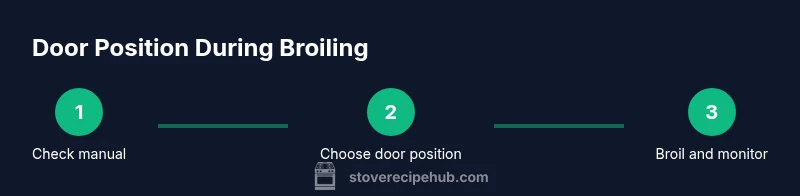
Choose door position following manual
Consult your oven’s manual to determine whether the door should be closed or slightly open during broiling. Default to closed unless the manufacturer explicitly allows an open position for broiling. If no guidance is available, start with the door closed.
Tip: Model-specific instructions trump general advice. - 4
Begin broiling
Slide the pan into the oven and start the timer. Keep the door in the chosen position and monitor the browning process from the oven window if available.
Tip: Keep a safe distance and use heat-resistant gloves. - 5
Monitor and adjust
Watch the first few minutes closely and rotate the pan if needed to promote even browning. If the exterior browns too quickly, raise the rack or shift the food slightly to control heat exposure.
Tip: Small adjustments early prevent over-browning. - 6
Check for doneness and rest
When the surface has achieved the desired crust, remove the food and let it rest briefly to reabsorb juices. For meats, verify doneness with a thermometer. For fish and vegetables, assess color and texture.
Tip: Resting improves juiciness and flavor. - 7
Finish safely and clean up
Turn off the broiler and carefully remove cookware. Allow the oven to cool before cleaning grease or drips from the pan. Store tools in a safe place for next time.
Tip: Clean while slightly warm to remove splatters easily.
Common Questions
Is it safe to broil with the oven door closed?
In most home ovens, yes; closing the door during broiling is standard to ensure heat consistency and safety. However, always check your manual for model-specific instructions.
Yes, it’s usually safe to keep the door closed while broiling, but refer to your manual.
Are there ovens that require the door to be left open during broiling?
Some older or specialty ovens may advise a slight open position; otherwise most models perform better with the door closed. Always follow the manufacturer’s guidance.
Some older models may require an open door, but most modern ovens are designed for a closed door.
What should I do if my oven is smoking while broiling with the door closed?
Smoking indicates overheating or burning fats; turn off broil, open the door cautiously, use oven mitts, and move the food aside. If smoke persists, purge and consult the manual.
If you see smoke, turn off, open carefully, and check the food.
Should I broil with the door open for thick cuts?
For thick cuts, you may start with the door closed and monitor; if the outside browns too quickly, you can crack the door slightly to regulate heat according to your manual.
Usually start closed; you might crack the door a bit if needed.
How can I tell when broiling is done without overcooking?
Rely on visual browning, color of surface, and internal temperature for meat; use a thermometer to confirm doneness and remove when appropriate.
Watch the browning and use a thermometer to confirm doneness.
Can I use the broiler to crisp toppings like cheese?
Yes, broiling is ideal for finishing toppings, but keep a close eye, as cheese can burn quickly. Use a small amount and a short duration.
Yes, but watch closely.
Watch Video
Top Takeaways
- Follow manufacturer guidance on door position for broiling.
- Keep the door closed for most broiling tasks to ensure even browning.
- Monitor browning in the first minutes and adjust as needed
- Use a timer and stay close to avoid scorching
- Prioritize safety and appliance guidelines over habit