How to Clean a Ceramic Stove Top: A Practical Guide
Learn to safely clean a ceramic stove top with non-abrasive cleaners, microfiber cloths, and a plastic scraper. This guide covers tools, step-by-step methods, maintenance, and troubleshooting to keep your surface gleaming.


This guide teaches you how to safely and effectively clean a ceramic stove top without scratching or leaving residue. You’ll need a non-abrasive cleaner, microfiber cloths, a scraper for stubborn spots, a nylon scrub sponge, and basic kitchen supplies for routine maintenance. By following these steps, your clean ceramic stove top will stay gleaming and ready for daily cooking.
Why a clean ceramic stove matters
Keeping a clean ceramic stove top isn't just about aesthetics; it preserves heat distribution, makes cooking safer, and extends the life of the surface. The Stove Recipe Hub Team emphasizes that the smooth glass-ceramic surface is susceptible to scratching and staining if abrasive cleaners or metal tools are misused. When you routinely remove spills and baked-on residues, your clean ceramic stove top will perform more predictably and look better over time. Regular wiping after cooking reduces the formation of stubborn stains and haze, which keeps your cooking area both functional and visually appealing. As of 2026, this advice remains a cornerstone of practical stove-top maintenance.
What to avoid on a ceramic surface
To protect the finish of your clean ceramic stove top, avoid harsh or abrasive cleaners, steel wool, and metal scrapers. Do not spray cleaners directly onto the surface—moisture can seep into seams and knobs, promoting wear over time. Never use oven cleaners, bleach, or ammonia-based products on the ceramic glass surface, as they can dull the shine or damage the coating. Avoid heat when applying cleaners; wait for the surface to cool completely before starting, and keep cleaning away from the control panel. Promptly wipe up sugary or acidic spills to prevent etching or sticky buildup that becomes harder to remove later.
Cleaners and tools that work best
For a safe, effective clean, rely on a non-abrasive ceramic cooktop cleaner or a mild dish soap solution. A microfiber cloth is essential for lifting residue without scratching. Use a plastic scraper (not metal) at a shallow angle to lift stuck-on spots. Keep a damp microfiber cloth handy to rinse away cleaner and a dry cloth to buff the surface to a streak-free shine. Optional items like baking soda paste or white vinegar can help with stubborn residues, but test first on a small area to confirm it won’t alter the surface. The goal is a clean ceramic stove top that shines after cooking and is ready for the next meal.
Daily maintenance routine to prevent buildup
Develop a quick daily routine to keep your clean ceramic stove top pristine. Wipe away spills while the surface is still warm but not hot, use a soft microfiber cloth to lift any film, and finish with a dry buff to prevent streaks. After cooking, wait briefly for the surface to cool, then wipe with a damp cloth and dry thoroughly. Regular light cleaning is easier than deep scrubbing and helps prolong the top’s glossy finish. This approach aligns with Stove Recipe Hub's practical guidance for home cooks who want reliable stove-top performance.
Dealing with stubborn stains: techniques and cautions
For baked-on sugar, caramel, or wax, begin with a plastic scraper at a shallow angle to avoid scratching. If residue remains, apply a small amount of ceramic cleaner to a microfiber cloth and work in gentle circular motions. A baking soda paste can help lift stubborn spots, but avoid abrasive powders that can scratch. If you encounter cloudy haze, wipe with a clean damp cloth and buff dry. Remember to rinse away any cleaner completely to prevent residue that can reappear as streaks. With patient, careful technique, most marks on a clean ceramic stove top come away with minimal effort.
Troubleshooting and quick fixes
If streaks or haze appear after cleaning, mist the surface lightly with water and re-wipe with a clean microfiber cloth until it dries clear. Ensure you’re using the correct cleaner for ceramic glass and that you’re not leaving cleaner on the surface for extended periods. For persistent issues, a dedicated ceramic cooktop cleaner can be used, but always test on a hidden spot first. If you notice cracks, chips, or peeling coating, stop cleaning and consult a professional—surface damage can worsen with improper products or scrubbing.
Tools & Materials
- Non-abrasive ceramic cooktop cleaner(Formulated for ceramic glass surfaces; avoid abrasive cleaners)
- Microfiber cleaning cloths(Soft, lint-free; use separate cloths for cleaning and drying)
- Plastic razor scraper(Used at a shallow angle to lift stuck-on residue; avoid metal blades)
- Mild dish soap(Combined with warm water for gentle cleaning)
- Warm water(For rinsing and diluting cleaners)
- White vinegar (optional)(Useful for streaks; test on a small area first)
- Baking soda (optional)(Create a paste for stubborn spots; test on inconspicuous area)
- Isopropyl alcohol (optional)(Good for removing streaks or adhesive residues)
- Soft sponge or pad (optional)(Use gently; avoid abrasive textures)
Steps
Estimated time: 15-30 minutes
- 1
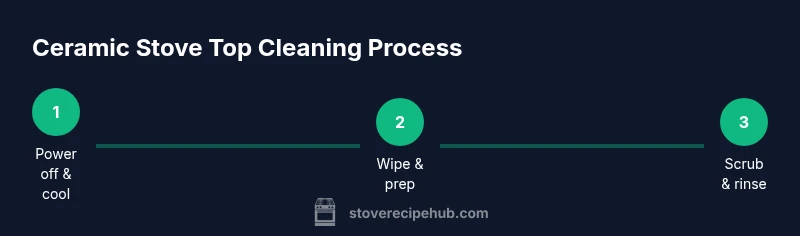
Power down and cool
Turn off the cooktop and allow the surface to cool completely before cleaning. This reduces the risk of burns and avoids thermal shock that could crack the ceramic glass. If you’ve just cooked, wait 10-15 minutes for the top to reach a safe handling temperature.
Tip: Never clean a hot surface; heat can cause cleaners to splatter or warp the finish. - 2
Wipe loose debris
Use a dry microfiber cloth to remove crumbs, sugar granules, and loose residue. This prevents scratching during subsequent scrubbing and helps you see what you’re removing.
Tip: Keep one cloth dry for debris removal and another damp for cleaning. - 3
Apply cleaner to cloth, not surface
Dampen a microfiber cloth with cleaner or a mild soap solution and wipe the surface. Avoid spraying directly onto the ceramic surface to prevent pooling in edge seams near controls.
Tip: Avoid getting cleaner on the control panel knobs to minimize wear. - 4
Gently scrub and lift
With the cloth, work in circular motions to lift stains. For baked-on spots, hold a plastic scraper at a shallow angle and glide it across the surface. Do not press hard; let the cleaner do the work.
Tip: Keep the scraper almost flat to reduce risk of scratching. - 5
Rinse and remove cleaner
Wipe the surface with a clean, damp cloth to remove cleaner residues. Rinse the cloth often and repeat until the surface feels clean and free of film.
Tip: Rinse cloth frequently to prevent redepositing residue. - 6
Dry and buff to finish
Dry the surface with a fresh microfiber cloth and buff in circular motions until it shines. A dry, even wipe helps prevent streaks and restores a glossy appearance.
Tip: Inspect under bright light to catch remaining haze. - 7
Final check and upkeep
Look for missed spots and re-clean as needed. Keep up a quick daily wipe to maintain the clean ceramic stove top and reduce deep cleaning frequency.
Tip: Address spills immediately to prevent staining and etching.
Common Questions
What is the safest cleaner for a ceramic stove top?
Choose a cleaner labeled for ceramic cooktops and apply it to a cloth rather than directly on the surface. Avoid bleach and ammonia-based products on the glaze.
The safest cleaner is a ceramic cooktop cleaner used on a cloth, not sprayed directly on the surface.
Can I use a razor blade on a ceramic stove top?
A plastic scraper or ceramic-safe blade is best. Metal blades can scratch the surface and void warranties.
Avoid metal blades; use a plastic scraper at a shallow angle.
Why does my ceramic stove top haze after cleaning?
Haze usually comes from cleaner residue or incomplete drying. Buff with a clean microfiber cloth and consider a dedicated cleaner if needed.
Haze means cleaner residue; dry and buff with a microfiber cloth.
Is vinegar safe on ceramic stove tops?
White vinegar can be used in small amounts for quick wipes but test first and wipe dry to avoid dulling the gloss.
Vinegar can be used sparingly, but test first and rinse well.
How often should I clean my ceramic stove top?
Wipe spills as they happen and perform a deeper clean weekly if you cook daily. More frequent light cleaning keeps the surface shiny.
Wipe spills immediately and do a deeper clean weekly.
Watch Video
Top Takeaways
- Use non-abrasive cleaners for ceramic tops
- Avoid metal utensils and harsh abrasives
- Rinse and dry thoroughly to prevent haze
- Tackle spills promptly to prevent staining
- Regular light cleaning preserves shine