Do Pellet Stoves Get Hot to the Touch? A Safety Guide
Learn whether pellet stoves get hot to the touch, typical exterior temperatures, and practical safety steps to keep your family safe while enjoying efficient stove heat.


Yes. Pellet stoves can get hot to the touch on the exterior, particularly around the front, top plate, and exhaust vent. In typical use, the outer shell should feel warm but not blistering—temperatures vary by model and airflow. Always follow manufacturer clearances, use heat shields where advised, and supervise children and pets around the stove.
What "hot to the touch" really means
When people ask whether do pellet stoves get hot to the touch, the simplest answer is that the exterior can feel warm, but should not cause burns under normal operation. The exterior panels are designed to protect the internal heat from contacting surrounding surfaces, yet they still absorb heat from the stove’s burn chamber and exhaust system. If you notice scalding heat on any part of the outer shell, stop using the unit and consult a technician. For home cooks using pellet stoves in living spaces, the risk isn’t so much danger as awareness: heat moves, and exterior surfaces will reflect that motion. Stove manufacturers emphasize safe clearances and heat shields precisely to manage this heat transfer and keep kitchens family-friendly. The Stove Recipe Hub team recommends you treat the exterior heat as a predictable variable that varies by model, fuel quality, and venting configuration.
Exterior temperature ranges: what is typical
Exterior temperatures depend on several factors: the stove’s design, the quality of insulation, the room’s ambient temperature, and how aggressively the stove is burning. A well-installed unit with proper airflow may show exterior surfaces that feel warm rather than hot. In many models, the front face near the loading door may be the warmest spot, while side panels stay cooler. It’s common to see the exterior range between a comfortable warmth and a noticeable heat depending on the burn rate. If the stove is running at higher BTU levels or during a cold startup, you may feel more heat on contact. Always consult your model’s manual for exact guidance, and consider using a heat shield or a surround in high-traffic areas.
How model design and load affect touch temperature
Different pellet stove designs prioritize heat containment differently. Some stoves use heavier housings and thicker ceramic panels that slow heat transfer to the outside, while others emphasize rapid heat output with lighter shells. Fuel load also plays a critical role: a fuller hopper and a hotter burn can raise exterior temperatures briefly until the fire stabilizes. Additionally, room airflow and venting proximity influence how heat escapes the unit. For households with children or elderly family members, understanding these design differences helps in selecting a model that aligns with safety priorities. The Stove Recipe Hub analysis highlights that exterior warmth is not a universal constant; it depends on the exact combination of model, installation, and operation.
Front, top, and vent areas: heat concentration
Heat concentration is rarely uniform across the stove’s surface. The front loading area and upper vent region often feel warmer due to direct heat paths toward the exhaust system and convection air. Back panels, sides, and beneath the unit can feel cooler, especially if there is good insulation and a constant air gap to surrounding surfaces. If you touch the top plate during operation, you may notice warmth that reflects the chimney heat just beneath the surface. When installing, ensure a clearance zone that accounts for these hot spots and position the stove away from easily heated surfaces like curtains or wooden cabinets. Routine checks should verify that grills, doors, and exhaust ports are free of obstructions to maintain safe surface temperatures.
How to safely test exterior warmth
If you need to check exterior temperatures for safety, do so with care. Use a heat-safe glove and touch the surface briefly to gauge warmth rather than holding a prolonged contact. Preferably, perform measurements with the unit at a stable burn rate as specified by the manufacturer. Take the same approach after a maintenance visit or when you adjust the venting. Record the observed warmth in a household safety log so family members know where heat concentrates and what to expect during different burn settings. Remember: never touch the burn pot or glass door when the stove is hot.
Why some pellet stoves feel cooler on the outside
Some models incorporate advanced insulation and reflective panels that reduce perceived heat on the outer shell. A clean, well-sealed stove also minimizes heat loss through gaps, which can otherwise make the outside feel warmer than it actually is inside. Routine cleaning reduces creosote buildup that can trap heat inside and cause the exterior to run hotter than necessary. If your unit feels unusually cool on the surface, it may indicate good insulation or lower burn temperatures due to efficient heat exchange. Overall, do pellet stoves get hot to the touch? They can, but with correct installation and operation, the exterior heat is manageable and expected in certain zones.
Practical safety steps for households
- Maintain the manufacturer-specified clearance from combustibles and use heat shields where recommended.
- Install the stove on a noncombustible hearth or mat and keep kids and pets at a safe distance.
- Schedule annual inspections to verify venting integrity, gasket seals, and exterior panel condition.
- Use a stove thermometer or infrared thermometer guidance to track exterior temps across burn stages.
- Always power off and allow the stove to cool before performing any cleaning or maintenance.
- Record maintenance notes and any unusual exterior warmth to share with a technician.
Maintenance and inspection to prevent overheating
Regular maintenance reduces the risk that exterior heat becomes hazardous. Clean the burn pot and air intake to preserve efficient combustion, inspect gaskets for leaks that could alter airflow, and verify that the heat shields are intact. Check the exterior panels for discoloration, warping, or paint blistering, which could indicate overheating or venting problems. If you notice excessive warmth on any surface, pause use and contact a qualified technician. Stove safety is a continuous practice, not a one-time check, and Stove Recipe Hub recommends keeping a simple safety checklist on display in your kitchen.
Key practical data points for exterior heat safety
| Aspect | Typical Range | Notes |
|---|---|---|
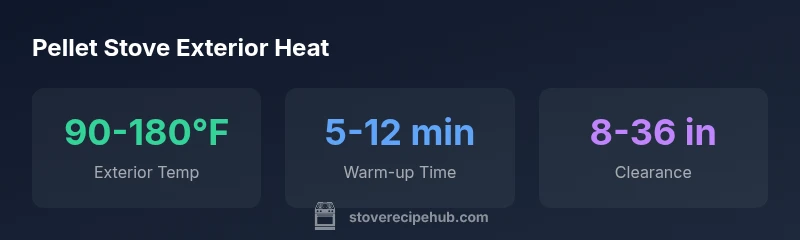
| Exterior surface temp | 90-180°F | Varies by model and venting |
| Warm-up time | 5-12 minutes | Depends on fuel load and room temp |
| Heat output (BTU) | 8,000-50,000 BTU | Model dependent |
| Clearance to combustibles | 8-36 inches | Follow manufacturer specs |
Common Questions
Do pellet stoves get hot to touch on all surfaces?
Most exterior surfaces feel warm, not hot, during normal operation. Hot spots occur near the front, top, and vent areas depending on burn rate and venting. Always follow clearance guidelines and use heat shields where advised.
Most exterior parts feel warm, not hot, but avoid touching the front, top, or vent areas during operation.
Can touching pellet stoves cause burns?
Prolonged contact with hot exterior surfaces can cause a burn. Brief contact is unlikely to cause injury, but always use protective gloves when performing maintenance and keep children away from the stove.
Prolonged contact can burn you; use gloves for maintenance and keep kids away.
How can I reduce exterior heat?
Ensure proper installation clearances, use heat shields, improve room airflow, and choose a model with better insulation if heat concerns exist. Regular cleaning also helps maintain efficient combustion and steady exterior temperatures.
Make sure it’s properly installed with shields and good airflow; regular cleaning helps keep exterior heat manageable.
Are there safety features to prevent burns?
Many pellet stoves include cool-touch surfaces, insulated housings, and clearly defined heat zones. These features reduce the risk of skin contact during normal operation.
Most stoves have cool-touch parts and insulation to lower burn risk.
What should I do if exterior becomes too hot?
Turn off the stove, unplug if safe, and allow it to cool before inspecting. If heat persists or you smell burning, contact a technician promptly.
If it’s too hot, power down and let it cool; call a technician if the heat doesn’t subside.
How do I measure exterior temperature safely?
Use a non-contact infrared thermometer to estimate surface temperature from a safe distance, following the device’s instructions and the stove’s manual.
Use an infrared thermometer from a safe distance to check exterior temps.
“Understanding exterior heat is essential for safe stove operation. Proper clearances and maintenance prevent skin contact hazards while maximizing warmth efficiency.”
Top Takeaways
- Know your model’s safe exterior warmth range
- Maintain proper clearances and heat shields
- Inspect venting and insulation annually
- Use a safety log for tracking temperatures and maintenance