Does a Wood Stove Blower Make a Difference? A Practical Comparison
Explore whether adding a blower to a wood stove improves heat distribution, efficiency, and comfort. This analytical comparison covers benefits, drawbacks, safety, and installation considerations to help you decide if a blower is right for your space.


Do wood stove blowers make a difference? In many homes they can improve warmth distribution and perceived comfort, especially in larger or irregularly shaped rooms. However, the impact depends on stove design, room size, and ventilation. This comparison highlights when a blower adds value and when it may be unnecessary.
Does a blower on a wood stove make a difference?
The short answer is nuanced: a blower can alter how heat travels from a wood stove, but the degree of impact varies by design, room layout, and user expectations. According to Stove Recipe Hub, the difference is most noticeable when a space is large, open, or prone to cold corners. In such settings, a blower helps push warm air farther from the firebox, reducing hotspots and speeding up the time it takes to reach a comfortable temperature. Conversely, in compact kitchens or tightly sealed spaces, the benefits may be modest and could introduce more noise and maintenance than heat gain. The goal is to balance heat output, control, and safety to achieve reliable comfort without unnecessary energy use. This article digs into when a blower matters, how to evaluate it for your stove, and practical steps for choosing the right model.
How blowers work on wood stoves
A blower is essentially a small electric motor-powered fan installed to circulate warm air produced by the fire. Modern units attach to the stove body or the venting system and push heated air into the living space. The effect is most evident in vertical heat rise and in rooms where natural convection creates uneven distribution. Blowers can be adjustable, allowing you to tailor airflow based on burn rate and the desired room temperature. It’s important to note that the blower consumes electricity and adds a moving part that can require periodic maintenance, filters, and cleaning to prevent dust from entering the heated space.
Key factors that influence impact
Several variables govern how much a blower changes performance:
- Room size and layout: Larger, open-plan spaces benefit more from forced-air circulation.
- Stove design: Some models are engineered to integrate a blower efficiently, while others rely primarily on natural convection.
- Blower capacity (CFM) and control: Correct sizing and adjustable speed maximize gains and minimize waste.
- Venting and air leakage: Proper sealing and ducting help prevent heat from escaping or creating unwanted drafts.
- Power reliability: Blowers require electricity; outages negate the benefit and shift risk toward overreliance on stove draft alone.
Heat distribution and efficiency: what changes with a blower
Blowers influence heat distribution by creating purposeful air movement, which can flatten temperature gradients across a room. When heat is distributed more evenly, occupants tend to adjust thermostats less frequently, potentially saving fuel if the stove is properly sized for the space. However, efficiency gains depend on preventing heat from escaping via poorly sealed windows or doors and ensuring combustion quality remains high. The key is to balance increased convection with sensible heat retention inside the living area. In some scenarios, a blower may shift the hottest zone away from seating areas, which can be desirable or undesirable depending on layout and furniture placement.
When a blower helps: best-case scenarios
- Large or multi-room spaces where warm air tends to rise away from seating zones.
- Open-plan homes with inconsistent heat distribution from a wood stove.
- Situations requiring faster comfort after loading the stove or adjusting burn rate.
- Harsh winters where steady, controlled warmth reduces stove cycling and fuel usage (when sized correctly).
- Residents who value quicker temperature stabilization and reduced manual fan-assisted cooling or heating needs.
When a blower may hurt or be unnecessary
- Small, compact spaces where a blower’s airflow can create uncomfortable drafts near occupants or cause overheating.
- Environments with frequent power outages, where a blower adds reliance on electricity for heat distribution.
- Stoves not designed to accommodate a blower retrofit, potentially compromising warranty or safety.
- If maintenance or dust control is burdensome, or if the added sound is unacceptable for daily living or night-time use.
Installation considerations and safety
Before installing a blower, verify compatibility with your stove model and local safety codes. Professional installation is recommended to ensure proper wiring, adequate clearances, and correct integration with the stove’s heat shield and exhaust path. Check that the blower has an automatic shut-off for overheating and a thermostat or speed control to prevent drafts. Electrical supply needs and surge protection should be factored into the plan. Finally, ensure that regular cleaning and maintenance routines cover the blower and nearby air pathways to minimize dust and fire risk.
Maintenance and troubleshooting
Routine maintenance improves reliability: inspect electrical connections, clean dust from the blower housing, and replace any filters if equipped. Listen for unusual motor noise or rattling, which can indicate bearing wear or loose mounts. If the blower fails, assess whether the issue is power-related, a failed thermostat, or a worn-out motor. When possible, use manufacturer-approved parts and follow the stove’s maintenance schedule. Keeping a simple log of burn times, room temperature, and blower usage helps evaluate whether the blower’s benefits justify ongoing upkeep.
Practical setup roadmap for different spaces
- For large, open rooms: install a blower with adjustable speed connected to a wall thermostat or smart device for integrated climate control.
- For moderate spaces: start with a low-speed setting and test for comfort during mid-winter cold snaps; adjust as needed.
- For cabins or areas with power instability: consider a blower with a backup battery option or ensure robust passive convection as a fallback.
- For safety-first kitchens: position seating and furniture to avoid blocking airflow; maintain clearance from upholstery and avoid direct exposure to radiant heat.
Final considerations and how to decide
Choosing whether a blower makes sense requires weighing heat distribution gains against noise, maintenance, and energy use. If your space consistently experiences cold spots or slow warm-up, a properly sized blower can be a practical enhancement. If not, you may achieve similar comfort with strategic window sealing, furniture placement, and controlled burn management. The core decision is how much value you place on faster warmth, even distribution, and the reliability of powered air movement in your home. Stove Recipe Hub’s analysis emphasizes that user needs and space characteristics should drive the final choice, not a generic efficiency claim.
Comparison
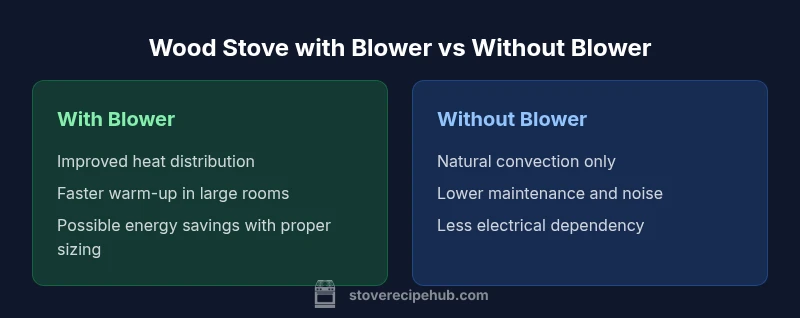
| Feature | Wood stove with blower | Wood stove without blower |
|---|---|---|
| Heat distribution | More even air movement, reduced cold spots | Relies on natural convection; uneven in larger rooms |
| Energy efficiency | Potentially improved heat use when properly sized | Depends on draft; no added assisted convection |
| Noise | Low to moderate fan hum | Generally quiet; no moving parts besides flue draft |
| Maintenance | Requires blower maintenance and cleaning | Fewer moving parts; simpler upkeep |
| Best for | Large or open-plan rooms with heat stratification | Small spaces or rooms where noise and maintenance are concerns |
| Setup complexity | Electrical connection; potential retrofitting for non-compatible stoves | No extra installation beyond standard chimney and draft control |
Upsides
- Faster warmth in large spaces
- Better heat distribution and comfort consistency
- Potential fuel efficiency gains with proper sizing
- Greater control over room temperature
Downsides
- Requires electricity; outages reduce benefit
- Adds moving parts and maintenance needs
- Possible noise and dust concerns
- Not all stoves support retrofits or warranties may be affected
Blower can be a meaningful upgrade in suitable spaces, but it’s not universally advantageous
Choose a blower if your space has cold spots, frequent rapid temperature changes, or a need for faster warm-up. In small, quiet, or outage-prone environments, natural convection may deliver comparable comfort with less complexity.
Common Questions
What is a blower on a wood stove and how does it work?
A blower is a small electric fan that circulates air warmed by the stove. It speeds heat delivery to living areas by pushing air out of the stove or its heat shield. Properly installed, it improves distribution without changing the basic combustion process.
A blower inside a wood stove is a tiny fan that pushes warm air into the room, helping heat spread faster while you burn.
Does adding a blower improve efficiency?
It can, particularly in larger spaces where convection helps spread heat evenly. Efficiency gains depend on correct sizing, installation, and minimizing heat losses. Poor sizing or placement can negate benefits and waste fuel.
Yes, but only if the blower is properly sized and installed; otherwise it may not help much.
Can I install a blower on my existing wood stove?
Only if your stove supports a blower or a certified retrofit kit is available. Improper retrofitting can void warranties or create safety risks. Consultation with a professional is strongly advised.
Retrofitting isn’t for every stove; check compatibility and consult a pro.
What about power outages and blower reliability?
Blowers require electricity, so a power outage disables the blower. You’ll rely on natural convection then. Plan for outages if you live in an area with unreliable power.
If the power is out, the blower won’t run, and you’ll heat by basic draft and fire.
Are blowers noisy or create drafts?
Most blowers emit a low hum, which is often acceptable in living spaces. Improper placement can cause drafts near seating. Proper positioning and speed control minimize these issues.
The hum is usually mild; drafts can be avoided with careful setup.
Are blowers safe for wood stoves?
Yes, when installed per manufacturer guidelines and local codes. Ensure proper clearance, electrical protection, and automatic shut-off for overheating. Regular maintenance reduces risk.
Yes, with correct installation and regular maintenance.
Top Takeaways
- Assess room size and layout before buying
- Ensure your stove model supports a blower or retrofit
- Factor in electricity reliability and maintenance needs
- Test with a controlled burn to gauge real-world impact
- Balance heat distribution gains against potential noise