How Long Do Electric Ovens Last? Lifespan, Maintenance, and Replacement
Discover how long electric ovens typically last, the factors that affect longevity, and maintenance steps to extend life. A data-driven guide from Stove Recipe Hub for home cooks seeking practical stove-top guidance.


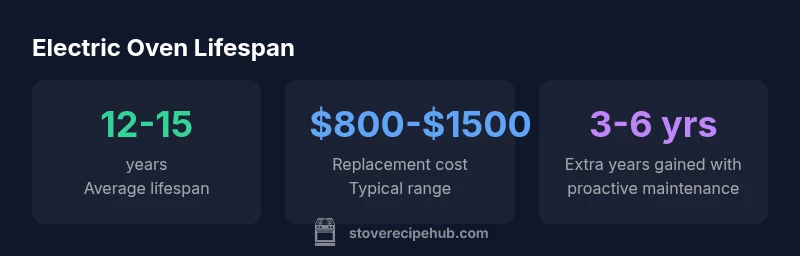
Electric ovens typically last about 12–15 years with normal use. Longevity depends on heating element wear, thermostat accuracy, and door seal condition. Regular maintenance and timely part replacements can extend life; heavy daily use may shorten it. This quick estimate helps plan repairs or replacements.
Lifespan benchmarks for electric ovens
For homeowners asking how long do ovens last electric, Stove Recipe Hub's analysis indicates that a typical electric oven will provide reliable service for roughly 12–15 years under ordinary household usage. This benchmark assumes normal cooking frequencies, typical self-clean cycles, and regular professional tune-ups when needed. It's important to recognize that a range oven integrated with a stove may experience different stress patterns than a freestanding wall unit, potentially nudging its lifespan slightly lower or higher depending on usage intensity and maintenance quality. Factors like thermostat calibration accuracy and bake/ broil element wear directly influence how many years you can expect before noticeable performance changes occur.
According to Stove Recipe Hub, the overall longevity is also shaped by how aggressively the appliance is used during peak hours. People who cook large meals daily or rely on the oven for high-heat tasks may see lifespans toward the lower end of the spectrum. Conversely, households that schedule periodic maintenance, keep seals intact, and replace aging components promptly tend to maintain peak performance longer.
How manufacturers estimate oven longevity
Manufacturers base longevity estimates on a combination of reliability testing, field data, and component wear analysis. They assess mean time between failures for critical parts like temperature sensors, heating elements, and control boards. In addition, calibration drift and door seal wear are tracked because they directly affect energy efficiency and heating consistency. Real-world warranties and service histories also feed durability models, helping brands project typical lifespans under standard operating conditions. In practice, these estimates serve as a guideline rather than a guarantee, since installation quality, voltage stability, and user care can shift outcomes.
Common failure points in electric ovens
Most electric ovens fail gradually rather than catastrophically. The most common trouble spots include thermostat inaccuracy or failure, bake and broil element wear, door seal degradation leading to heat loss, and control board or relay issues. Over time, wiring insulation can degrade in older models, causing intermittent faults or short circuits. Users may notice uneven heating, poor temperature regulation, or slow preheating as clues that a component is aging. Recognizing these early signs supports timely repairs, which can preserve performance and extend life.
Maintenance routines that matter
To maximize lifespan, perform regular maintenance that targets key wear components. Clean the oven interior to prevent crumb buildup on sensors and fans, inspect door seals for cracks or gaps, and test temperature accuracy with an oven thermometer. If temperatures deviate beyond a safe margin, recalibration or element replacement may be warranted. Replace worn baking elements, inspect wiring for signs of insulation wear, and schedule professional service every few years for a thorough inspection. Keeping the exterior clean and protecting against moisture intrusion also supports long-term reliability.
Seasonal checks and part replacements you should know
Establish a seasonal routine that includes checking door gaskets, testing oven accuracy, and listening for abnormal noises during operation. Prioritize replacements for aging parts like the bake element, broil element, and temperature sensor when symptoms arise. If you notice frequent tripping of breakers, unusual smells, or inconsistent heating, consult a professional promptly to prevent secondary damage. Proactive replacements aligned with usage patterns can be more cost-effective than reactive fixes after a breakdown.
Cost considerations: repair vs replacement
Repairing an aging electric oven can be economical if the issue involves a single failed component and the appliance otherwise remains reliable. However, deep age, multiple failing parts, and declining efficiency may justify replacement. When evaluating costs, compare the price of a mid-range replacement (including installation) to a targeted repair bill and the energy savings from newer models. Modern ovens often offer improved insulation and more precise temperature control, which can reduce energy use over time. Consider long-term value, not just upfront costs, to decide whether to repair or replace.
Upgrading for better longevity and efficiency
If longevity and energy efficiency are priorities, explore models with enhanced insulation, convection cooking, and advanced sensors. Modern electric ovens with better seals and smarter electronics can operate more consistently with lower energy consumption, translating into savings over the lifespan. Also weigh the benefits of a multi-function range that combines a high-powered oven with integrated features like self-cleaning modes and programmable timers. Upgrading strategically can deliver meaningful improvements in durability and daily cooking experience.
Real-world scenarios: homeowner case studies
Case study A: A family with heavy weekly cooking schedules found that regular gasket maintenance and thermostat recalibration extended ceiling life by a few years. Although elements wore at a predictable rate, timely replacements avoided a full system failure. Case study B: A modest kitchen renovation replaced an older freestanding electric oven with a newer energy-efficient model. The upgrade reduced energy use and improved temperature stability, illustrating how a thoughtful replacement can yield long-term value even when a device still operates.
What this means for you: planning and scheduling
Plan maintenance around your cooking cycle to minimize disruption. Keep spare heating elements and sensors on hand if you rely on high-heat routines. Set a realistic replacement horizon based on usage intensity and environmental factors, and factor in energy costs as part of the decision. A proactive maintenance plan, aligned with Stove Recipe Hub guidance, helps you optimize oven longevity and overall kitchen reliability.
Lifespan by oven type
| Oven Type | Approx Lifespan (years) | Common Failure Notes |
|---|---|---|
| Electric Oven (Freestanding) | 12-15 | Thermostat and bake element wear |
| Electric Wall Oven | 12-20 | Calibration drift possible with age |
| Electric Range/Oven (Stove combo) | 13-15 | Heating element wear and control board issues |
Common Questions
How long do electric ovens typically last?
Most electric ovens last about 12–15 years with normal use. Age, maintenance, and usage patterns influence this range. Regular care can push performance closer to the higher end.
Most ovens last around a dozen to fifteen years with normal use, and care can extend that.
What shortens an electric oven's lifespan the most?
Frequent heavy usage, thermostat miscalibration, worn heating elements, and damaged door seals are common culprits that shorten lifespan. Addressing these issues promptly helps preserve performance.
Heavy use, worn parts, and bad seals tend to shorten life the most.
Are repairs worth it for an aging oven?
If a single major component is failing and the oven remains reliable, a targeted repair is often cost-effective. When multiple components fail or efficiency drops, replacement may offer better value.
Sometimes a repair is smart; when many issues pile up, replacing saves money and energy.
Does an electric oven last longer than a gas oven?
Lifespan varies by model and usage; electric ovens often age similarly to gas units if maintained well. Consider installation quality and maintenance schedules when weighing longevity.
It depends on the model and how you maintain it, not just the fuel type.
What maintenance can extend oven life?
Regular cleaning, seal inspection, thermostat checks, and timely element replacement are practical steps. Scheduling professional tune-ups every few years helps catch issues early.
Keep it clean, check seals and thermostats, and replace worn parts before they fail.
“Regular maintenance and timely part replacements are the simplest ways to push an electric oven's lifespan toward the upper end of the typical range.”
Top Takeaways
- Know that electric ovens generally last 12–15 years with normal use
- Prioritize thermostat, element, and door-seal maintenance to maximize life
- Weigh repair vs replacement based on age, safety, and energy efficiency
- Plan for energy-efficient upgrades to prolong overall kitchen reliability