How to Cook Without a Stove: Practical No-Stove Cooking
Learn practical, safe ways to cook without a stove. This guide covers methods, tools, tips, no-stove recipes, and safety guidelines for home cooks and DIY enthusiasts in 2026.


Discover how to cook without a stove using simple, safe techniques and common tools. This guide covers no-stove methods, essential gear, and practical recipes you can start today. According to Stove Recipe Hub, mastering heat-control and improvised cooking setups expands your kitchen options. Whether you're camping, without electricity, or venturing into small apartments, these approaches emphasize reliability, safety, and flavor.
No-Stove Cooking: Core Concepts
No-stove cooking is about preparing meals without a traditional stovetop, relying on electric kettles, microwaves, ovens, grills, or heat-retaining methods like slow cookers. The goal is to maximize flavor and texture with safe, controlled heat sources. According to Stove Recipe Hub, successful stove-free cooking hinges on planning, heat management, and versatile ingredients. You can still achieve sautéed flavors by finishing items in a microwave-safe pan or baking in a toaster oven; the key is controlling moisture and temperature. In this guide, we explore practical approaches for everyday meals, snacks, and batch cooking that don't require a full stove. We also outline safety considerations, storage strategies, and quick recipes so you can start today.
To get the most from this no-stove approach, keep your pantry stocked with versatile staples (beans, grains, canned vegetables) and ready-to-eat proteins. This ensures that even when heat is limited or unavailable, you can assemble balanced meals without compromising taste. As you read, remember that no-stove cooking isn’t about sacrificing flavor—it’s about smart technique, proper equipment, and safety. The topic of no-stove cooking is especially timely in 2026 as more households seek flexible kitchen solutions while keeping energy use in check. The guidance here aligns with Stove Recipe Hub’s emphasis on practical stove-free methods that are safe for home cooks and DIY enthusiasts alike.
In practice, you’ll combine heat sources like a microwave, toaster oven, and electric kettle with cold preparation to build satisfying meals. Whether it’s reheating sauces, steaming vegetables in a microwave steamer, or finishing a bake in a small oven, the emphasis remains on safety, planning, and texture control. This article will walk you through actionable steps, share inclusive recipes, and help you adapt to different spaces—from studio apartments to temporary kitchens—so you can confidently answer the question: how to cook without stove.
note
Tools & Materials
- Electric kettle(Boil water quickly for reheating, broths, or rehydrating ingredients)
- Microwave-safe bowls and containers(For heating, reheating, and mixing without direct heat)
- Toaster oven or small countertop oven(Roasting, baking, and finishing dishes without a stove)
- Slow cooker or electric pressure cooker(Good for one-pot meals without direct heat)
- Cold-storage solutions (cooler or insulated bag)(Keep perishable ingredients safe when refrigeration is limited)
- Cutting board and chef’s knife(Prep ingredients safely and efficiently)
- Heat-safe utensils and oven mitts(Handle hot containers without burns)
- Microwave-safe steamer insert(Steam vegetables and grains in the microwave)
- Portable grill or outdoor heat source(Option for outdoor cooking or grilling)
Steps
Estimated time: 60-90 minutes
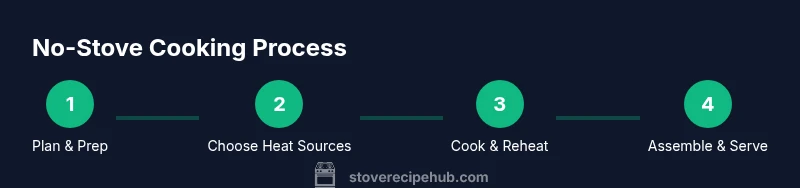
- 1
Assess heat options
Survey available heat sources (microwave, oven, kettle, slow cooker, grill) and outlets. Decide which combination works best for your planned meals. This determines which no-stove techniques you’ll use for the day.
Tip: Make a quick list of meals you want to prep and map them to an appliance you know you can access. - 2
Plan meals around appliance strengths
Select recipes that fit your heat options; for example, use the microwave for reheating and steaming, the toaster oven for roasting, and the kettle for soups or porridge. Planning saves time and reduces wasted ingredients.
Tip: Create a simple 3-meal plan that rotates through microwave, oven, and no-heat assembly. - 3
Prep ingredients safely
Wash and dry produce, trim proteins, and portion ingredients. Use airtight containers or resealable bags to keep items fresh and organized. Prepping in advance reduces the time you’ll need to spend around heat.
Tip: Label containers with date and contents to avoid confusion later. - 4
Set up a clean, safe workspace
Clear counter space, keep a dedicated cutting board, and have a trash bin nearby. Ensure cords and outlets are arranged to prevent tangling or heat hazards. A tidy area reduces the risk of accidents when handling hot containers.
Tip: Keep a damp cloth handy to clean spills immediately and prevent slips. - 5
Boil water and prepare grains with a kettle or microwave
Use the electric kettle to boil water, then pour over grains or legumes that don’t require prolonged simmering. Alternatively, microwave grains in a bowl with water in short intervals, stirring between sessions to prevent hotspots.
Tip: Cover containers to trap steam, which speeds up cooking and preserves moisture. - 6
Cook proteins and vegetables via non-stovetop methods
Roast vegetables or reheated proteins in a toaster oven; use a microwave steamer for greens and roots. If you have a grill, finish items with a quick sear for added flavor and texture.
Tip: Rotate trays midway to ensure even heating and browning. - 7
Assemble complete meals without direct heat
Combine cooled or pre-cooked components with fresh toppings or sauces. Assemble bowls, wraps, or salads where hot components are pre-cooked and cooled to safe handling temperatures before mixing.
Tip: Keep hot components above 140°F/60°C when combining with cold ingredients. - 8
Store leftovers safely and reheat properly
Cool foods quickly, refrigerate within two hours, and reheat to steaming hot. Use airtight containers and label dates. Reheat only to the safe internal temperature to avoid food-borne illness.
Tip: Divide large portions into smaller containers for faster reheating.
Common Questions
Is it safe to cook without a stove?
Yes, no-stove cooking can be safe when you follow basic safety practices: use heat-safe containers, keep outlets clear, monitor heat sources, and store foods at proper temperatures. Always read appliance manuals and follow recommended cooking times.
Yes, it can be safe if you follow basic safety steps and proper food handling.
What appliances can I use to cook without a stove?
Microwave, toaster oven, oven, slow cooker, electric kettle, and portable grills are common no-stove options. Choose devices based on your recipe and available space.
You can use a microwave, toaster oven, slow cooker, or grill depending on the dish.
Can I cook full meals or just snacks without a stove?
Both are possible. With thoughtful planning, you can prepare complete meals using no-stove appliances by roasting, steaming, or assembling components.
Yes, you can make full meals with no-stove methods.
How do I store no-stove meals safely?
Cool foods quickly, refrigerate promptly, and reheat to steaming hot. Use airtight containers and label leftovers with dates.
Cool quickly and reheat until steaming hot.
What are some no-stove breakfast options?
Overnight oats, yogurt parfaits, fruit salads with toppings, and microwave eggs in a mug are fast options. Prep ahead to save time.
Try overnight oats or microwave eggs for breakfast.
Do I need special cookware?
Not always. Look for microwave-safe, oven-safe, and dishwasher-safe pieces. Choose versatile pans that work across multiple appliances.
No special gear required, but use versatile, microwave-safe cookware.
Watch Video
Top Takeaways
- Plan meals around available heat sources
- Prioritize safety and proper food storage
- Utilize multiple appliances for flavor and texture
- Prep ahead to save time on no-stove days
- No-stove cooking expands kitchen flexibility