Plug-In Stove Top: Safe Setup & Use Guide
Learn to safely choose, set up, operate, and maintain a plug-in stove top with practical tips, cookware guidance, and safety checks for home cooks.


A plug in stove top lets you cook on a portable electric burner that plugs into a standard outlet. For best results, choose flat-bottom cookware, test the unit on a heat-safe surface, and unplug after use. See our full guide for step-by-step instructions.
What is a plug-in stove top?
A plug-in stove top, often called a portable electric burner or hot plate, is a compact cooking device that sits on your counter and powers from a standard electrical outlet. It uses an electric coil or radiant element to transfer heat to cookware placed directly on its surface. These units are popular for apartments, dorm rooms, or as a supplemental burner when your built-in range is busy. They come in single- or multi-burner configurations and can heat quickly or more gradually depending on wattage and design. When used correctly, a plug-in stove top can deliver reliable, on-demand cooking without committing to a permanent installation. It’s important to note that safety and proper cookware choice influence performance as much as the device’s settings.
Safety essentials for plug-in stove tops
Electrical safety is paramount with any portable appliance. Always place the unit on a stable, heat-resistant surface away from water, towels, or flammable items. Use a grounded outlet and avoid extension cords, especially high-wattage models that can overheat. Keep children and pets away while the unit is hot, and never touch the heating surface with bare hands. If you notice exposed wiring, scorching, or a burning smell, unplug immediately and discontinue use. Read the manufacturer’s manual for load limits, recommended cookware, and cleaning instructions. By treating it like any powered kitchen appliance, you reduce the risk of shocks, fires, and damage to surfaces.
How to choose the right plug-in stove top
Consider burner counts, thermostat control, and surface materials. Look for units with stable feet, an easy-to-read indicator panel, and auto shut-off for safety. A compact footprint suits small kitchens, while a larger model can handle batch cooking. Decide between coil, radiant, or induction technology; induction requires compatible cookware but offers fast, efficient heating. Budget for the unit and any accessories such as a heat-resistant mat or pan protectors. Finally, check warranty and availability of replacement parts, which can extend the life of your investment.
Setting up and connecting safely
Before first use, clear the area and ensure the outlet is clean. Place the plug-in stove top on a stable, heat-resistant surface and confirm that the cord can reach the outlet without tangling or crossing a path. Plug into a grounded outlet, switch on the unit, and, if available, press a test or preheat function for a brief moment to verify heating. Do not operate on damp surfaces or near sinks. If your model has a cord strain relief, secure it to prevent accidental unplugging.
Operating techniques for even heating
To achieve even cooking, use cookware with a flat, robust bottom that covers the burner area. Preheat the pan for a short time, then adjust heat gradually rather than making large jumps. Keep lids on for simmering or reducing evaporation. Avoid overcrowding the surface; give room for steam and heat to circulate. If your burner features multiple heat levels, start at a moderate setting and adjust as needed based on the food and cookware. Regularly rotate pots for uniform heat distribution.
Cookware compatibility and tips
Not all pots and pans work well on portable electric burners. Favor flat-bottom, heavy-gauge cookware made of cast iron, steel, or clad aluminum. Ensure the bottom is clean and dry before placing on the surface; moisture can cause uneven heating. Use a pan that matches the burner diameter to avoid heat loss at the edges. For nonstick coatings, avoid metal utensils that can scratch; opt for wooden or silicone alternatives.
Cleaning and maintenance routines
Cool completely before cleaning. Wipe the surface with a damp cloth and mild dish soap; avoid abrasive cleaners that can scratch the surface. If there are spills on heating elements, dab gently with a soft cloth rather than scrubbing. Remove any detachable parts per the manual and wash with warm water. Dry thoroughly before reassembling. Periodically inspect the cord and plug for wear, and replace if you notice damage. Store in a dry place when not in use.
Troubleshooting common problems
If the unit won't heat, verify the outlet has power by testing another appliance. Check that the cookware is properly seated and the control is set correctly. For uneven heating, ensure cookware is flat and centered. If you smell burning or see smoke, unplug immediately and inspect for residue or damaged components. For persistent issues, consult the manual or contact the manufacturer for guidance and warranty support.
Energy efficiency and cost considerations
Portable stoves can be more energy-intensive than full-sized ranges, especially at high heat. Use appropriate cookware to maximize heat transfer and minimize wasted energy. Weigh the benefits of batch cooking on a single burner versus using multiple smaller burners for separate tasks. When possible, plan meals to reduce the number of times you need to heat and reheat, and turn off the burner a few minutes before the food is fully cooked to take advantage of residual heat. Consider insulating lids or using heat-tempered glass lids to retain heat.
Safety for households with children and pets
Establish a dedicated cooking zone and use childproof latches if possible. Keep cords out of reach and use heat-resistant mats. Supervise children during cooking activities and teach them not to touch the hot surface. Use timer notifications to avoid overcooking and to remind you when to turn off the unit. After cooking, allow the surface to cool completely before cleaning or moving cookware. Use hot pads and keep flammables away from the burner area.
Plug-in vs built-in stove top: a quick comparison
A plug-in stove top is portable and ideal for space-limited kitchens or temporary cooking setups, but it typically offers fewer burners and less precise control than a built-in range. Built-in stoves often distribute heat more evenly and may include more consistent temperature sensing. Budget, power access, and cooking needs determine which is best for you. In both cases, safety practices remain essential and cookware choices can influence performance.
Extending the life of your plug-in stove top with a simple routine
Adopt a recurring routine: before each use, inspect the cord and surface; after use, clean and dry; store properly. Periodic deep cleaning of burners and vents can improve performance and safety. Keep the device away from moisture and extreme heat, and never wrap the cord around the unit when hot. By treating the appliance with care, you ensure reliable operation for years to come.
Tools & Materials
- Flat-bottom, stove-top-safe cookware(Choose pots and pans with flat bottoms that cover most of the burner area)
- Non-slip heat-resistant mat or silicone mat(Place under unit on delicate surfaces if needed)
- Dish soap and soft cloth(For quick cleaning after use)
- Sponge or microfiber cloth(For wiping the surface and removing residue)
- Timer or smartphone timer(Helpful to track preheat times and cooking duration)
- Heat-resistant gloves or pot holders(Use when handling hot cookware)
Steps
Estimated time: 30-45 minutes
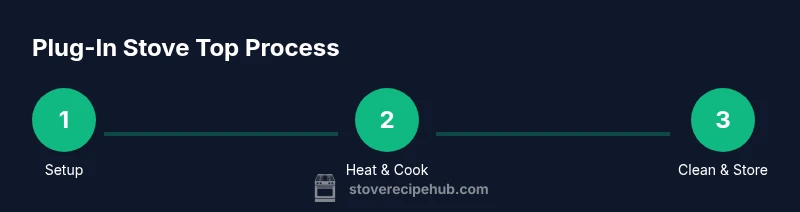
- 1
Choose a safe location
Place the plug-in stove top on a stable, heat-resistant surface away from water and flammable items. Clear the surrounding area and ensure ventilation is adequate for any cooking fumes.
Tip: Keep a small gap around the unit for heat dissipation. - 2
Check cookware compatibility
Inspect pots and pans to ensure the bottoms are flat and clean. Avoid warped or wobbly cookware which can trap heat and cause uneven cooking.
Tip: Test a dry pan first to verify stability before adding food. - 3
Set up and connect safely
Plug the unit into a grounded outlet. Ensure the cord has a safe path and that the plug is fully inserted. If the model has a preheat function, run it briefly to confirm heating.
Tip: Do not use extension cords with high-wattage portable cookers. - 4
Power on and test heating
Turn on the burner and select a medium setting to begin cooking. Observe for even heat distribution under your cookware and adjust if needed.
Tip: Avoid jumping to high heat; gradual increases reduce sticking and scorching. - 5
Cook with proper heat control
Keep lids on when appropriate to conserve energy and maintain moisture. Rotate cookware halfway through for even heating and prevent hot spots.
Tip: Use cookware that matches the burner diameter to maximize efficiency. - 6
Shut down safely
When cooking is finished, turn off the unit and unplug it. Allow the surface to cool completely before moving or cleaning.
Tip: Keep the unit away from edges where it could be knocked over. - 7
Clean and store
Wipe the surface with a damp cloth and mild soap after it cools. Dry thoroughly and store in a dry place to avoid moisture damage.
Tip: Never clean while the unit is hot or plugged in.
Common Questions
Can I use a plug-in stove top on a wooden countertop?
Yes, but you should place a heat-resistant mat beneath the unit to protect the surface and ensure proper clearance around the sides.
Yes, you can use it on wood if you use a heat-resistant mat and keep clearance around the sides.
Is it safe to leave it unattended while cooking?
No. Always stay nearby while the burner is on and never leave it unattended, especially with oil or liquids.
No, never leave it unattended while it's heating.
Can I use an extension cord?
Avoid extension cords. They can overheat and create a fire risk; plug directly into a grounded outlet.
Better to avoid extension cords and plug directly into a proper outlet.
What cookware works best?
Flat-bottom, heavy-duty cookware like cast iron, steel, or clad aluminum yields the most even heating.
Flat-bottom, sturdy pots and pans work best for even heat.
How do I clean the heating element safely?
Let it cool, unplug, then wipe with damp cloth and mild soap. Avoid soaking or abrasive cleaners.
Cool the unit, unplug, and clean with a damp cloth.
Do plug-in stoves have built-in timers?
Some models include a timer; check your specific unit’s manual for features and safety notes.
Some have a timer—check your manual for details.
Watch Video
Top Takeaways
- Choose cookware that fits the burner and cooktop.
- Prioritize safety: surface, cord, and ventilation.
- Unplug after use and clean while cool.
- Follow manufacturer guidelines for maintenance.