Tea Kettle Stove Top: A Practical Guide for Home Cooks
Learn to safely and efficiently boil water with a tea kettle on the stove top. This practical guide covers kettle selection, heat-control techniques, and maintenance for daily use by home cooks.


Goal: master safe, efficient boiling with a tea kettle on the stove top. You’ll pick the right kettle, control heat to speed boiling without damage, and maintain the kettle for long-term use. Before you start: ensure a compatible kettle, a heat source you can monitor, and proper handling tools.
Overview of tea kettle stove top safety and efficiency
Using a tea kettle on the stove top is one of the simplest ways to boil water quickly and reliably. The key is balancing safety with efficiency: a kettle made for stove-top use should heat evenly, resist heat, and be easy to handle when hot. In this guide, we discuss picking the right tea kettle stove top, controlling heat, and maintaining the kettle so it lasts for years of daily use.
First, always consider the basics of safety: never leave a boiling kettle unattended, keep your handle away from the flame, and make sure the kettle is dry before placing it on the burner. A kettle on the stove top can boil dry if the water evaporates completely, which can warp the spout seal or damage the interior. Always set a timer and listen for the whistle or the sound of steam starting to escape. If your kettle leaks steam around the lid, stop and inspect the seal. Regular maintenance reduces the risk of accidents and helps you achieve consistent boiling times.
When boiling water on the stove top, plan for the heat source and burner size. A kettle that overhangs a burner creates uneven heating and can tilt, which increases the risk of spills. Match the kettle diameter to the burner size, and avoid using oversized burners for small kettles. For electric stoves, a flat-bottom kettle makes better contact with the heating element; for gas stoves, direct flame contact is common. In all cases, use a sturdy trivet or heat-safe surface if you need to move the kettle after boiling. By understanding these basics, you can use the tea kettle stove top confidently and safely.
Choosing the right tea kettle for stove-top use
The tea kettle stove top setup begins with selecting a kettle that matches your cooking and drinking habits. Look for a design that fits your burner, pour profile, and daily routines. If you brew a single cup, a 0.8-1 liter kettle is often ideal; for families, a 1.5-2 liter kettle may be better. Consider the lid fit, spout design, and whistle behavior: a well-tuned whistle should signal you just as the water reaches a boil, without being obtrusive.
Material matters here, but so does comfort and durability. A kettle that heats evenly prevents hot spots on the base and reduces the chance of damage. A sturdy handle should stay cool to the touch, and a secure lid prevents steam from escaping when you move the kettle. If you frequently heat on high flame, a thick-walled kettle resists deformation. Otherwise, for gentle heating or pour-over rituals, a lighter kettle can be easier to maneuver. Finally, check the care instructions: dishwasher-safe kettles save time, but hand washing often preserves the finish and whistle mechanism longer. The best tea kettle stove top is one that suits your kitchen, your stove type, and your hot-beverage goals.
Material matters: stainless steel, copper, enamel, and more
Material choice affects heat distribution, durability, and maintenance for the tea kettle stove top. Stainless steel kettles are common: they resist rust, are durable, and work well on gas or electric coils. Many include a galvanized or polished exterior that hides heat well and stays comfortable at the handle. Copper kettles offer superb heat conduction and a classic look, but they often require polishing or internal lining to prevent reaction with acidic beverages. Copper-lined variants use tin or stainless steel inside to prevent copper ions from leaching into water. Enamel-coated steel kettles blend durability with aesthetic options, and the enamel interior helps avoid corrosion while remaining easy to clean.
Aluminum kettles are light and heat quickly, but they can react with acidic liquids and may pit if not properly seasoned or lined. Glass kettles exist for stove tops but are less common due to potential cracking from high heat; if used, ensure the stove stays within manufacturer-recommended temperatures and the glass is rated for cooking. For induction-ready stove tops, ensure the kettle is ferrous (magnetic) or has an induction-safe base. In all cases, choose a kettle that aligns with your maintenance tolerance and your kitchen style, ensuring the tea kettle stove top remains a reliable workhorse for daily tea or coffee.
Capacity and design features that affect performance
Capacity matters when you’re making tea for one or for the whole family. A small 0.8-1 liter kettle is nimble for quick boils, while a 1.5-2 liter model handles larger batches, reducing the number of boils in a single session. Look for a wide base that sits stably on the burner and a lid that seals well enough to build steam without pressing too hard on the handle. Gooseneck spouts offer precision for pour-over rituals, though most households prefer a standard curved spout for speed and ease. A whistle that’s loud enough to hear from across the room is convenient, but not so loud as to become annoying during morning routines. Heat-resistant handles are essential; ensure the handle stays comfortable and remains cool enough to grip when the kettle is hot. If you frequently boil hard water, a kettle with robust interior lining will resist mineral buildup. Finally, consider ease of cleaning: smooth interiors without tight corners simplify descaling and maintenance for the tea kettle stove top.
Using a tea kettle on a gas vs electric stove
Gas stoves provide immediate, adjustable heat, which means you can control boil timing precisely with a kettle on the stove top. However, direct flame contact can cause scorching if the kettle’s base is too large for the burner. Place the kettle so the flame covers the bottom evenly and avoid wobbling on a ceramic grate. On electric stoves, the coil or flat-top element heats more evenly, but heat-up times can be longer and less predictable. A kettle that heats uniformly on electric stoves reduces boil time variance and minimizes the risk of localized overheating. In both cases, avoid overheating a dry kettle; always keep water in the kettle to protect the interior from heat damage and preserve the whistle mechanism.
When moving a hot kettle after boiling, use heat-safe gloves or a potholder and set the kettle on a trivet or heat-resistant surface. If you notice uneven heating or strange noises, shut off the heat and inspect for mineral buildup or warping. By understanding stove differences, you can optimize the tea kettle stove top experience for your kitchen.
Boiling technique: speed, energy use, and flavor tips
Efficiency on the tea kettle stove top comes down to heat control and routine care. Start with clean water, as minerals present in hard water can influence taste and boil time. Fill to the recommended max line; water beyond that risks boil-over, steam leakage, and potential burns. When you place the kettle on the burner, use medium heat to bring water to a rolling boil rather than blasting on high; high heat can cause warping over time and wastes energy. Once the water boils, reduce heat to a gentle simmer if you want to maintain warmth for a longer period without scorching the kettle. For pour-over coffees or tea, a precise gooseneck-style kettle helps you pour at a consistent rate. Regularly descale to remove mineral buildup that slows boiling and dulls the whistle. Remember: the tea kettle stove top should be a tool that enhances your morning ritual, not a source of stress. By understanding heat control, water quality, and maintenance, you’ll boil water faster and more predictably.
Maintenance and care to extend life
Long-term performance from the tea kettle stove top comes from routine cleaning and mindful storage. After each use, rinse with warm water and wipe the exterior with a soft cloth to remove fingerprints or mineral residue. For mineral buildup, descaling every few weeks or months depending on water hardness keeps the kettle boiling efficiently. Use a solution of equal parts water and white vinegar or a mild descaler, simmer for 5-15 minutes, then rinse thoroughly. Dry the interior completely to prevent rust or corrosion. For copper kettles, consider periodic polishing to maintain luster, while enamel interiors should be checked for chips and cracks. Inspect the lid seal and whistle mechanism periodically; replace worn parts to maintain performance.
Storage matters too: keep the kettle dry, with the lid off or ajar to prevent moisture buildup inside, which can encourage odors or rust. A well-maintained tea kettle stove top will keep performing reliably and safely for years.
Troubleshooting common issues
If your kettle isn’t boiling as quickly as expected, check the burner setting and ensure the kettle base sits flat on the surface for even contact. Mineral buildup around the spout or lid can slow boiling and affect whistle noise; descale as needed. If the whistle doesn’t sound, ensure the vent is clear and there’s no blockage forming a tight seal. A leaking lid or loose handle indicates a need for closer inspection of seals or screws. If the base heats unevenly on a gas stove, consider replacing the kettle or using a heat diffuser to spread the flame more evenly. Finally, if the kettle shows signs of pitting or warping after repeated overheating, it’s time to retire that model and replace it with a kettle designed for stove-top use. These steps help you diagnose and fix common tea kettle stove top issues quickly.
Safety reminders and best practices
Always handle a hot tea kettle stove top with heat-resistant gloves; never touch a hot kettle with bare hands. Keep the area around the stove clear of towels and flammable items. Do not overfill above the max line, which can cause boil-over and burns. When the water begins to boil, keep the lid partially open to prevent pressure buildup and ensure safe venting. Regularly check the kettle’s bottom for signs of wear, and replace any warped or damaged parts immediately. Finally, store the kettle in a dry place and avoid stacking other cookware on top of it to prevent scratches and dents. By following these safety reminders and best practices, you protect yourself and your stove-top investment while enjoying reliable hot water for tea, coffee, or cooking.
Sparks of wisdom for tea kettle stove top mastery
A well-chosen tea kettle stove top becomes a reliable ritual. Prioritize a model with a solid base, a comfortable handle, and a good whistle. Practice heat-control techniques and keep it clean to preserve performance. With careful maintenance, your kettle will continue to serve you tea and hot water for years.
Tools & Materials
- Tea kettle (stove-top compatible)(Choose 0.8-2.0 L depending on household size)
- Heat-safe gloves or potholder(For handling hot kettle safely)
- Dish soap and a soft sponge(Gentle cleaning without scratching)
- Descaler or white vinegar(Descale mineral buildup when needed)
- Kettle brush or non-abrasive sponge(Interior cleaning and scale removal)
- Timer or clock(Helps track boil time and safety)
- Dry towel or microfiber cloth(Dry interior after cleaning)
- Soft cloth for exterior(Prevents water spots and keeps finish tidy)
Steps
Estimated time: 5-10 minutes
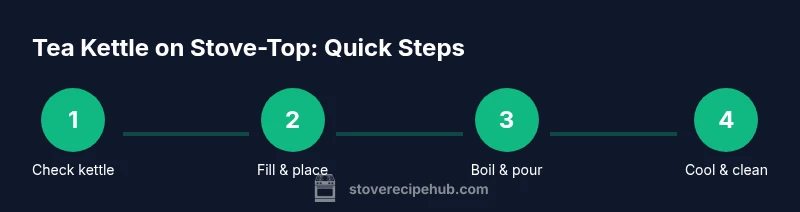
- 1
Check compatibility and safety
Inspect the kettle for heat resistance on stove tops and confirm it sits flat on the burner. Ensure the lid seals well and the whistle is intact. This prevents wobbling, spills, or accidental steam exposure later.
Tip: If the base isn’t flat, use a heat diffuser to stabilize heat transfer. - 2
Fill to the recommended max
Pour water up to the manufacturer’s max line. Overfilling can cause boil-over and water spillage, increasing burn risk and cleaning needs.
Tip: Always use cold water for quicker boil and better flavor preservation. - 3
Position kettle on burner
Place the kettle centered over the burner with the handle pointing away from the flame. Start on medium heat to avoid scorching the bottom and watch for the first signs of steam.
Tip: Avoid using oversized flames; heat evenly and efficiently. - 4
Boil and monitor
Let the water reach a rolling boil. If you’re after a slower boil for certain teas, reduce heat slightly after you see steam. Do not leave unattended.
Tip: If using a gooseneck kettle, pour slowly to control flow during brewing. - 5
Turn off heat and remove
Turn off the burner and use an oven mitt to lift the kettle away from the heat. Avoid tipping the kettle to pour until you’ve secured a stable surface.
Tip: Pour away from your body to avoid splashes. - 6
Pour safely and enjoy
Pour the hot water into your cup or teapot. Hold the kettle still and steady to prevent spills. Enjoy your tea or coffee immediately for best aroma.
Tip: If you’re brewing tea, pre-warm the cup for better temperature stability. - 7
Cool and dry
Allow the kettle to cool on a heat-safe surface before cleaning. Dry the interior to prevent rust and wipe the exterior to remove water spots.
Tip: Never put a hot kettle in cold water—it can warp the metal. - 8
Clean and maintain
Wash with mild soap and a soft sponge. Descale periodically using vinegar or a descaler, rinse thoroughly, and dry completely to extend life.
Tip: Regular maintenance prevents mineral buildup and keeps the whistle clear.
Common Questions
What is the best material for a tea kettle stove top?
The best material depends on your priorities. Stainless steel offers durability and non-reactivity, enamel-coated kettles resist corrosion, and copper provides excellent heat conduction when lined. For a balanced choice, stainless steel with a tin or stainless interior lining is common and reliable.
Stainless steel is a great all-around choice for stove top kettles, offering durability and non-reactive performance.
Can I use a glass kettle on a gas stove?
Glass kettles exist, but they’re less common for stove tops due to thermal shock risk. If you choose one, ensure the flame is well under the base and avoid sudden temperature changes. Always follow the manufacturer’s guidance on heat limits.
Glass kettles can crack on a gas stove if the flame is too high or if temperatures change quickly. Use them with caution.
How long does it typically take to boil water in a tea kettle on the stove top?
Boiling time depends on kettle size, water temperature, and burner power. A 1 liter kettle on a medium flame typically reaches a rolling boil in about 4-7 minutes depending on your stove and water starting temperature.
Most kettles reach a rolling boil in about four to seven minutes on a standard burner.
Why won’t my kettle whistle?
A kettle’s whistle can fail due to mineral buildup, a bent or blocked vent, or a loose lid. Descale the interior and check the vent hole to ensure steam can escape freely. If the whistle is damaged, replace the cap or kettle.
Check the vent and clean mineral buildup; if the whistle is damaged, replace the kettle.
How do I descale a kettle with hard water?
Mix equal parts water and white vinegar (or a commercial descaler) and simmer for 5-15 minutes. Rinse thoroughly, then boil fresh water to remove any vinegar taste. Regular descaling keeps boil times fast and kettle interiors clean.
Descale with a vinegar solution, rinse well, and boil fresh water to remove any vinegar taste.
Is it safe to leave a boiling kettle unattended?
No. Boiling water can evaporate quickly and warp the kettle or damage the stove. Always stay nearby while the kettle is on heat and remove it from the burner as soon as it boils.
Do not leave the kettle unattended on the stove; stay nearby while it boils.
Watch Video
Top Takeaways
- Choose a kettle that fits your stove and pouring style
- Control heat to avoid scorching and save energy
- Descale regularly to maintain efficiency
- Pour with care to prevent burns
- Maintain the kettle to extend lifespan