What Causes Stove Top to Crack: Troubleshooting and Prevention
Discover the common causes of cracks on glass stove tops, how to troubleshoot safely, and proven prevention tips for home cooks. Learn quick fixes and when to call a pro for best results.


Most stove-top cracks are caused by thermal shock: sudden temperature changes that stress the glass-ceramic surface. Hot cookware placed on a cool top, or pouring liquid onto a hot surface, or rapid heating can create microcracks that grow over time. For a quick fix, avoid using the affected area, let it cool gradually, and replace the top if cracks are visible to prevent heat hazards today.
What causes the stove top to crack
If you’ve ever asked what causes stove top to crack, you’re not alone. The most common culprit is thermal shock from rapid temperature changes that stress the glass-ceramic surface. The surface is strong under normal use, but abrupt shifts in heat can create microcracks that grow over time. According to Stove Recipe Hub, using cookware with warped bottoms or heating cold pots on hot tops increases this risk. In this guide we’ll cover how to prevent cracking, how to identify signs, and what you can do in an emergency. The keyword what causes stove top to crack will appear repeatedly in discussions about this topic, but the practical takeaway remains: keep heat changes gradual and monitor cookware condition. This information comes from the Stove Recipe Hub team, which emphasizes cautious handling as a core habit for home cooks.
Signs and what they mean
Cracks often appear as hairline lines that spider outward, or as larger, rooted fractures that traverse the surface. Small, isolated lines may indicate early stress, while a network of fine cracks can worsen with use. Chips along the edge or a crack that runs through the center of a burner are red flags. If you notice discoloration around the crack or bubbling under the glass, stop using the area and inspect further. The phrase what causes stove top to crack is frequently referenced by hobbyists, but diagnosing requires looking at heat history and cookware quality. From a practical standpoint, any visible crack indicates the surface has weakened and requires professional assessment. Remember: safety first, and do not underestimate the impact of thermal stress on a delicate glass-ceramic top.
The science behind thermal shock on glass stove tops
Glass-ceramic tops expand when heated and contract when cooled. If hot cookware is placed on a cold surface, the difference in expansion rates creates stress that can crack the top. Reheating a cold pan on a hot burner concentrates stress at the same spot, increasing the likelihood of a fracture. Prolonged high heat also weakens the material, making it more susceptible to cracking even with small temperature changes. Understanding these dynamics helps home cooks avoid what causes stove top to crack in real kitchens and reinforces the need for gradual heat transitions and proper preheating.
Everyday scenarios that trigger cracks (and how to audit them)
- Preheating a pan on high heat, then adding cold oil or water. This rapid temperature swing can generate a crack across the surface. - Loading the burner with heavy pots that press on the surface during heating. Weight alone can create stress in a localized area. - Cleaning with abrasive pads or cleaners while the surface is hot. Chemicals and heat collide, potentially weakening the glass. - Dropping a utensil or pot lid near the edge of the cooktop can produce impact damage. By auditing your routine, you can reduce the chances of what causes stove top to crack and extend the life of the surface.
Safe response and immediate actions when you notice a crack
First, turn off the burner and power, then give the surface time to cool completely. Do not move cookware across the cracked area, and avoid trying to seal or cover the crack with adhesive or epoxy. If a large or spreading crack is present, plan for replacement and avoid using that burner. Document the crack with photos for records and warranty claims. The safety priority is to prevent shards or heat exposure, especially when the crack compromises viewing windows or heat distribution.
Maintenance and best practices to prevent cracking in the future
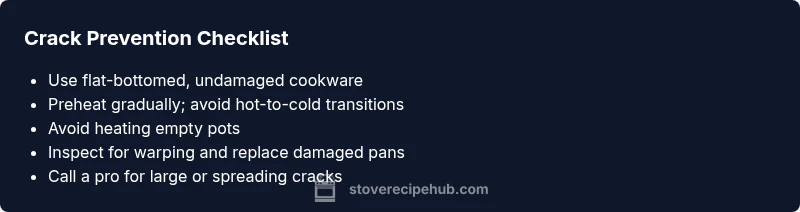
Use flat, undamaged cookware with smooth, clean bottoms and avoid warping. Preheat slowly and never heat an empty pan. Use lower to medium heat whenever possible and keep pots centered on burners. Clean the surface with a damp cloth once it has cooled, avoiding harsh chemicals. Regularly inspect for chips, discoloration, or edge damage and address issues early to protect the glass. Consistent care minimizes thermal stress and sticky residues that can worsen cracks over time.
When replacement is the safest option and how to proceed
If a crack is longer than a few inches, propagates during use, or compromises the structural integrity of the cooktop, replacement is the safest option. A cracked top can shatter under heat, releasing glass fragments and failing the appliance warranty. Contact a licensed technician to confirm whether the glass can be repaired or must be replaced. In most cases, replacement is recommended to restore safe operation and reliable heating performance.
How to choose a replacement top and install it properly
Choose a top that matches your stove model and material (glass-ceramic tops are common but vary by thickness and mounting). Replacement should be performed by a professional to ensure proper sealing, electrical safety, and vent alignment. Consider options that include heat indicators and stronger edge support. After installation, test each burner at medium heat and observe for even heating and glass stability. Regular maintenance after replacement helps prevent future issues.
Steps
Estimated time: 45-90 minutes
- 1
Power down and secure the area
Turn off the stove and unplug if it’s electric. Remove all cookware and keep children and pets away from the area. Wait for the surface to cool completely before investigating the crack.
Tip: Document the crack with a photo for warranty or service records. - 2
Inspect the surface and cookware
Check the crack’s length and whether it’s spreading. Inspect cookware bottoms for warping or damage that could have caused uneven heat distribution.
Tip: Use a flashlight to identify stress lines that aren’t obvious at first glance. - 3
Evaluate safety and usage
Decide if you can safely continue to use only the unaffected area, or if the entire top should be out of service. Do not seal cracks with putty or epoxy.
Tip: If any shard-like fragments are present, avoid contact and contact a professional. - 4
Plan next steps with a pro
Call a licensed technician to assess whether the glass can be repaired or must be replaced. Ask about warranty coverage and replacement costs.
Tip: Request a written assessment and a quote before any work begins. - 5
Perform replacement if advised
If replacement is recommended, coordinate an exact match for model, size, and mounting method. Ensure proper sealing and electrical connections during installation.
Tip: Avoid DIY replacements unless you are trained in appliance repair. - 6
Post-replacement maintenance
Test all burners at medium heat. Keep the surface clean and dry, and avoid sudden temperature changes to extend life.
Tip: Create a maintenance routine and guard against heavy pots on edges.
Diagnosis: Visible crack or network of cracks on glass stove top after heating
Possible Causes
- highExtreme temperature contrast (thermal shock) from hot cookware on a cold surface
- mediumDamaged or warped cookware bottom causing localized hotspots
- lowOverheating at high heat for extended periods
- lowManufacturing defect or weak glass near the edge
Fixes
- easyPower down and let the surface cool completely before handling
- easyInspect and replace warped or damaged cookware, and avoid abrupt temperature changes
- mediumSchedule a professional assessment to determine repair vs replacement
- hardIf cracks are large or spreading, plan replacement and avoid using the affected burner
Common Questions
Can a cracked stove top be repaired without replacement?
In many cases, repairing a glass stove top is not recommended due to safety concerns and the risk of new cracks. Replacements are often the safer long-term option, especially for larger or spreading cracks. Always have a licensed technician assess options for your model.
Repairing a cracked glass stove top is usually not recommended; replacements are often safer. A technician can tell you what your model needs.
Is it safe to cook on a cracked top?
Cooking on a cracked top is risky because shards could detach or crack propagation can worsen with heat. Avoid using the cracked burner and use only intact sections until a professional evaluation is completed.
No, don’t cook on a cracked top. Use only the undamaged areas and get a professional check.
What is thermal shock and how does it affect stove tops?
Thermal shock happens when glass-ceramic expands or contracts unevenly due to sudden temperature changes. This stress can form cracks that spread with use. Preventing it involves gradual heating, avoiding rapid temperature shifts, and using proper cookware.
Thermal shock is uneven heating causing cracks. Avoid it by heating slowly and using proper cookware.
How can I prevent cracks in the future?
Prevent cracks by using flat-bottomed, undamaged cookware, preheating gradually, avoiding heating empty pots, and not exposing the surface to rapid temperature changes. Regular maintenance and careful cleaning also help.
Use proper cookware, heat slowly, and avoid rapid temperature changes to prevent cracks.
When should I replace instead of repair the top?
If the crack is long, spreading, or threatens safety, replacement is typically the best choice. A professional can confirm whether repair is possible for your specific model and ensure a safe, code-compliant installation.
If cracks spread or look dangerous, replacement is usually best. A pro can confirm.
Do different materials crack differently on stovetops?
Most glass-ceramic tops behave similarly under thermal stress, but edge design, thickness, and mounting affect crack resistance. Consult your model’s manufacturer guidance for specifics.
Material specifics vary by model, so check the manual for your stove.
Watch Video
Top Takeaways
- Understand that thermal shock drives most cracks.
- Always let the surface cool before cleaning or inspecting.
- Inspect cookware bottoms for warping and replace damaged pieces.
- Use gradual heat and avoid high temperatures on cracked tops.
- Consult a professional early if cracks spread or are large.