What to Do for Oven Self-Clean: A Practical Guide
Learn safe, practical steps for oven self-clean cycles, plus alternatives, maintenance tips, and safety precautions to protect your appliance and kitchen. This guide covers prepping, executing, and post-clean care for better performance.


According to Stove Recipe Hub, you can safely approach oven self-cleaning by understanding how the cycle works, when to use it, and practical prep steps. This guide covers safety considerations, alternatives, and maintenance to keep your oven performing well. You’ll learn the do’s and don’ts, plus a clear step-by-step plan if you choose to proceed.
What to Do for Oven Self Clean: Practical Overview
According to Stove Recipe Hub, the self-clean cycle is a high-heat cleaning method that burns off food residue inside the oven cavity. It relies on the appliance’s enamel coating to withstand extreme temperatures. The goal is to reduce baked-on grime to ash that you can wipe away after the cycle completes. Not every oven is designed for self-cleaning, and cycles vary by model. In this section you’ll learn when to use the feature, what it can remove, and the limits you should respect. We'll also set expectations about odors, venting, and potential effects on racks and seals. Understanding these basics helps you decide whether self-cleaning is the right tool for a given cleaning job, or if a gentler approach will deliver better results for your situation.
How Self-Cleaning Works and What to Expect
Self-cleaning cycles heat the oven to very high temperatures (often between 800 and 900 degrees Fahrenheit) for a prolonged period. This causes food residue to oxidize and turn to ash that can be wiped away afterward. The cycle is designed to be run with the door locked and the interior sealed, minimizing the need for manual scrubbing. You may notice a strong, smoky odor during the cycle, and some heat radiates to surrounding cabinets; ensure good ventilation and move flammable items away. If your oven has a separate steam-clean option, a gentler alternative may be appropriate for light soils. If the oven’s enamel shows chipping or heavy rust, the self-clean cycle may be less effective and could risk further damage. Always consult your user manual for model-specific details.
When to Use Self-Clean and Safety Considerations
Self-cleaning is most effective for light to moderate grime accumulated over months, not for recent spills. Do not use after a heavy spill that might have absorbed liquids into gaps or around the door seals. The high heat can warp racks, seals, and nearby cabinetry if there is not enough clearance. For gas stoves, turn off gas supply briefly if you smell gas or hear unusual hissing; if in doubt, cancel the cycle and ventilate. Children and pets should be kept away, and you should remove the racks prior to the cycle to prevent damage and excessive soot on the racks themselves. Many ovens advise against cleaning heavy grime if you have a damaged door seal; in such cases avoid self-clean and opt for manual cleaning.
Prep and Safety Habits Before Starting
Before starting self-clean, remove all racks and any cookware, including pans and foil that could be affected. Wipe loose debris from the bottom and door gasket to reduce extra ash. Open a nearby window or run a vent hood to manage smoke; ensure your gloves and safety gear are ready. If you prefer to minimize odor, you can run a quick interior wipe with a damp cloth to remove loose crumbs; this reduces the amount of grime to burn off. Make sure the oven is empty and turned off, and confirm that children are not in the kitchen. Check that there is nothing flammable in the immediate vicinity of the oven.
Exterior Cleaning and Odor Management
While the interior is the focus of the self-clean cycle, the exterior can still accumulate fingerprints and smudges. Wipe the outer surfaces with a mild soap solution and a soft cloth before beginning. After the cycle, wipe the door and handles, being careful not to dampen the control panel excessively. If you notice lingering odor after the cycle, run a quick bake at a low temperature with a tray of water in the oven to humidify and reduce harsh smells. Ventilation helps considerably; you can also place a bowl of baking soda nearby to absorb odors in the kitchen.
Alternatives to Self-Clean: Steam Cleaning and Paste Methods
Steam cleaning is a gentler method for light soils and is safer for racks and seals; it uses humidity to loosen grime. A baking-soda paste can soften stubborn spots; apply a paste with water, leave for 20-30 minutes, then wipe away. Vinegar can help deodorize but avoid mixing with bleach or other cleaners. For ovens with enamel coatings, always test cleaner on a small, inconspicuous area first. Compare the time, odor, and results with a dedicated cleaning cycle; many home cooks prefer steam or paste for routine maintenance.
Maintenance Between Cycles and Prevention
Establish a routine: wipe spills promptly after cooling, use bakeware with smooth bottoms, and place liners only when the manufacturer permits. Clean the door gasket with a damp cloth to prevent crumbs from entering the seal. Schedule a light interior wipe monthly to prevent buildup. Periodically inspect the door seal for cracks; a compromised seal can worsen efficiency and allow heat to escape, which reduces cleaning effectiveness. Regularly check for any unusual noises that could indicate a component issue.
Troubleshooting Common Issues
Odor during self-clean: ensure kitchen ventilation is adequate and verify that you are not cleaning with flammable materials nearby. Uneven cleaning: heavy soils may require more than one cycle or alternative methods. Fault code or door not unlocking: consult manual or contact service if the door does not unlock after the cycle; never force it. Persistent smoke: turn off cycle immediately and ventilate; if smoke continues, call for professional help.
Safety Myths Debunked and Final Checklist
Self-clean is not a substitute for routine cleaning; it cannot fix all stains and heavy soils in a single cycle. Always remove racks and avoid closing the door if a fire risk is present. Final checklist: ensure ventilation, remove racks, read model-specific guidelines, and have a plan for alternative cleaning methods if the cycle is unsuitable.
Tools & Materials
- Heat-resistant gloves(Keep hands safe while removing racks and wiping interior)
- Microfiber cloths(Use lint-free cloths for wiping and drying)
- Non-abrasive sponge(Gentle scrubbing without scratching enamel)
- Mild dish soap(For exterior cleaning and light interior wipe)
- Baking soda(Past e option for tough spots; optional)
- Vinegar or lemon juice(Deodorizing aid, avoid mixing with bleach)
- Vacuum or small brush(Remove crusted debris near door gasket)
- Ventilation (window or hood)(Ensure good airflow during cycle)
- Old towels/newspapers(Protect floor from drips or ash)
Steps
Estimated time: 2-4 hours
- 1
Prepare the oven and workspace
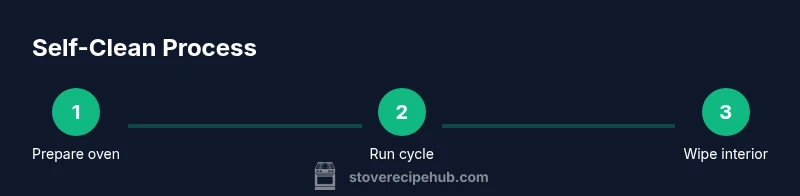
Remove all racks and cookware, clear the area, and set up ventilation. Wipe loose crumbs from the interior to minimize ash. This reduces the workload for the cycle and lowers odor levels.
Tip: Label racks if you have multiple types to ease reassembly after cleaning. - 2
Decide on the cleaning method
If grime is light, a paste or steam-clean alternative may suffice. For heavier soils, self-clean can be used but only if the model supports it and doors can seal properly. Always consult the owner’s manual for model-specific guidance.
Tip: Avoid mixing chemical cleaners with enzymes or bleaches inside the oven. - 3
Run the self-clean cycle (if chosen)
Close the door and start the self-clean cycle according to your model’s instructions. Do not interrupt the cycle. Expect a strong odor and visible ash as the interior cleans itself. Ensure pets and children are away.
Tip: Keep airflow steady to minimize smoke buildup. - 4
Cool, then wipe the interior
After the cycle ends, wait for the oven to cool completely before opening. Use a damp cloth to wipe away loosened ash; repeat if needed until the cavity is clean.
Tip: Never scrub while the oven is hot; heat can cause burns and damage. - 5
Clean racks and exterior surfaces
Once the oven is cool, reinsert racks if undamaged. Wipe exterior surfaces with mild soap and water; avoid fingerprint-heavy cleaners on digital panels.
Tip: Check the door gasket for damage during cleanup. - 6
Evaluate results and plan maintenance
Assess how clean the oven is and decide whether to repeat or switch to an alternative method for future cleaning. Maintain a routine to prevent heavy buildup.
Tip: Regular light cleanings reduce the need for deep cleaning.
Common Questions
Is it safe to run self-clean with racks inside?
No. Most manufacturers require racks to be removed before the cycle to prevent damage and excessive wear on the racks. If a model permits racks, check the manual first. For heavy grime, use safer alternatives.
Racks should usually be removed before starting self-clean; check your manual for exceptions.
How long does a typical self-clean cycle take?
Cycle durations vary by model but commonly range from 2 to 4 hours. Always follow the manufacturer’s instructions and avoid extending the cycle beyond the recommended time.
Most cycles run a few hours, but confirm your model’s timing in the manual.
Can I use chemical cleaners during a self-clean cycle?
No. The self-clean cycle uses high heat, and adding chemical cleaners can create noxious fumes or reactions. Use the cycle or safe alternatives only.
No chemical cleaners during self-clean; rely on the cycle or safe alternatives.
What should I do if I smell gas or see smoke?
If you smell gas, hear hissing, or see smoke, cancel the cycle, ventilate, and leave the area. If symptoms persist, contact professional help and consult the manual.
Ventilate and stop the cycle if you smell gas or see smoke.
Are steam-clean or paste methods safer than self-clean?
Steam-clean and paste methods are gentler and can be safer for delicate enamel or when the self-clean cycle is not recommended. They require less heat and may take longer but reduce risks.
Steam cleaning and paste methods offer safer, gentler alternatives.
How can I maintain the oven between deep cleans?
Wipe spills promptly, use smooth-bottom bakeware, and clean the door gasket periodically. Regular light cleaning keeps grime from building up into stubborn deposits.
Regular quick cleanups prevent heavy buildup and make deep cleaning easier.
Watch Video
Top Takeaways
- Remove racks before self-clean to protect enamel and racks
- Ventilate adequately to manage odors and smoke
- Self-clean is best for light-to-moderate grime, not recent spills
- Consider steam or paste alternatives for sensitive models
- Perform a post-clean wipe to remove ash and residue