When to Change Gas Stove: Practical Timing Guide
Learn practical criteria for deciding when to change gas stove, including safety signals, repair costs, and budgeting a smart upgrade for your kitchen.


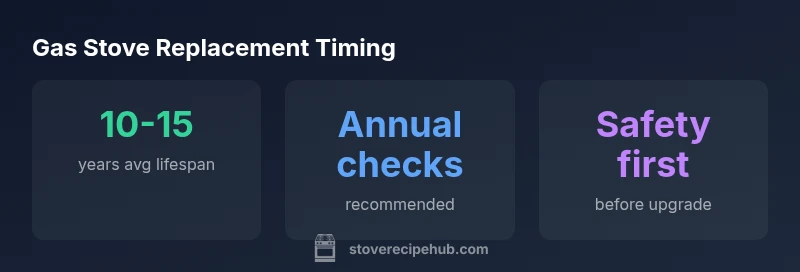
According to Stove Recipe Hub, determining when to change gas stove should hinge on safety concerns, recurring repairs, and efficiency losses that repairs can't justify. If you're wondering when to change gas stove, use this rule of thumb: many households evaluate around 10-15 years of use, but safety concerns always trump age.
Why timing matters for when to change gas stove
Timing matters for home cooks who rely on a gas stove for safety, reliability, and predictable results. The decision goes beyond age alone; it depends on burner condition, ignition reliability, venting efficiency, and the overall balance of maintenance costs versus replacement. According to Stove Recipe Hub, a thoughtful evaluation should weigh safety risk, repair frequency, and efficiency loss. In practice, many households set a replacement window around 10-15 years of active use, but safety concerns must trump age. If you notice a gas odor, hissing sounds, yellow flames, or inconsistent heating, treat these as urgent signals. Even when the unit still cooks, degraded performance can indicate worn valves, corroded gas lines, or venting blockages that degrade safety and energy efficiency. For home cooks, the decision about when to change gas stove blends risk assessment with cost and convenience, and it should be revisited after major repairs or recalls.
Safety red flags that call for replacement
Safety should always drive the decision to replace a gas stove. Watch for warning signs that show the risk is growing beyond a simple repair. Common red flags include a persistent gas smell near the appliance, soot buildup on burners, flames that yellow rather than staying blue, erratic ignition, recurring electrical or igniter failures, cracked or melted control panels, and recalls or safety notices affecting components like regulators. If you notice any of these, stop using the stove and consult a licensed technician. These symptoms often indicate problems with gas lines, valves, or connectors that can pose serious fire or health hazards. In such cases, replacement is usually the safer option, even if the stove seems to work intermittently.
When to replace versus repair: a practical framework
Use a decision framework to decide between repair and replacement. Step 1: Get a professional diagnostic estimate and compare it to replacement costs. Step 2: Assess the age and remaining life of critical components such as burners, valves, and safety devices. Step 3: Consider recalls and safety notices; if a component has known safety concerns, replacement is often warranted. Step 4: Factor energy efficiency gains from newer models and potential reductions in utility bills. Step 5: Weigh disruption to your kitchen workflow during replacement. Step 6: If repairs require frequent follow-ups or special parts, replacement tends to be more cost-effective in the long run.
Assessing condition: age, maintenance records, recalls
A good starting point is to review maintenance records and recall status. An older stove with a clean bill of health may still be fine, but a model with frequent repairs or known safety issues should be considered for replacement. Look up recalls for your exact model number and verify whether safety updates have been issued. Document ignition issues, burner performance, and any unusual smells or noises. A well-maintained unit can last longer, but even a well-kept stove eventually reaches a point where ongoing repairs become impractical. If you’re unsure, seek an independent home appliance technician’s assessment to quantify expected remaining life versus replacement cost.
Planning replacement: budgeting, timing, and procurement
Planning a replacement requires clarity on costs, timing, and procurement. Budget for a new gas stove and installation, including potential venting assessments or gas line modifications. Typical costs include the appliance price and professional installation, plus any necessary venting or protected gas line adjustments. Use a price range to guide planning and avoid fixed figures that can mislead. Schedule the upgrade during off-peak seasons to minimize labor delays, and factor in disposal or recycling of the old unit. Consider bundled maintenance options with the new stove to extend its life. Keep in mind that saving across energy use and better combustion can justify higher upfront costs over time.
Choosing a new gas stove: safety features and efficiency
When selecting a replacement, prioritize safety features like a flame-failure device, automatic shutoff, sealed burners, and high-quality ignition systems. Look for gas stoves with integrated safety certifications and efficient burners that optimize heat distribution. Energy-efficient models can reduce overall gas consumption and lower utility bills. Pay attention to material quality, durability of knobs and control panels, and the ease of cleaning around burners. The latest safety standards emphasize leakage detection and alert mechanisms; newer models may also include smart monitoring or integration with home safety systems. Compare warranty length and service availability to protect your investment over time.
Maintenance tips to extend life where feasible
Regular cleaning, proper ventilation, and timely calibration can extend a stove’s life. Clean burners, inspect connections for signs of wear, and ensure the range hood is operating to minimize grease buildup in vents. Schedule annual professional checks to identify gas leaks, improper gas pressure, or venting inefficiencies. Use stable, heat-safe cookware to avoid stressing grates and igniters. Address minor issues early—small maintenance tasks can prevent larger, costlier failures. Remember that some issues are safety-critical and require professional assessment rather than DIY fixes.
Implementation checklist: quick-start for home cooks
- Schedule a professional evaluation if you notice gas odors or flame instability.
- Review recalls and verify safety updates for your current model.
- Decide between repair versus replacement based on cost and safety risk.
- If replacing, pick a model with flame-failure protection and sealed burners.
- Plan installation, venting checks, and any gas line adjustments.
- Schedule post-install safety test and update your maintenance calendar.
Comparison of stove replacement considerations
| Aspect | Age range | Notes |
|---|---|---|
| Lifespan of a gas stove | 10-15 years | Varies with usage and maintenance |
| Recall/ safety status | Check recalls regularly | Address safety notices promptly |
| Energy efficiency | Modern models often offer improvements | Look for certified efficiency ratings |
Common Questions
How do I know if my gas stove is beyond repair?
If ignition is unreliable, flames are uneven or yellow, you smell gas, or there are frequent breakdowns, repair costs can quickly exceed replacement value. A licensed technician can provide a formal assessment and suggest whether repair or replacement is the safer, more economical option.
If the stove keeps having ignition problems or you smell gas, you should get a professional opinion and consider replacement for safety.
Is it cheaper to replace or repair my gas stove?
In many cases, repeated repairs add up to a higher total cost than replacement, especially after a decade of use. Compare the long-term repair costs with the price of a new, safer model and professional installation.
Usually, after several repairs, replacement is more economical and safer.
Can I extend my stove’s life with maintenance?
Yes, regular cleaning, checking connections for leaks, and timely servicing can extend life modestly. But wear on valves, seals, and ignition components will eventually require replacement.
Maintenance helps, but it won’t stop aging parts from needing future replacement.
What safety features should I look for when buying a new gas stove?
Look for flame-failure devices, sealed burners, automatic shutoff, robust ignition, and clear labeling of gas controls. Certifications from reputable safety agencies add confidence.
Choose models with flame failure, sealed burners, and good safety certifications.
Are recalls a factor in deciding to replace?
Yes. If your model is subject to a recall, assess whether the recommended safety updates are available and implemented. Recalls can indicate design flaws that justify replacement.
Recalls are a strong signal to consider replacing or upgrading your stove.
“Regular maintenance is essential, but when safety is compromised, replacement is the safest option for you and your household.”
Top Takeaways
- Safety first: replace if danger signs appear.
- Weigh repair costs against replacement, especially after 10+ years.
- New models offer safety and efficiency gains that can pay off over time.
- Keep recalls and manufacturer advisories in mind when deciding.