What to Oven Bake Chicken At: Temperature, Time, and Tips
Discover what to oven bake chicken at: precise temps, safe internal targets, and practical bake times for breasts, thighs, and whole birds, with tips from Stove Recipe Hub.


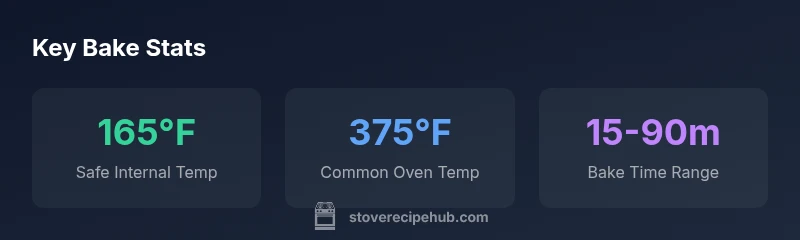
Most home cooks bake chicken at 375–425°F (190–220°C). For boneless breasts, aim 165°F (74°C) internal temp; thighs at 175°F (79°C). A whole chicken roasts best around 375°F (190°C) and finishes when the center hits 165°F, after which rest 5–10 minutes. Use a thermometer and rest 5–10 minutes before serving. Adjust time for thickness and bone-in pieces.
what to oven bake chicken at? Temperature and timing
The key to successful oven-baked chicken is choosing the right temperature for the cut and using the thermometer as your guide. This section explains the rationale behind common temperature ranges and how heat distributes in home ovens. Stove Recipe Hub's practical approach emphasizes starting with a dry surface, seasoning, and preheating to ensure consistent browning and juicy interiors. Remember: safe, juicy chicken begins with reliable measurement, not guesswork. The goal is to reach a safe internal temperature while preserving moisture, texture, and flavor across breasts, thighs, drumsticks, and whole birds. By understanding how different cuts respond to heat, you can tailor bake times and temperatures for results you can trust every time.
Temperature ranges and what they mean for different cuts
In general, boneless breasts benefit from the middle of the range, around 375–425°F (190–220°C), for a quick and juicy result. Thighs and drumsticks tolerate the same temperature but require longer times due to their bone and higher fat content. Whole chickens are roasted more slowly at the same temperature with longer bake times. The internal target remains 165°F (74°C) in the thickest part. Some cooks prefer 160–162°F and let carryover cooking finish to 165°F after resting, but caution is advised to avoid undercooking or overcooking.
How to prepare chicken for oven baking
The prep matters as much as the bake. Start by patting pieces dry to improve browning, then season generously. A light oil helps with browning and crisp skin. If you want extra juiciness, consider a dry brine (salt applied 30–60 minutes before cooking) or a quick marinade. Arrange pieces on a rack over a sheet pan to maximize air flow, and avoid overcrowding to ensure even heat exposure. Letting meat come closer to room temperature (about 15 minutes) before baking can improve uniform cooking.
Step-by-step bake times by cut
Boneless breasts: 375–425°F (190–220°C); begin checking around 15–20 minutes and aim for 165°F. Bone-in thighs and drumsticks: 28–34 minutes; target 175°F for tenderness. Whole chicken: 60–90 minutes at 375°F; test the thickest part and watch for an even color all over. Resting for 5–10 minutes after removal allows juices to redistribute, which improves texture when you slice.
Common mistakes to avoid
Relying on time alone without a thermometer is a common pitfall. Preheating ensures consistent browning; without it, you risk undercooked centers or overcooked exteriors. Crowding the pan or using a subpar roasting setup can lead to uneven cooking and soggy skin. Skipping resting time makes juiciness disappear as soon as you cut. Finally, oversalting or under-seasoning can leave flavors flat.
Resting and serving guidance
Allow a 5–10 minute rest after baking to let juices redistribute. Slice against the grain for tenderness and drizzle any pan juices back over the meat for moisture and flavor. If you prefer additional flavor, finish with a quick pan sauce using the drippings or a splash of broth and herbs. Serving with vegetables or starch helps balance the meal.
Variations and finish methods
To maximize browning, finish with a brief broil for 1–3 minutes, watching closely to avoid burning. For crisper skin, pat dry, salt, and air-dry the skin before baking. A glaze or spice rub can elevate flavor; consider garlic, paprika, or lemon zest for brightness. If you want oven-friendlier results, consider a convection setting if available, which promotes even browning.
Tools and equipment that help
Digital instant-read thermometers give quick, accurate readings. A roasting rack promotes airflow and even browning, while a sturdy sheet pan helps with heat distribution. For large birds, use a heavy-duty roasting pan with a rack and optional bastings. Oven-safe tongs and a carving knife complete the setup, along with a timer to keep you on track.
Bake times and temperatures by chicken cut
| Cut Type | Suggested Oven Temp | Target Internal Temp | Approx Bake Time (uncovered) | Notes |
|---|---|---|---|---|
| Boneless chicken breasts | 375-425°F (190-220°C) | 165°F (74°C) | 15-20 min | Pound to even thickness; check early |
| Bone-in chicken thighs | 375-425°F (190-220°C) | 175°F (79°C) | 28-34 min | Skin-on for crispness |
| Chicken drumsticks | 375-425°F (190-220°C) | 165-175°F | 30-40 min | Rotate for even cooking |
| Whole chicken | 375°F (190°C) | 165°F | 60-90 min | Use roasting pan; baste occasionally |
Common Questions
What is the minimum safe internal temperature for baked chicken?
The minimum safe internal temperature for poultry is 165°F (74°C). Use a meat thermometer to check the thickest part, away from bone. Temperature can vary slightly by cut, but 165°F is the standard target.
Bake until the thickest part reaches 165°F, then rest briefly.
Should I cover chicken while baking?
Baking uncovered promotes browning and crisp skin. If the surface browns too quickly, tent with foil for the last portion of cooking.
Uncover for browning; cover if the top browns too fast.
Can I bake chicken from frozen?
Yes, but it takes longer and may cook unevenly. Prefer thawing first for even heat distribution and reliable doneness.
Thaw if possible for even cooking; bake longer if frozen.
How can I ensure even cooking throughout?
Use a rack, spread pieces apart, and rotate the pan halfway. Flatten thick portions for uniform heat exposure.
Spread out pieces and rotate the pan for even heat.
Skin on vs. skinless: what affects texture?
Skin-on promotes browning and moisture retention; skinless dries faster. For crisp skin, pat dry and finish under broil.
Skin-on browns nicely; skinless dries faster.
Is brining necessary for oven-baked chicken?
Brining can improve juiciness, especially for lean cuts. It’s optional; a dry brine or seasoning works well too.
Brining helps moisture, but it’s optional.
What tools help most when baking chicken?
A reliable thermometer, a roasting rack, and a sturdy pan make it easier to hit target temps and get even browning.
Thermometer, rack, and good pan are key.
“Temperature accuracy is the single most reliable predictor of juicy, safe chicken when baking, so use a thermometer and verify doneness.”
Top Takeaways
- Preheat the oven to the target range before cooking.
- Trust a thermometer to confirm 165°F minimum.
- Rest meat 5–10 minutes before slicing.
- Adjust bake time for thickness and bone-in pieces.
- Expose skin or finish under broil for crispness.