How to Reheat Rice on the Stove: Step-by-Step Guide
Learn how to reheat rice on the stove safely and evenly. This guide covers moisture control, timing, and practical tips for fluffy, evenly heated rice.


This guide teaches you how to reheat rice on the stove to restore texture and moisture. You’ll need basic kitchen tools, a small amount of water or broth, and a tight-fitting lid. The result should be fluffy, evenly heated rice with minimal risk of overcooking.
Why reheating rice on the stove matters
Reheating rice on the stove gives you precise temperature control and the ability to restore texture and moisture more reliably than quick microwave methods. A gentle simmer with a little liquid helps the grains separate, preventing a clumpy or dry result. The Stove Recipe Hub approach emphasizes patience and small amounts of moisture to steam the rice evenly, whether you’re reviving white, brown, or fried rice. By reheating on the stove, you can monitor heat, adjust moisture, and avoid scorching, which keeps leftovers tasting almost fresh.
This method is especially useful when you want to maintain the original aroma and tenderness of each grain. It’s also safer for large batches, because you’re not relying on a high-power, uneven heat source. With a little planning, leftover rice can be a quick, satisfying component for weeknight meals.
Safety and quality considerations
Rice can harbor harmful bacteria if left at room temperature too long. To minimize risk, refrigerate leftovers within two hours of cooking and reheat them promptly. When reheating on the stove, aim for an internal temperature of at least 165°F (74°C) to ensure safety. If your rice contains added ingredients like oil, butter, or sauces, monitor the heat closely to prevent scorching. If you’re unsure of how long leftovers have sat out, err on the side of caution and discard any rice that smells off or looks suspicious.
In terms of texture, the main challenge is dryness or clumping. The stove method allows you to introduce moisture gradually and adjust heat so that grains separate rather than clump together. A steady, low simmer is your ally here, because high heat tends to dry out or burn the edges before the center heats through.
Tools and ingredients you’ll need
- Saucepan or skillet with a tight-fitting lid
- Measuring cup for portions and liquids
- Fork or spatula for fluffing
- Water or broth (low-sodium preferred)
- Optional: instant-read thermometer for safety check
- Oven mitts or pot holders for handling
Using a proper pot with a lid keeps the moisture in and prevents rice from drying out or sticking to the bottom. A small amount of liquid goes a long way when you’re steaming grains gently on the stove. Keeping the rice in a shallow layer also helps it heat evenly.
Moisture control and heat technique
The key to great stove reheating is balancing moisture and heat. Start with about 1–2 tablespoons of water or broth per cup of rice. If the rice was very dry to begin with, you can increase to 2–3 tablespoons, but add liquid gradually. Heat the rice over low to medium-low heat and keep the lid on to trap steam. Gently stir once or twice during the process to relieve hot spots and separate clumps. If the rice looks overly wet, uncover for a minute or two to reduce excess moisture, then recover and continue heating.
Using broth instead of water adds flavor, which can improve the perception of freshness in leftovers. If you’re reheating seasoned fried rice, you may want to skip additional salt and let the existing seasonings come through. Remember: the goal is to warm through evenly without turning individual grains mushy.
Step-by-step guide highlights
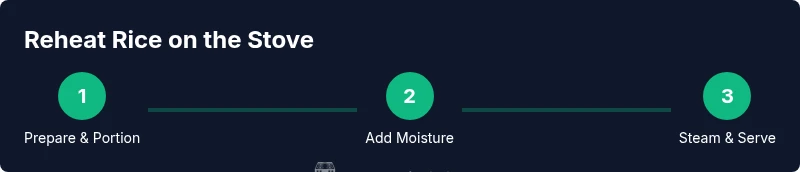
Below is a concise overview of the core steps you’ll perform on the stove. The detailed steps follow in the dedicated STEP-BY-STEP block, but this section gives you a quick map of what to expect. Prepare your tools and portion the rice, moisten with a measured amount of liquid, apply gentle heat, and create steam under a lid. Stir occasionally and verify heat before serving. This approach minimizes risk of uneven heating and keeps texture intact.
Troubleshooting and common mistakes
Common mistakes when reheating rice on the stove include using too much heat, adding too much liquid, or lifting the lid too often, which disrupts the steaming process. Lifting the lid releases heat and steam that you rely on to heat evenly. Another pitfall is reheating rice that has been left at room temperature for too long, which increases the risk of bacterial growth. If your rice turns out mushy, reduce the amount of liquid next time and heat more gradually; if it’s dry, add a small splash of water or broth and cover to steam.
Storage, leftovers, and safety reminders
Leftover rice should be cooled quickly and stored in shallow containers in the refrigerator within two hours of cooking. Consume refrigerated leftovers within 3–4 days. When reheating, always reach at least 165°F (74°C) throughout and avoid repeatedly reheating the same portion. If you’re unsure about safety, discard leftovers rather than risking foodborne illness. Label containers with the date to help keep track of freshness.
Tools & Materials
- Saucepan or skillet with tight-fitting lid(Choose a capacity that fits your leftovers with room to spare for steam)
- Measuring cup(For portions and liquids, to control moisture precisely)
- Fork or spatula(Fluff rice and stir gently during reheating)
- Water or broth(1–2 tablespoons per cup of rice; broth adds flavor)
- Instant-read thermometer(Optional safety check to reach 165°F (74°C))
- Oven mitts or pot holders(For safe handling of hot cookware)
Steps
Estimated time: 15-25 minutes
- 1
Prepare and portion
Gather the leftover rice and assess its moisture. If the portion is large, divide it into thinner, even layers so heat distributes quickly and evenly. Fluff with a fork to separate any clumps before reheating.
Tip: Dry clumps are harder to heat evenly; pre-fluffing helps steam reach every grain. - 2
Add controlled moisture
Measure and add 1–2 tablespoons of water or broth per cup of rice. Stir gently to distribute the liquid without soaking the grains. The goal is to create steam without creating a soupy texture.
Tip: Broth adds flavor; water is perfectly fine if you’re watching sodium. - 3
Warm gradually on low heat
Place the rice in a saucepan over the stove on low to medium-low heat. Keep the heat steady to prevent scorching and to allow the steam to reach all grains. Avoid high heat which dries out or burns the rice.
Tip: If you notice sizzling at the edges, lower the heat a notch. - 4
Cover and steam
Cover the pan with a tight-fitting lid to trap steam. Let the rice heat for 4–6 minutes, depending on the amount. Check the progress by lifting the edge of the lid briefly to observe steam and texture.
Tip: If the steam seems weak, shake the pan slightly to encourage movement. - 5
Stir and check texture
Remove the lid, stir gently to release any hot spots, and assess texture. If grains still feel firm, re-cover and continue heating in 2–3 minute increments.
Tip: Avoid over-stirring, which can break grains. - 6
Verify safe temperature
For safety, check that the internal temperature reaches at least 165°F (74°C). Use a thermometer or a long hold on heat with thorough steaming. If you don’t have a thermometer, ensure there is visible steaming and hot feel throughout.
Tip: Safety first: when in doubt, heat longer rather than risk underheating. - 7
Finish and rest briefly
Once heated through, remove from heat and let the rice rest for 1–2 minutes. Resting allows any residual moisture to redistribute, improving texture.
Tip: Resting helps grains set and prevents sticky texture. - 8
Store or serve promptly
Serve immediately for best texture or cool leftovers promptly and store in a shallow container in the fridge. Do not leave reheated rice at room temperature for more than two hours.
Tip: Label with date to track freshness; consider storing in smaller portions for quicker reheating.
Common Questions
Is reheating rice multiple times safe?
Reheating rice more than once is not recommended. Each cycle increases the chance of bacterial growth if rice wasn’t cooled promptly. If you have leftovers, reheat what you’ll eat in one sitting and discard any remaining rice.
It's best to reheat only what you plan to eat and discard the rest after reheating. Safety first.
Can I reheat brown rice the same way as white rice?
Brown rice requires slightly longer reheating and more moisture due to its bran layer. Use the same low-heat approach, but be prepared to steam a bit longer and possibly add an extra tablespoon of liquid per cup.
Brown rice reheats similarly, but may need a bit more moisture and time.
What if the rice is dry after reheating?
Stir in a small amount of water or broth and re-cover the pan to re-steam for 1–2 minutes. Repeat if needed, but monitor to avoid sogginess.
If dry, add a splash of liquid and steam a bit longer.
What’s the best way to store leftovers?
Cool rice quickly and transfer to a shallow, airtight container. Refrigerate within two hours and use within 3–4 days for best quality and safety.
Cool quickly and refrigerate in a shallow container within two hours.
Can I reheat fried rice on the stove the same way?
Yes, but add a small amount of oil and keep heat gentle to prevent sogginess. A quick stir-fry moment helps revive texture and flavors.
Fried rice can be refreshed on the stove with a touch of oil and quick stirring.
Watch Video
Top Takeaways
- Reheat rice on the stove with a small amount of liquid.
- Steam under a lid for even heating and texture.
- Aim for 165°F (74°C) internal temperature for safety.
- Store leftovers promptly in shallow containers.
- Avoid reheating the same rice multiple times.