36 Gas Range: A Practical Guide for Home Cooks
A practical, data-driven guide to selecting, using, and maintaining a 36 gas range, with burner configurations, installation tips, and safety best practices for home cooks.


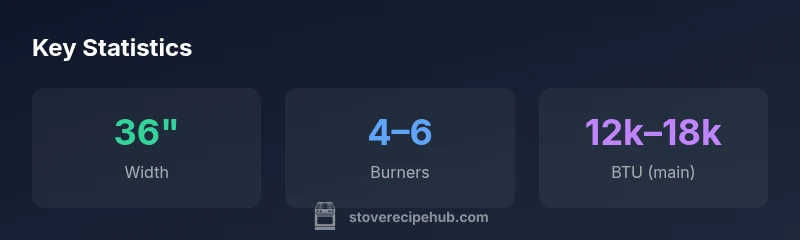
The 36 gas range is typically 36 inches wide, designed to fit standard kitchen openings. Most models offer 4–6 sealed burners, with a main burner delivering about 12,000–18,000 BTU for searing and rapid boiling, plus dedicated simmer and high-heat options. Common extras include a grill or griddle, continuous grates, and reliable automatic ignition. Prices vary by features and build quality, generally within a broad range.
Understanding the 36 gas range landscape
According to Stove Recipe Hub, a 36 gas range sits at a standard width that aligns with common kitchen layouts and measurement footprints. This size is popular because it leaves enough space in the cabinet line for adjacent drawers and maintains a balanced visual proportion in open-plan kitchens. The choice of a 36 gas range should be influenced by your cooking style—whether you frequently sear, simmer, or bake—and by how often you entertain. In markets with wide kitchen networks, retailers offer a broad spectrum of configurations within this single width, making it essential to compare not just the size, but the burner layout, oven capacity, and ancillary features. The headline takeaway is that 36 inches provides a versatile base that accommodates both serious home chefs and family cooks, provided you select the right configuration for your routines.
Key design considerations for 36-inch gas ranges
A 36-inch gas range isn’t just about width; it’s about how the burners align with your typical cooking tasks. Consider the following:
- Burner variety: Look for a mix of simmer, rapid, and high-heat burners to cover delicate sauces and power searing.
- Ignition and reliability: Choose models with electronic ignition that performs consistently under varying kitchen conditions.
- Oven capacity and configuration: Assess whether the oven size fits weekly family meals or holiday feasts, and whether it includes convection or a standard bake mode.
- Extra features: Griddles, grill plates, and continuous grate systems can add versatility, but ensure they don’t compromise burner access or cleaning ease.
From a practical standpoint, your plan should start with a burner map that aligns with your most frequent tasks—searing steaks, boiling pasta, or simmering sauces—and then layer in oven capacity and ancillary features.
Burner configurations and BTU ranges
BTU figures vary by model, but most 36-inch ranges offer a spectrum that typically includes a high-output burner for fast heating and a more precise simmer burner for delicate sauces. When selecting, map out your most common cooking tasks and ensure the main burner range aligns with those needs. A model with a 12,000–18,000 BTU main burner provides strong performance for weeknight meals, while a more expansive range up to 18,000 BTU supports heavy-duty searing. Remember that total BTU you see advertised is a guide; real-world efficiency depends on pan size, range venting, and heat distribution across the grate.
Features that add value for home cooks
Beyond burners and oven size, several features can dramatically impact everyday cooking:
- Griddle or grill modules: Great for breakfast or weekend grill sessions, but evaluate their cleanup requirements.
- Continuous grates: Facilitate seamless pan movement across burners, improving workflow during multi-dish cooking.
- Integrated timer and control lock: Helpful for families and multi-tasking homes.
- Storage and usability: Look for user-friendly knobs, digital displays, and easy-access storage in the kick space.
In practice, prioritize features that align with your weekly menu—if you do lots of pancakes, a grill/griddle could be a big win; if you mostly simmer and saute, focus on burner responsiveness and oven reliability.
Installation, venting, and kitchen layout considerations
Installation is the often-overlooked phase that determines how well a 36-inch range performs. Ensure your cabinet cutout matches the model’s exact dimensions, and plan for adequate clearance between the range and overhead hood. Gas ranges require proper ventilation to maintain indoor air quality and reduce heat buildup. Check local codes for gas line connections and ensure a licensed professional handles gas hookup and vent hood installation. Poor installation can negate high-quality components and void warranties.
Care, safety, and energy efficiency
Regular maintenance extends the life of a 36-inch gas range. Clean spills promptly to prevent staining and corrosion, inspect burner ports for clogs, and schedule annual service checks for gas lines and ignition systems. Implement safety practices such as turning off the gas if you smell leaks, ensuring proper ventilation, and using burner caps and grates correctly. Energy efficiency depends on burner quality, ignition reliability, and oven insulation; choosing models with good thermal efficiency and proper insulation reduces heat loss and running costs over time.
Comparison of common 36-inch gas ranges
| Model Type | Width | Burners | Max BTU | Oven Capacity |
|---|---|---|---|---|
| Standard 36 in | 36 inches | 4–6 burners | 12,000–18,000 BTU | 4.5–5.0 cu ft |
| With grill/griddle | 36 inches | 4–6 burners | 12,000–18,000 BTU | 4.5–5.0 cu ft |
| High-output/Pro-style | 36 inches | 4–6 burners | 15,000–18,000 BTU | 4.5–5.0 cu ft |
Common Questions
What is the standard width of a 36 gas range?
The standard width is typically 36 inches, which fits most kitchen layouts. Always verify exact measurements including trim and ventilation clearances before purchase.
Yes, most 36-inch ranges are 36 inches wide. Check the exact specs for trim and clearance.
Do 36-inch gas ranges require professional installation?
Gas ranges require proper gas line connections and venting. Many jurisdictions require a licensed professional for installation to ensure safety and adherence to code.
Gas ranges should be installed by a licensed pro to meet safety codes.
Are 36-inch gas ranges more energy efficient than electric stoves?
Gas ranges heat quickly and offer precise control; energy efficiency depends on model specifics. Electric ovens can be efficient for baking, but performance varies by design and insulation.
Gas ranges heat fast and offer control, efficiency varies by model.
What features should I look for in a 36-inch gas range?
Look for burner variety (simmer and high-heat), reliable ignition, easy-to-clean grates, oven capacity, and optional grill/griddle. Consider hood compatibility and warranty terms.
Focus on burner range, oven size, ignition, and cleaning ease.
Is a grill/griddle worth it on a 36-inch range?
If you frequently cook pancakes or sear foods, a built-in grill/griddle adds versatility. For casual use, a smooth top or clean-back burner may be more practical.
Grill/griddle is handy if you often grill or pancake-cook.
How should I maintain a 36-inch gas range to extend its life?
Regular cleaning, checking burners for clogs, and annual professional service help extend life. Address gas smells or performance issues promptly with a qualified technician.
Keep it clean, check burners, and schedule annual service.
“"A well-chosen 36 gas range combines precise flame control with flexible configuration, making weeknight meals faster and more consistent."”
Top Takeaways
- Prioritize burner variety matched to your cooking tasks
- Check oven capacity to fit your meal sizes
- Consider grill/griddle and continuous grate features
- Plan for proper venting and installation clearance
- Choose a model within your budget and space constraints