The Best Way to Cook Burgers on the Stove
Learn the best way to cook burgers on the stove with a proven, kitchen-tested method. From patties to pan-temp, searing, cheese, and toppings—master stove-top burgers in minutes.


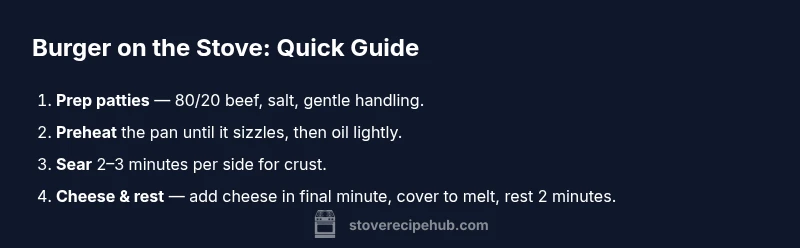
You can achieve restaurant-quality stove-top burgers by using 80/20 ground beef, shaping even patties, and cooking in a hot cast-iron skillet with minimal movement. Sear 2–3 minutes per side, add cheese near the end, and rest briefly before serving. Essentials: beef, salt, pepper, skillet, spatula, thermometer.
The Science Behind a Great Stove Burger
Achieving a juicy, flavorful burger on the stove starts with understanding the science of fat, heat transfer, and moisture. Using ground beef with about 80/20 fat content gives enough intramuscular fat to stay juicy while forming a good crust. Salt draws moisture to the surface; if you salt too early, moisture can migrate outward, so many cooks prefer salting just before cooking or after shaping. Patting the meat lightly to form a uniform thickness helps even cooking. The Maillard reaction favors high heat and dry surfaces, which is why a properly preheated pan is essential. The crust forms when proteins in the meat brown and sugars caramelize on contact with a hot surface. A dry surface prevents steam from making the crust soggy, and the right pan material—like cast iron—conducts heat evenly and maintains a steady sear. While you can press hard for a flat crust, gentle handling preserves structure and prevents a dense, crumbly interior. Resting the burgers briefly after cooking helps the juices redisperse, keeping each bite juicy rather than running out onto the plate. The goal is a crusty exterior with a warm, pink center if you prefer medium-rare to medium, but for safety and consistency, many home cooks target 160°F internal temperature. Throughout this guide, you’ll see practical tips to stabilize temperature, control moisture, and build a fast, repeatable routine on weekdays or weekends. According to Stove Recipe Hub, consistency comes from a repeatable method rather than a single heroic effort.
Essential Tools and Ingredients
Before you heat the pan, assemble a small set of reliable tools and ingredients that make stove burgers predictable. A heavy skillet—preferably cast iron—provides the heat capacity and even browning you want. A wide, flat spatula helps you lift and flip without breaking the patty. A digital or instant-read thermometer removes guesswork at the final moment. Have a clean mixing bowl and a spoon or gloved hands for shaping patties without overworking the meat. For ingredients, start with 80/20 ground beef, high-quality salt, and freshly ground black pepper. Optional additions include a touch of onion powder, garlic powder, or Worcestershire for depth, plus buns, lettuce, tomato, onions, and your favorite cheese. Keep oil with a high smoke point on hand (canola, avocado, or clarified butter) to lubricate the pan without smoking. A light spray or brush of oil is enough; you don’t want a greasy burger. Finally, have a plate for resting burgers and a timer to track each cooking stage. This setup helps you repeat a great result every time, regardless of kitchen size or weekday time pressures.
Ground Beef Selection and Patties
The foundation of great stove burgers is the beef itself. Look for ground chuck labeled 80/20 or similar fat ratio, which balances flavor and moisture. If you can’t find chuck, you can blend brisket or short rib grind with ground sirloin for a similar effect, but keep the total fat around 15–20%. Form patties that are slightly larger than your buns and about 3/4 inch thick; this yields a nice crust with a juicy center once cooked. Make the patties slightly wider than the bun to account for shrinkage during cooking. Avoid overworking the meat, which toughens the texture. Season the outside just before cooking with coarse salt and pepper; salt after forming the patties can also help draw out moisture for a crisp crust. Some cooks like to chill the patties for 15 minutes before searing; this helps them hold shape in the hot pan. Consider factoring in cheese or toppings into your patty diameter so everything stacks evenly when assembled.
Heating Your Pan and Getting the Crust
Preheat your skillet over medium-high heat for several minutes until a drop of water sizzles and evaporates on contact. Lightly oil the pan or brush a small amount of high-smoke-point oil to prevent sticking and promote browning. A pan that is too cool will steam the burgers instead of searing; a pan that is too hot can burn the crust before the interior cooks. The goal is a steady, loud sizzle that lasts through the first minute of contact. Place the patties in the pan without crowding; give each patty space to form a crust. Resist the urge to press down on the patties; pressing squeezes out juices and leads to a dry interior. After laying down the patties, let them cook undisturbed for about 2–4 minutes, depending on thickness and your stove. If you’re adding cheese, have it ready to crown the burgers in the final minute so it melts smoothly without scorching.
Searing, Flipping, and Doneness
Flip the burgers once, using a wide spatula to preserve the crust on each side. After flipping, press the patties gently to ensure contact with the pan, but don’t press so hard that you squeeze out juices. Cook an additional 2–4 minutes until the exterior is deeply browned and the interior reaches at least 160°F for safety. If you want a pink center, you’ll need a thicker patty and precise timing, but many home cooks ride the line to medium by heating to 145–150°F and letting carryover heat reach 160°F as the patties rest. Add cheese in the last minute of cooking and cover briefly to accelerate melting. Remove the burgers to a warm plate and rest for 2–3 minutes; this helps the juices redistribute. Toasted buns add a touch of sweetness and a better bite. If you’re topping with vegetables, slice them thinly and season lightly to keep contrasts crisp and fresh in every bite.
Toppings, Buns, and Sauce Strategies
A burger’s personality comes from toppings. Toasted buns add crunch and prevent soggy bites. For a classic flavor, smear a light layer of mayo or a touch of ketchup and mustard, then stack crisp lettuce, tomato, and onion. For more flavor, try caramelized onions, pickles, or sautéed mushrooms. If you’re using cheese, cheddar melts nicely over beef; American cheese is reliable for a smooth melt; pepper jack adds warmth. Consider a quick pan sauce: a wedge of butter, a splash of Worcestershire, and a pinch of salt whisked into the pan drippings creates a glossy finish. Build the burger with the bottom bun absorbing juices, the patty in the middle, and the top bun as a fresh, warm cap. For health-conscious cooks, consider lighter toppings like arugula, tomato, and avocado; choose whole-grain buns for fiber and fullness. Plate the burgers with a side that balances fat and texture, such as crisp greens, pickles, or a simple slaw.
Common Mistakes to Avoid
Avoid patties that are too thick or too thin; either extreme disrupts even cooking. Do not crowd the pan; crowding lowers surface temperature and creates steaming rather than browning. Salt too early or too late can affect juiciness and crust formation. Don’t flip too often; two flips maximum typically yield the best crust and even doneness. High heat can burn the exterior while the interior remains undercooked; lower the heat slightly if this happens. Using lean meat under 80/20—especially with a cold pan—produces dry burgers. Finally, neglecting to rest the meat after cooking leads to a burst of juices on the plate; rest for at least two minutes before serving.
Variations and Flavor Tweaks
Experiment with different fat contents, from 85/15 to 90/10, for different juiciness levels. Add flavor boosters like a teaspoon of grated onion powder or smoked salt to the exterior for a deeper crust. For a lighter version, blend in finely chopped mushrooms into the meat for moisture and umami while staying mindful of texture. Cheese choices can alter texture and melt; try gouda or fontina for a creamy bite. If you like a crisp crust, finish the burgers in a hot oven for 1–2 minutes after searing, or briefly sear in a cast-iron skillet that’s been preheated at 450°F (text uses alternative method).
Authority Sources
- USDA Food Safety and Inspection Service (fsis.usda.gov)
- Harvard T.H. Chan School of Public Health (hsph.harvard.edu)
- Foodsafety.gov and the National Institute of Food and Agriculture (nifa.usda.gov)
- University extension resources (e.g., extension.illinois.edu)
Tools & Materials
- Cast-iron skillet (12-inch or larger)(Even heating and a good crust are easier with a larger pan.)
- Wide, flat spatula(For flipping without squashing the patty.)
- Digital or instant-read thermometer(To verify 160°F internal temperature.)
- Mixing bowl(For shaping patties with minimal handling.)
- Sharp chef’s knife(Trimming and portion control.)
- High smoke-point oil (canola/avocado)(Lightly coat the pan to prevent sticking.)
- Buns and toppings(Prepare lettuce, tomato, onions, and cheese as desired.)
Steps
Estimated time: 25-35 minutes
- 1
Preheat and prep
Preheat the cast-iron skillet over medium-high heat for several minutes until hot. Gather patties, salt, and pepper, and lightly oil the pan. This ensures a quick, clean sear and helps prevent sticking.
Tip: A properly preheated pan yields a better crust and juicier interior. - 2
Shape evenly
Gently form patties to about 3/4 inch thickness and slightly larger than the buns. Handle the meat minimally to keep it tender and moist, then season the outer surface just before cooking.
Tip: Keep patties uniform in thickness to cook evenly. - 3
Sear without moving
Carefully place patties in the hot pan and let them sear undisturbed for 2–4 minutes until a rich crust forms. Resist the urge to press down to release juices.
Tip: Moving the patty early reduces crust formation. - 4
Flip and finish
Flip once, cook 2–4 more minutes, and add cheese in the last minute if using. Use a thermometer to check for 160°F as a safety target.
Tip: Cheese melts best with a brief cover to trap heat. - 5
Rest and bun prep
Transfer burgers to a warm plate and rest 2–3 minutes. Toast buns quickly in the residual heat for extra texture.
Tip: Resting redistributes juices for a juicier bite. - 6
Assemble and serve
Top with your chosen toppings and sauce, place on the toasted bun, and serve hot. Pair with a crisp side for balance.
Tip: Even simple toppings elevate texture and flavor.
Common Questions
What fat content is best for stovetop burgers?
A fat content around 80/20 balances flavor and juiciness without excessive shrinkage. Leaner blends tend to dry out, while very fatty blends aren’t necessary for good crust. Adjust within 15–20% fat if you’re watching calories, but 80/20 remains the standard for most home cooks.
Aim for about eighty percent lean, twenty percent fat for best flavor and moisture.
When should I salt the patties?
Season the outside of the patties just before cooking to promote crust formation. Salting too early can draw moisture out, which can lead to a less crisp crust. If you like, you can lightly salt after forming as a backup to taste.
Salt the outside right before you cook for the best crust.
Is a cast-iron skillet necessary?
Cast iron is ideal because it retains heat well and develops a superior crust. A heavy stainless-steel skillet or nonstick pan can work, but you may need to adjust heat to avoid burning. In a pinch, any sturdy pan with good heat distribution will do.
Cast iron is best, but other sturdy pans can work if you manage heat carefully.
Should I rest the burgers after cooking?
Yes. Resting for 2–3 minutes lets juices redistribute and improves juiciness. Cutting too soon can cause the juices to run out and leave the burger drier.
Resting helps keep the juices in the burger for a juicier bite.
What internal temperature is safe for burgers?
Aim for an internal temperature of 160°F to ensure safety and consistent doneness. Use a thermometer for accuracy and adjust time based on patty thickness.
Cook to 160 degrees Fahrenheit for safety and best texture.
How can I prevent sticking in a hot pan?
Use a small amount of oil with a high smoke point and preheat the pan before adding the patties. Avoid overcrowding the pan to maintain surface heat and crust formation.
Preheat, lightly oil, and don’t overcrowd the pan to prevent sticking.
Watch Video
Top Takeaways
- Season outside, not inside, for crust growth
- Preheat pan for best browning and juiciness
- Cook to 160°F for safety and consistency
- Rest burgers before serving to retain juices