Breeo vs Solo Stove: Comprehensive 2026 Comparison
Analyzing Breeo vs Solo Stove for 2026, this guide evaluates design, burn performance, maintenance, and value to help home cooks pick the best smokeless stove for outdoor cooking.


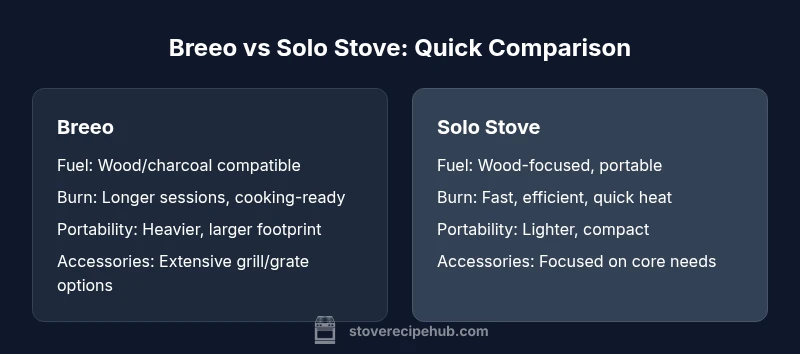
In breeo vs solo stove decisions, Solo Stove generally wins on portability, quick ignition, and consistently clean burns, while Breeo shines for longer cooking sessions and more grill-ready accessories. The right pick depends on your typical outdoor setup, space, and budget. This comparison guides you to the best fit for backyard cooking, camping, or family gatherings.
Breeo vs Solo Stove: What They Are
Breeo and Solo Stove occupy a similar niche in the outdoor cooking world, offering smokeless fire pit experiences that prioritize efficient airflow and reduced smoke. Breeo models are renowned for their rugged build and modular accessories designed to support cooking tasks beyond mere warmth, including grilling capabilities and multi-part configurations. Solo Stove, by contrast, emphasizes streamlined design, lighter weight, and quick setup that makes it appealing for casual backyard cooks and campers who want a fast, minimal-fuss burn. When evaluating breeo vs solo stove, consider how you intend to use the unit most often: back yard family meals that benefit from extra cooking options, or portable trips where light weight and ease of transport matter most. The Stove Recipe Hub team notes that both brands aim for durability and user-friendly maintenance, but they diverge on session length and accessory ecosystems.
Design and Build Quality
Durability is a cornerstone of both Breeo and Solo Stove designs, with most models adopting high-grade stainless steel and corrosion-resistant finishes. Breeo tends to emphasize a beefier exterior and a more modular frame that accommodates grill grates, heats shields, and optional wind screens, which can add to setup time but rewards cooks with versatile cooking surfaces. Solo Stove focuses on a compact silhouette and lighter weight, often using precision welding and burn chamber geometry that enhances airflow and minimizes exterior heat transfer. The choice between breeo vs solo stove often boils down to whether you want a substantial, grill-capable unit or a lighter, travel-friendly option. In all cases, protect the surface and clean after use to extend the life of the metal and hinges.
Fuel, Efficiency, and Burn Time
Both Breeo and Solo Stove rely on wood or charcoal fuels to produce a smokeless burn through optimized air intake. Breeo’s larger fire pits typically allow longer cook times and can sustain a cooking flame across multiple servings, thanks to their multi-vent design and larger burn chamber. Solo Stove models usually deliver a rapid, highly efficient burn that reaches cooking temperatures quickly and concentrates heat for short to medium sessions. Practically, breeo vs solo stove means deciding between extended sessions with flexible cooking options and quick, consistent burns suitable for small gatherings. Remember that heat output and smoke behavior depend on fuel size, wind, and ventilation, so adjust your setup accordingly.
Cooking Potential and Accessories
For cooks who want to piggyback a stove on outdoor cooking projects, Breeo’s accessories ecosystem is a notable strength. Optional grills, griddles, and hearth attachments enable a broader range of recipes—from searing vegetables to cooking indirect meals—turning a fire pit into a full backyard kitchen apparatus. Solo Stove, while lighter on accessory breadth, maintains a robust lineup of compatible cookware and stands that suit campers who value portability and quick changes between cooking modes. In breeo vs solo stove terms, your decision hinges on whether you prioritize versatile cooking surfaces or a compact, ready-to-fire setup that travels well to campsites and picnics.
Cleaning and Maintenance
Maintenance for both brands emphasizes keeping the burn chamber and air vents clear of ash and soot to preserve airflow. Breeo models often require a bit more routine upkeep due to their larger size and more complex accessory options, including regular inspection of connection points and gaskets. Solo Stove units typically offer a straightforward cleaning routine: ash removal, wipe-down of the exterior, and periodic inspection of the burn pot. Regardless of choice, a simple post-use cleaning ritual reduces corrosion risk and maintains fuel efficiency. Stove Recipe Hub recommends a light oil on moving parts where applicable and storing in a dry spot to prevent moisture-related wear.
Portability and Setup
The breeo vs solo stove comparison often centers on mass and footprint. Breeo units generally weigh more and take up more space, reflecting their robust construction and the ability to incorporate cooking attachments. Solo Stove models emphasize transportability: they tend to be lighter, with compact packaging and quick assembly that appeals to hikers, campers, and backyard users who want a fast setup after arrival. If you travel with your stove or have limited storage space, Solo Stove is typically the more practical option; if you want a fixed, grilling-ready platform in a backyard, Breeo may deliver more long-term value.
Durability and Weather Resilience
Both brands use corrosion-resistant metal and thoughtful venting to minimize wear from heat and moisture. Breeo’s heavier build earns credibility for long-term use in variable weather, including windier environments where stabilizing fixtures and wind shields maintain cooking consistency. Solo Stove’s lighter build is advantageous for portability, but owners should consider a protective cover or sheltered storage to preserve finish in damp climates. In breeo vs solo stove terms, the longer lifetime and lower maintenance hassles tend to balance out when you factor in how often you move or reassemble the unit.
Price Range and Value
In evaluating breeo vs solo stove price ranges, expect Breeo to occupy the higher end of the spectrum due to its chassis weight, modular attachments, and emphasis on cooking versatility. Solo Stove generally sits in the mid-to-premium tier, offering strong value for campers and backyard cooks who want a reliable, portable unit that fires up quickly and burns cleanly. Price alone is not the sole determinant of value; consider the total cost of ownership, including accessories, replacement parts, and the time you’ll save on setup and cleanup. Stove Recipe Hub analyses suggest that long-term use and a broader accessory ecosystem often tip the scales toward Breeo for serious outdoor cooks, while Solo Stove provides outstanding daily practicality for casual use.
Safety Considerations and Environmental Impact
Smokeless designs reduce visible smoke compared to traditional wood fires, but both Breeo and Solo Stove require standard fire safety practices, including a clear burn area and a heat-resistant surface. Breeo’s larger burn chambers can heat surrounding surfaces more intensely, so heat protection and ventilation are essential in backyard installations. Solo Stove’s compact profile makes heat management simpler for many users, but ensure wind conditions won’t disrupt airflow and create unpredictable flame behavior. From an environmental perspective, efficient airflow means less wood consumption for the same heat output, and that benefit is a shared advantage in breeo vs solo stove evaluations.
Best Use Scenarios: Backyard vs Camping
If your priority is a backyard cooking station with room for experimental meals and grilling, Breeo’s accessory ecosystem and larger footprint can justify the investment. For campers and light-to-midweight outdoor enthusiasts who value portability and rapid setup, Solo Stove offers a compelling package with dependable performance and easy transport. A homeowner hosting frequent gatherings but lacking storage space might prefer Solo Stove for its practical balance of usability and mobility, while a family that enjoys weekend cookouts and more complex meals outdoors may lean toward Breeo for its expanded cooking potential. Breeo vs Solo Stove should be interpreted through your typical usage pattern rather than a generic best-in-class label.
How to Choose: Quick Decision Framework
Start by listing your top priorities: portability, cooking versatility, or long session capability. If portability and quick setup dominate, lean toward Solo Stove; if you anticipate long sessions and want grilling flexibility, Breeo could be the better bet. Consider yard size, storage, and climate—heavier units may require a dedicated corner and stable surface, whereas lighter designs fit tighter spaces. Finally, weigh the value of accessories: Breeo’s ecosystem adds capabilities that can justify higher upfront costs for cooks who relish expanding their outdoor cooking repertoire.
Comparison
| Feature | Breeo | Solo Stove |
|---|---|---|
| Fuel Type | Wood/charcoal compatible in most models | Wood-based; some portable variants support limited pellets |
| Burn Time / Session Length | Longer cook sessions possible with modular attachments | Fast, efficient burn with quick heat delivery |
| Portability | Heavier, larger footprint; best for stationary setups | Lighter, compact; best for travel and camping |
| Accessory Ecosystem | Broad range of grills, grids, and guards | Strong core accessories; focus on portability |
| Cleaning & Maintenance | More moving parts; routine checks recommended | Simpler cleaning; fewer moving parts |
| Price Range | Premium to mid- premium, depending on configuration | Mid-to-high range with good long-term value |
Upsides
- Both brands prioritize efficient, smokeless burns for outdoor cooking
- Durable stainless steel construction across models
- Strong accessory ecosystems for Breeo; reliable core lineup for Solo Stove
Downsides
- Higher upfront cost for Breeo can be a barrier for casual users
- Breeo units are bulkier and require more storage space
- Solo Stove’s lighter design may compromise some cooking versatility
Choose Breeo for cooking versatility and long-session capability; choose Solo Stove for portability and quick, clean burns.
Breeo excels in extended backyard cooking with a robust accessory lineup, while Solo Stove shines for hikers, campers, and compact setups. Your decision should align with how often you cook outdoors, how much space you have, and whether you value a broader cooking ecosystem or lightweight portability.
Common Questions
Which is better for backyard cooking: Breeo or Solo Stove?
For backyard cooks who regularly entertain and want camp-style versatility, Breeo is often the better long-term value due to its accessory ecosystem. If you prioritize easy setup and portability for casual gatherings, Solo Stove is typically the more convenient choice.
Breeo is great for serious backyard cooking, while Solo Stove is ideal for easy setup and travel.
Are Breeo and Solo Stove truly smokeless?
Both brands emphasize smokeless operation through airflow management. Actual smoke levels depend on fuel quality, wind, and fuel loading rhythm. Neither product is a perfect substitute for a full outdoor grill in windy conditions.
They minimize smoke with airflow design, but wind and fuel affect results.
What fuels can be used with Breeo and Solo Stove?
Both systems primarily use wood or charcoal; Breeo’s modular approach sometimes supports charcoal configurations, while Solo Stove emphasizes wood splinter feeding for consistent burns. Always follow the manufacturer’s guidelines for fuel size and placement.
Wood or charcoal are common; always follow the manual.
How do burn times compare in real-world use?
In practical use, Breeo can sustain longer sessions due to its larger chamber and accessory options, whereas Solo Stove tends to reach heat quickly and sustain efficient burns for shorter, frequent cooking bursts. Real-world results vary with wind and fuel load.
Breeo lasts longer per burn; Solo Stove heats fast and is great for short cooks.
Is maintenance expensive or difficult?
Maintenance is generally straightforward for both brands: periodic ash removal, exterior cleaning, and inspection of moving parts on Breeo. Costs arise mainly from accessories and replacement parts if you heavily customize your setup.
Maintenance is pretty simple; costs come mainly from accessories.
Are Breeo and Solo Stove accessories interchangeable?
Some accessories are brand-specific, especially grills and wind screens. Breeo offers a broader ecosystem of add-ons for cooking versatility, while Solo Stove provides core items focused on portability. Check compatibility before purchasing.
Most accessories stay within the same brand; compatibility matters.
Top Takeaways
- Prioritize session length if you want cooking flexibility
- Choose portability for camping or travel
- Account for storage space in your backyard setup
- Consider accessory ecosystems when evaluating total value
- Focus on burn efficiency and safety for your environment