Camping Stove Guide: How to Choose, Use & Maintain
Learn how to pick, set up, ignite, and maintain a camping stove for reliable outdoor cooking. This practical guide covers fuel types, safety, wind considerations, and storage tips for flavorful meals on the trail.


This guide helps you choose, set up, and safely operate a camping stove for reliable outdoor cooking. You’ll compare fuel types, learn essential setup steps, master safety practices around flames, and perform quick maintenance to prevent clogs and leaks. By the end, you’ll be confident packing the right stove for your trips and cooking delicious meals outdoors.
Why a camping stove matters
A camping stove is a compact, controlled heat source designed for outdoors. It lets you cook meals quickly without building a campfire, reducing smoke, sparks, and environmental impact. For most backcountry trips, a stove provides consistent boil times, predictable fuel use, and safer cooking in windy or damp conditions. According to Stove Recipe Hub, choosing the right stove starts with understanding your meals, the expected weather, and how much you value weight versus reliability. The Stove Recipe Hub team emphasizes that a well-matched stove saves time and fuel, and keeps your trip enjoyable rather than interrupted by weather or fuel shortages.
As you plan, think about how often you’ll cook, whether you need to simmer sauces or boil large pots, and if you’ll be camping in areas with fire restrictions. Your stove choice should align with those realities rather than a single best model. With the right gear, you can prepare gourmet-style meals, hearty breakfasts, or simple dehydrated dinners with minimal cleanup, all while staying within your pack weight and budget.
How to choose the right camping stove
Selecting a camping stove is about balancing fuel, weight, reliability, and cost. Start by deciding on fuel type: canister-based propane/isobutane, liquid fuel, or alcohol. Canister stoves are convenient and quick, good for moderate climates; liquid fuel stoves perform well in cold weather and high altitude, but require more maintenance. Alcohol stoves are ultra-light and inexpensive but slower and less capable with larger pots. Consider your typical camping scenario, from ultralight backpacking to car camping with family. Price ranges exist, from budget options to premium cooking systems; plan for a mid-range setup if you want good performance without breaking the bank. The Stove Recipe Hub analysis shows that pairing the stove with a compatible pot and windscreen dramatically cuts boil times and fuel use, especially in windy campsites.
Weight and size matter: if you’re trekking long distances, you’ll prioritize compact, lightweight designs with efficient fuel consumption. In car camping, you can opt for a more robust setup with larger pots and a sturdy surface. A modular system that allows swapping pots and griddles can be valuable for versatile meals. Finally, evaluate how easy the stove is to light, clean, and maintain—these factors matter on rugged trips where you can’t easily source replacement parts. You don’t need the highest-end model to get great results; a reliable mid-range stove paired with good cookware and proper fuel handling will serve you well.
Fuel types and compatibility
Understanding fuel types helps you optimize performance and safety. Canister stoves run on pre-mixed propane/isobutane cylinders, offering clean burning and easy ignition in mild to moderate conditions. They’re compact, quick to set up, and ideal for most weekend trips. Liquid fuel stoves burn white gas or other fuels and generally perform better in cold or high-altitude environments, though they require pumping and more routine maintenance. Alcohol stoves are the lightest option and work best for ultra-light backpacking or simple meals, but they’re slower and less versatile for boiling large pots. Always verify that your stove is compatible with the fuel you plan to bring, and store fuel containers upright in a cool, ventilated area away from direct sunlight. Stove safety hinges on matching fuel type to your stove and handling fuels with care.
Setup basics: wind, surface, and stability
Before you light anything, prepare a stable, wind-safe cooking area. Clear away dry leaves and debris, place the stove on a flat, nonflammable surface, and set a windscreen if wind gusts threaten flame stability. If you’re using a car camp setup, a fold-out table provides a steady base and keeps fuel canisters away from damp ground. Check that the canister is screwed on securely and that the generator is free of cracks or wear. Make sure you have a heat-resistant pad under pots, a utensil, and a timer to avoid overcooking or burning foods. Great cooking starts with a clean, organized space and a reliable ignition source.
Lighting, flame control, and simmering
Ignition should be easy and predictable. Use a built-in igniter or a trusted lighter; keep hands away from the top of the burner during ignition. Start with a low flame and gradually increase to reach a rolling boil, then adjust for simmering as needed. For delicate sauces or simmered dishes, maintain a steady, low flame and keep pot lids on to trap heat. Be mindful of fuel efficiency: shorter, controlled bursts of heat often outperform long, high flames. If you notice yellow or flickering flames, adjust the fuel-air mix or check for blockages. Remember that precision control makes for better meals and safer cooking environments, especially in crowded campsites.
Safety, wind, and environmental considerations
Outdoor cooking introduces unique risks. Never cook inside a tent or enclosed shelter; CO buildup is dangerous. Check local fire bans and camp rules before lighting any stove, and keep a bucket of water or sand nearby as a precaution. Use a windscreen when wind threatens flame stability, but never enclose the stove completely—stove performance depends on adequate air flow. When you’re done, turn off the stove fully and detain fuel valves to prevent leaks. After cooking, cool the stove before packing to prevent burns and accidental damage. The Stove Recipe Hub team stresses that responsible cooking is as important as delicious meals for protecting the environment and staying safe on every trip.
Maintenance and storage: care that pays off
After a trip, clean your stove while it’s warm but not hot. Remove any food debris from burners and pots, and wipe down the outside with a damp cloth. For liquid-fuel stoves, check for fuel leaks and inspect seals and hoses for wear. Dry all components thoroughly before storage to prevent corrosion. Store fuel canisters separately in a cool, ventilated area away from heat sources. Regular maintenance improves efficiency and safety, extending the life of your stove. Stove Recipe Hub’s guidance emphasizes routine checks, especially after exposure to cold or dusty environments, to maintain optimal performance.
Cooking ideas and practical meal planning
A camping stove opens a world of simple and satisfying meals. Start with quick breakfasts like instant oats boiled in a small pot, then prepare one-pot dinners such as chili or pasta with sauce. For larger groups, plan meals that reuse ingredients to minimize waste and weight. Pre-measure spices and dry ingredients at home to speed up cooking in the field. By pairing versatile cookware with a reliable stove, you can craft nourishing meals while keeping packing light and efficient. Remember to prioritize safety during all cooking activities and to respect local habitats by minimizing waste.
Authority sources
For further reading and safety guidelines, consult these reputable sources:
- https://www.nps.gov
- https://www.fs.usda.gov
- https://www.cdc.gov
Tools & Materials
- camping stove(Choose a stove compatible with your preferred fuel and meals; consider weight and boil time.)
- fuel canisters or liquid fuel(Ensure you have a spare canister and store upright in a cool, ventilated area.)
- lighter or ignition source(Reliable ignition is essential for quick starts; keep spare ignition tools.)
- windshield (optional)(Helpful in windy conditions to maximize efficiency.)
- pots/pans with lids(Nonstick or hard-anodized works well; a lid speeds boiling and reduces splatter.)
- tongs, spatula, or heat-safe utensils(For handling hot pots and food safely.)
- cleaning supplies(Sponge, cloth, and mild detergent for post-trip cleanup.)
- thermometer or timer(Useful for monitoring food safety and cooking times.)
Steps
Estimated time: 60-90 minutes
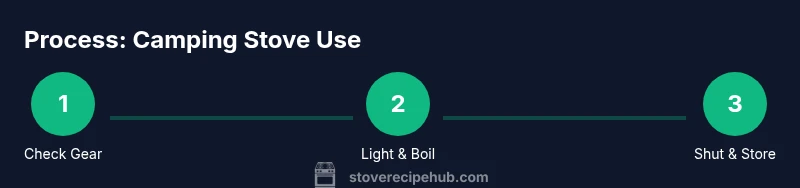
- 1
Check gear and fuel
Before departing, inspect the stove, fuel canister, and ignition. Confirm that all connections are secure and the canister is not dented. Verify the fuel level and check for leaks by listening or smelling gently around joints. This upfront check prevents interruptions on the trail.
Tip: Keep a small spare fuel canister in your pack to avoid mid-trip shortages. - 2
Prepare the cooking area
Choose a flat, stable space away from dry vegetation and camp gear. Clear debris and place a heat-resistant pad under the stove. If wind is present, set up a windscreen or use natural barriers, ensuring good air flow to avoid accidental flame blowouts.
Tip: Avoid cooking on soft ground where a kicked pebble or log could roll and cause a spill. - 3
Attach fuel and light
Securely attach the fuel canister and ensure the generator is clean. Light the stove with the built-in igniter if available, or use a safe lighter. Begin with a low flame and test for stable ignition before increasing heat.
Tip: If the flame sputters, turn off and recheck connections and fuel levels. - 4
Control flame and cook
Adjust the flame to achieve a steady simmer or rolling boil as needed. Use a lid to trap heat for faster cooking. For sauces or delicate dishes, maintain a lower flame and monitor frequently to prevent scorching.
Tip: Keep pot handles away from edges to prevent tipping. - 5
Finish cooking and shut down
Turn off the stove by closing the fuel valve fully and ensuring the flame is extinguished. Allow any residual heat to dissipate safely before moving the stove. Detach the canister only when cool.
Tip: Keep the fuel canister away from any heat source during shutdown. - 6
Cool, clean, and store
Let components cool completely, then wipe down with a damp cloth. Clean any food residues from burners and pots. Dry all parts thoroughly and store in a cool, ventilated area away from direct sun.
Tip: Store fuel separately and upright to avoid leaks. - 7
Pack out and plan next trip
Repack your stove, fuel, and cookware in an organized manner so you’re ready for the next adventure. Consider recording fuel usage and any maintenance needs for future trips.
Tip: Document your fuel consumption to better plan future outings.
Common Questions
What fuel types are best for camping stoves?
The best fuel depends on your environment and needs. Canister stoves are convenient for mild conditions and quick meals, liquid-fuel stoves excel in cold weather or high altitude, and alcohol stoves are ultra-light for minimalist trips. Always check compatibility with your stove.
Canister stoves are easy for most trips, while liquid-fuel stoves perform better in cold or high altitude, and alcohol stoves are ultra-light for very simple meals.
Is it safe to cook inside a tent with a camping stove?
No. Cooking inside a tent or enclosed space risks carbon monoxide buildup and fire hazards. Always cook outdoors in a well-ventilated area away from gear and trees.
Never cook inside a tent; keep cooking outdoors in a ventilated area.
How can I prevent my camping stove from tipping over?
Use a stable, flat surface and a wide, non-slip base. If the ground is uneven, use a leveling pad and keep heavy pots centered over the burner.
Set the stove on a flat surface and use a stable base to prevent tipping.
How long does a typical fuel canister last?
Fuel duration varies with stove efficiency, pot size, and cooking style. Refer to the canister label and your stove’s burn rate for an estimate, and track usage to plan future trips.
It depends on how you cook and the gear you use; check the canister label and your stove’s burn rate.
Can I use a camping stove in cold weather?
Yes, but performance may decline with lower ambient temperatures. Use insulated cookware, keep fuel warm when possible, and consider a liquid-fuel stove for cold environments.
Yes, but expect longer boil times and plan for fuel efficiency in cold weather.
What maintenance does a camping stove require?
Regularly clean burners, check seals and hoses (for liquid-fuel stoves), and inspect fuel connections for leaks. Store components dry and in a ventilated place after use.
Clean burners, check seals, and store dry to keep the stove working well.
Watch Video
Top Takeaways
- Choose a stove that fits meals and terrain
- Keep flames controlled and stable
- Always practice safe fuel handling and storage
- Test your setup before leaving home
- Carry essential maintenance items for field care