Can You Cook on the Stove Instead of a Slow Cooker? A Practical Guide
Explore practical, stove-top substitutions for slow cooker recipes. Learn when it works, how to adapt ingredients and timing, plus tips for safety and flavor on the stove.


Yes—many slow cooker recipes can be cooked on the stovetop with careful adaptation. The goal is to recreate the long, gentle simmer that a slow cooker provides by using low heat, tight lids, and steady monitoring. This guide explains when stove-top substitution works, how to adjust ingredients, timing, and technique, and how to stay safe in the kitchen.
Can You Cook on the Stove All Day Instead of a Slow Cooker
If you’re asking can you cook on stove instead of slow cooker, the answer is yes for many braises, stews, and pulled-meat dishes. The stove can emulate the slow-cooker’s long, low-heat environment, but it requires careful heat management, more frequent stirring, and attention to liquid levels. According to Stove Recipe Hub, with the right technique, you can achieve tender textures and deep flavors on the stove that rival slow cooker results. The key is understanding which recipes lend themselves to stove-top simmering and which ones should stay in a slow cooker. Budget-friendly weeknight meals, chunkier soups, and braises are particularly good candidates when you can maintain a steady, low simmer for extended periods.
When Stove-Top Cooking Is a Good Substitute
Not every slow cooker recipe translates perfectly to the stove, but many do. Braises, chili, bean stews, and shredded meats are often excellent candidates because they benefit from browning and flavor development before slow simmering. The stovetop offers faster start-to-table times for some dishes, but it also demands ongoing attention to prevent scorching or evaporation. If the original recipe relies on long, unattended cooking for 6–8 hours, plan for a shorter overall cooking window on the stove and adjust liquid accordingly. Stove recipes that include tomato bases or dairy should be monitored closely to prevent scorching and curdling. By choosing compatible dishes, you can maintain flavor integrity while keeping meal prep flexible.
Ingredient Prep and Layering Flavors on the Stove
Successful stove-top conversions begin with good prep. Gather aromatics, sear proteins to develop surface browning, and layer flavors gradually with onions, garlic, herbs, and spices. De-glazing the pot after browning with a splash of stock or wine adds depth and prevents flavor loss. Use sturdy cuts of meat that benefit from long simmering, such as chuck, brisket, or pork shoulder, and adjust spices to compensate for less time in a slow cooker. Remember to taste and adjust as you go; stove-top cooking exposes flavors quickly, so you can fine-tune seasoning in real time.
Searing, Browning, and Building Flavor
Brown meat or vegetables before simmering to maximize Maillard flavor. The stove encourages a controlled browning process, which locks in juices and enriches the final dish. Use a heavy-bottom pot or Dutch oven to distribute heat evenly and prevent hot spots. After browning, remove the meat temporarily, then deglaze the pan with a small amount of liquid to lift fond from the bottom. Return the meat with liquids and simmer gently, keeping the lid on to conserve moisture and promote even cooking.
Controlling Heat: Low and Slow on a Stove
Maintaining a steady, low heat is crucial when substituting on the stove. Use a flame that just barely simmers the liquid, and consider a heat diffuser if your burner runs hot. If your pot tends to scorch, reduce the size of the flame slightly and increase the lid’s tightness. Stir occasionally to prevent sticking, especially near the bottom edges where heat concentrates. For best results, aim for a gentle bubble rather than a vigorous boil, which can make meat tough and vegetables mushy.
Liquid Management: How Much Liquid to Use on the Stove
Stovetop cooking loses more moisture to evaporation than a slow cooker. Start with a measured amount of liquid, then check periodically and add small amounts as needed. Use stock, broth, or water that complements the dish; avoid over-thick sauces unless your recipe calls for it. If a recipe calls for beans or tougher cuts, you may need extra liquid at the start to compensate for faster reduction. Remember that dairy or cream-based sauces can separate if overheated, so add dairy near the end and keep heat low.
Time Management and Monitoring on the Stove
Plan for shorter total cooking times on the stove compared with a slow cooker, but be prepared for frequent checks. Set a timer and check liquid levels every 15–30 minutes for the first hour, then every 30–45 minutes as the dish nears completion. If the liquid drops too low, add a little hot stock or water to maintain coverage. Use a meat thermometer to verify doneness for proteins, and taste frequently to adjust salt, acidity, and sweetness as needed.
Thickening Sauces Without a Slow Cooker
If your recipe relies on a thick sauce, you’ll likely need to adjust thickening methods. On the stove, a slurry of cornstarch or arrowsroot with cold liquid can rapidly finish a sauce, or finish with a rox or beurre manié if you prefer. Simmer uncovered for a few minutes to reduce, then whisk in the thickener gradually to prevent lumps. For dairy-based sauces, add dairy at the end and off the heat to prevent curdling.
Common Mistakes to Avoid on the Stove
Avoid overheating, which causes tough meat and separated sauces. Don’t lift the lid too often, which wastes moisture and slows progress. Using an under-seasoned base can leave flavors flat, so taste and season in stages. If a recipe requires overnight marinating, give yourself time to marinate, then proceed with browning and simmering. Finally, don’t assume that longer equals better; the stove’s heat is faster and can overcook components if you’re not careful.
Recipe Conversion: A Practical Example
Take a classic slow cooker beef stew and translate it for the stove. Brown beef cubes in batches, deglaze with a splash of broth, add aromatics, and sear root vegetables. Add broth, wine, and tomato paste, bring to a simmer, then cover and reduce to a gentle heat. Cook until meat is tender and vegetables are fork-tender, checking liquid levels every 20–30 minutes and adjusting time as needed. Finish with fresh herbs and adjust seasoning before serving.
Cleaning Up and Maintaining Your Stove
After cooking, allow the pot to cool before washing. Scrape off any stuck-on bits while the pan is warm, then soak if needed. Regularly check burner vents and lids for grime that can affect heat distribution. A clean stove not only performs better but also reduces the risk of buildup that can lead to unwanted flavors in future dishes.
Alternative Techniques for Busy Days
If you’re pressed for time, consider using a skillet with a tight lid or a Dutch oven to mimic the slow cooker environment. Searing and finishing in the same pot saves steps and cleanup. For very long recipes, you can split tasks: brown proteins first, then simmer with vegetables in a larger pan with a steady low flame. When in doubt, start with a stovetop version of the base recipe and adjust as needed.
Tools & Materials
- Heavy-bottom pot or Dutch oven (4-6 qt)(Promotes even heat distribution and minimizes scorching)
- Skillet with high sides(For browning portions separately if needed)
- Lid that fits well(Keeps moisture in during simmer)
- Wooden spoon or silicone spatula(For gentle stirring without scratching)
- Measuring cups and spoons(Accurate liquids and seasonings)
- Instant-read thermometer(Helpful for doneness but not always required)
- Timer or smartphone timer(Keeps track of simmer intervals)
- Heat diffuser (optional)(Even heat on very hot burners)
- Cutting board and sharp knife(Prep ingredients safely)
- Stove-safe pan scraper(Easier cleanup for scorch marks)
Steps
Estimated time: 120-180 minutes
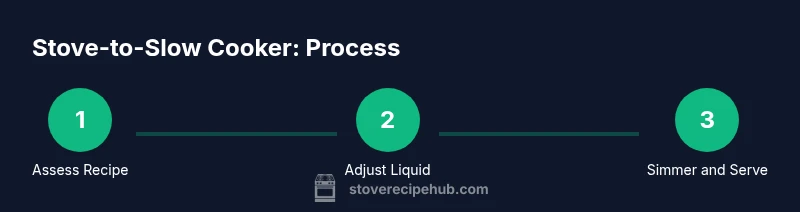
- 1
Assess the recipe for stove-friendliness
Review the original slow cooker recipe and identify ingredients that benefit from browning or longer caramelization. Decide if the dish can be started on the stove and finished with a simmer, rather than an overnight cook.
Tip: If the recipe relies on very tender, long-cooked textures, plan to test a short version first. - 2
Prep ingredients and brown the meat
Dry and season meat; sear in batches to develop flavor. Remove browned pieces and deglaze the pan with a small amount of broth or wine to lift the fond.
Tip: Browning adds depth; do not crowd the pan to avoid steaming the meat. - 3
Build the base and add aromatics
Return meat to the pot; add onions, garlic, carrots, and other aromatics. Deglaze again and scrape the bottom to incorporate browned bits into the sauce.
Tip: Use tomato paste or similar to deepen flavor early on. - 4
Add liquid and bring to a gentle simmer
Pour in stock, wine, or tomatoes to reach a modest simmer. Lower the heat to maintain a steady, gentle bubble under a covered lid.
Tip: Start with less liquid and add as needed to avoid overly watery results. - 5
Simmer with lid on and monitor
Keep the pot covered and maintain a gentle simmer, stirring every 15–30 minutes. Check liquid level and adjust heat if necessary.
Tip: Use a lid that fits tightly to reduce evaporation. - 6
Finish, thicken, and season
If the sauce needs thickening, use a slurry or reduce uncovered for a short period. Taste and adjust salt, pepper, acidity, and sweetness before serving.
Tip: Add dairy or cream at the end to avoid curdling.
Common Questions
Can you convert any slow cooker recipe to the stove top?
Most braises, stews, and bean dishes convert well. Very long, unattended simmer recipes may need redesign. Start with recipes designed for slow cooking and adjust after testing a small batch.
Most braises and stews convert well, but some long, unattended recipes may need redesign. Test a small batch first.
Will the flavor and texture be the same on the stove?
Flavor develops similarly when you brown first, deglaze, and simmer with the lid on. Texture can be close, but some tenderness may differ depending on cut of meat and simmer time.
Flavor can be very close, but texture may vary slightly based on cut and simmer time.
How should I adjust liquids when moving from slow cooker to stove top?
Start with less liquid than the slow cooker recipe since evaporation is higher on the stove. Add small amounts as needed, monitoring thickness and moisture.
Begin with less liquid and add as needed while cooking.
What equipment makes stove-top substitutions easier?
A heavy-bottom pot, tight-fitting lid, and a sturdy skillet for browning help maintain even heat and moisture.
Use a sturdy pot, a tight lid, and a good skillet for browning.
Is it safe to simmer a recipe on the stove for hours?
Yes, with proper precautions: use low heat, monitor for scorching, and keep lids on to prevent spills. Do not leave equipment unattended for extended periods in a hot kitchen.
Yes, with strict attention and a low, steady simmer.
Can I use dairy or cream in stove-top substitutions?
Add dairy toward the end of cooking to prevent curdling. If using cream, keep heat gentle and stir frequently.
Add dairy at the end and keep heat low.
Watch Video
Top Takeaways
- Can substitute many slow cooker recipes on the stove with careful technique.
- Browning, deglazing, and controlled simmer are essential.
- Monitor liquid and adjust heat to prevent scorching.
- Thickening and dairy additions require timing adjustments on the stovetop.