Can You Oven Cook Bacon? The Easy, Mess-Free Method
Master oven-cooked bacon with a mess-free method that yields crisp, even slices. This step-by-step guide covers temps, timing, troubleshooting, and tasty variations for perfect bacon every time.


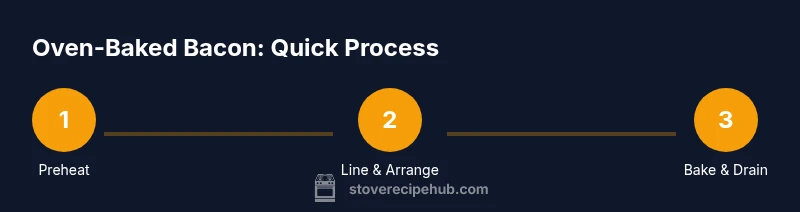
Yes. You can oven cook bacon for consistently crisp results with less mess than pan-frying. Preheat to 400°F (204°C). Arrange bacon on parchment-lined sheet, bake 12–15 minutes for thin cuts or 15–20 minutes for thicker slices, then drain on paper towels and serve. If you like extra crispness, finish under the broiler for 1–2 minutes.
Why oven-baked bacon is worth it
If you’re asking can you oven cook bacon, the answer is yes—and it’s a smarter option for many home cooks. Oven-baked bacon delivers even crispness across slices, minimal grease splatter, and hands-off timing that frees you to prep sides or sauces. According to Stove Recipe Hub, this method reduces cleanup compared with skillet-frying and yields uniform texture without constantly flipping pieces. You can cook a full tray at once, which makes it ideal for weekend breakfasts, meal-prep, or feeding a hungry crowd. The key is organization: choose the right pan, line it with parchment or a silicone mat, and select the bacon thickness that matches your preferred texture. When done properly, the oven method provides great flavor with less effort, which is why it’s a staple in many home cooks’ repertoires.
Can you oven cook bacon? What to know before you start
Oven cooking is forgiving for beginners and scalable for large batches. It’s important to start with dry bacon, avoid overcrowding, and select a temperature that suits your cut. The fat renders slowly, so you’ll often get a crisper end product with less sogginess than pan-frying. If you want ultra-precision, you can use a rack over the sheet pan to elevate the bacon so fat drips away, though parchment on the tray will still yield excellent results. Finally, consider your oven’s tendencies—some ovens run hot in the back, so rotate the pan halfway through for even browning.
Thickness, texture, and timing: choosing the right approach
Thin-cut bacon cooks faster and yields a very crisp bite, typically ready in the lower end of the timing range. Thick-cut bacon requires more time to render fat and achieve a crisp edge. When you plan your bake, decide if you want chewy but tender slices or a uniformly crisp result. Timing can vary by oven and bacon brand, so it’s smart to check around the 10-minute mark and then monitor every few minutes after that. Remember to keep the slices in a single layer for even heat distribution and to prevent curling.
Temperature, convection, and the carousel of options
Standard ovens usually benefit from a 400°F (204°C) baseline. If you’re using a convection setting, you can shave 1–2 minutes off the cooking time due to improved air circulation, but monitor closely to avoid over-browning. If your oven runs hot, you might start at 375°F (190°C) and adjust as needed. Avoid higher temperatures that can burn the fat before it renders; the goal is to melt fat slowly while browning the meat evenly.
Layering, fat management, and flavor development
Using a rack can help the fat drain away from the bacon, producing a crisper result with less grease pooled on the sheet. If you don’t have a rack, line a sheet pan with parchment and lay bacon in a single layer without overlapping. The rendered fat can be saved for sautéing vegetables, eggs, or potatoes—just strain and store in a clean container. For flavored bacon, you can dust with pepper, brown sugar, or maple glaze before baking, but be mindful of added sugars and potential smoke.
Finishing touches: when to flip, broil, and rest
Most cooks don’t need to flip bacon when using a metal rack, as heat circulates around each slice. If you bake directly on parchment, a quick flip halfway through cooking can promote even crispness. For extra crispness at the end, a 1–2 minute broil can finish the top layer, but watch carefully to prevent burning. After removing from the oven, let the bacon rest on paper towels to blot excess fat and set the final texture. A short rest improves bite and helps flavors settle.
Tools & Materials
- rimmed sheet pan(Full-size pan works best; helps contain fat splatter)
- parchment paper or silicone baking mat(For easy cleanup and non-stick surface)
- oven-safe rack (optional)(Elevates bacon so fat drains away; yields crisper results)
- tongs(For turning slices if needed and handling hot bacon)
- paper towels(Pat bacon dry after baking to remove surface grease)
Steps
Estimated time: 25-35 minutes
- 1
Preheat oven
Set your oven to 400°F (204°C) and allow it to come fully to temperature. A steady heat ensures even rendering of fat and uniform browning across slices.
Tip: Give the oven 10–15 minutes to preheat; a cold start can lengthen total time. - 2
Line the pan
Line a sheet pan with parchment or a silicone mat to prevent sticking and simplify cleanup. If you use a rack, place it on the lined pan.
Tip: If using parchment, ensure it covers the entire pan so edges don’t burn. - 3
Arrange the bacon
Lay bacon in a single layer without overlapping. Overlap can cause uneven cooking and soggy spots.
Tip: If you’re cooking a lot, bake in batches rather than stacking slices on top of each other. - 4
Bake until crisp
Place the pan in the oven. Thin-cut bacon typically needs 12–15 minutes; thicker slices may require 15–20 minutes. Check around the 10-minute mark and monitor every few minutes after.
Tip: Convection can shave a minute or two off the time—adjust accordingly. - 5
Drain and rest
Remove the bacon from the oven and lay it on fresh paper towels to blot excess fat. Let it rest 1–2 minutes to finish crisping.
Tip: If you want extra-crisp edges, brush off excess fat and return to the oven for 30–60 seconds. - 6
Optional finish
For maximum crispness, broil on high for 1–2 minutes, watching closely to prevent burning.
Tip: Door slightly cracked during broil helps manage smoke and heat.
Common Questions
Is oven-baked bacon healthier than pan-fried?
Oven-baking bacon can reduce splatter and allows you to drain more fat, which may lower the amount of surface grease on the finished product. It’s also a cleaner method with less direct handling.
Oven-baked bacon is a cleaner, hands-off method that can help reduce splatter and surface grease, making it a convenient alternative to pan-frying.
Can I cook bacon from frozen in the oven?
Yes, you can cook frozen bacon in the oven, but it will take longer and may cook unevenly. Thawing first yields more even results. If cooking from frozen, start checking at the 20-minute mark and adjust as needed.
You can cook bacon from frozen in the oven, but it will take longer and may be less even. Thaw first for best results.
How do I prevent bacon from sticking to the pan?
Line the pan with parchment or a silicone mat. Avoid overlapping slices and use a rack if possible to keep fat away from the bacon.
Line the pan, don’t overlap slices, and consider a rack to prevent sticking and help fat drain.
What if my oven isn’t hot enough to crisp the bacon?
Increase the oven temperature slightly (to about 425°F) if your bacon isn’t browning or crisping as desired, and monitor closely to avoid burning.
If your oven isn’t crisping the bacon, raise the temp a bit and watch it closely to prevent burning.
Can I reuse or save the bacon fat after cooking?
Yes. Strain the rendered fat into a clean container and refrigerate. It can be used for sautéing vegetables, eggs, or potatoes for extra flavor.
Absolutely. Save the rendered fat for future cooking to add depth to sautéed dishes.
What are good variations for flavor?
Try peppered bacon, maple-glazed bacon, or a brown sugar sprinkle before baking for a sweet-savory finish. Keep added sugars modest to avoid excessive browning or smoking.
Peppered, maple, or brown sugar variations can add great flavor, just watch the sugars while baking.
Watch Video
Top Takeaways
- Preheat to 400°F for best results
- Line the pan and cook in a single layer
- Drain fat and rest before serving
- Use convection to speed cooking (optional)
- Finish with a brief broil for extra crispness