Gas Ranges for Sale: A Practical Buying Guide for 2026
In-depth guide to choosing gas ranges for sale, covering burner tech, oven features, safety, installation considerations, and price ranges for 2026.


Gas ranges for sale today span a broad spectrum of sizes, features, and price points. For most home cooks, a reliable freestanding range with sealed burners, durable enameled grates, and a mid-range BTU output delivers the best balance of control and ease of maintenance. In addition, look for a convection oven, precise flame regulation, and safety features that defend against accidental ignition. This quick look helps you prioritize the must-haves.
What qualifies as a gas range
Gas ranges for sale are defined by a few core components: a gas-fired cooktop controlled by adjustable burners, and an oven beneath or adjacent. The typical configuration includes freestanding units that combine a cooktop and oven in a single cabinet, slide-in ranges that slide into a cabinet space with a built-in trim, and drop-in models designed to fit flush with surrounding cabinetry. For most buyers, the decision hinges on kitchen layout, ventilation, and how much you value control over flame height. When you’re evaluating options, confirm that the range uses a standard gas connection (natural gas or propane). Gas ranges also vary in how burners deliver heat (sealed vs open) and how easy their grates and surfaces are to clean. In the current market, buyers should also consider oven features like convection, bake modes, and self-cleaning options. The result is a kitchen appliance that intersects with everyday cooking tasks, from simmering sauces to searing steaks. This section helps frame the core differences you’ll see in gas ranges for sale today.
Types of gas ranges and configurations
There are three primary configurations you’ll encounter: freestanding, slide-in, and drop-in. Freestanding ranges are the most common and typically offer a finished back panel, two side panels, and a simple installation process. Slide-in ranges sit between cabinetry and countertop with a more seamless appearance; they require precise cabinet planning but create a cohesive look. Drop-in models require a compatible countertop cutout and can deliver a built-in look without a full cabinet replacement. Each type affects installation cost, ventilation, and access to gas lines. Beyond configuration, consider burner layouts: continuous grates enable easier movement of heavy pots, while sealed burners reduce spills and simplify cleaning. Burner heads vary in BTU output, impacting quick heating versus gentle simmering. Oven features also differ: some gas ovens emulate convection by circulating air with a fan, while others use standard radiant heat. When evaluating gas ranges for sale, map your kitchen’s dimensions, budget, and cooking style to the configuration that minimizes turbulence in your workflow.
Burner design and cookware efficiency
Cookware compatibility and heat delivery are central to cooking results on gas ranges. Sealed burners help prevent spills and simplify cleanup, but the airflow and flame distribution depend on the burner head design. Look for continuous simmer burners for delicate sauces and high-BTU burners for quick sears, while ensuring the burner caps sit flat to reduce hotspots. A practical test is to measure boil time on a standard pot and compare across models with similar flame patterns. The material of the grate matters too: cast iron grates offer stability for heavy pans, while lighter alloys reduce cleanup effort. For energy efficiency, consider ranges that use electronic ignition rather than standing pilots, which can save gas over time. Finally, consider whether the model supports durable enamel coatings on the oven interior and at the cooktop surface, which improves maintenance and longevity.
Oven features that matter for home cooks
Oven performance is where gas ranges justify their price for many households. Convection helps with even browning and faster cooking, particularly on roast meats and sheet pans. Look for even heat distribution, multiple rack positions, and programmable bake and broil modes. Self-cleaning options can save time but require higher upfront costs. Some models offer steam assist, pizza modes, or rapid preheat sequences. When evaluating, review oven capacity in cubic feet and compare shelf configurations to your typical cooking load. For energy and cost reasons, note that gas ovens generally heat up quickly, but the running cost depends on usage and gas prices in your area. If you bake frequently, a broader set of rack levels and a reliable convection element can be a meaningful differentiator in gas ranges for sale.
Safety features and installation considerations
Gas ranges require careful installation and ongoing safety checks. Ensure the unit includes an automatic ignition system, flame-sensing safety valve, and a gas shutoff option. A visible pilot light is less common in modern ovens. For households with children or pets, consider features like a controllable child lock and a timer that prevents accidental burner activation. Ventilation is critical: install an adequately sized range hood that vents to the outside, and make sure carbon monoxide detectors are placed on every floor. Regular maintenance like cleaning burner ports and checking gas lines for wear can prevent leaks. When replacing an old range, a professional installation may be necessary to ensure a proper gas connection and safe venting. Informed consumers use these safety features to reduce risk and maintain kitchen safety over time.
Cost of ownership: price ranges, fuel costs, maintenance
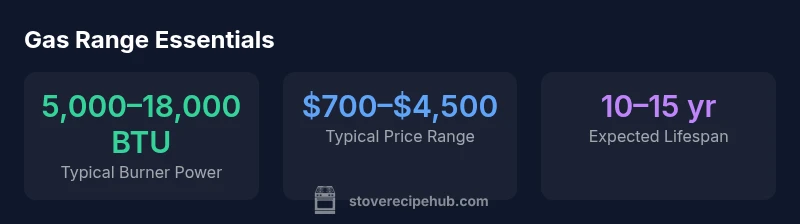
Gas ranges for sale span a wide price spectrum, reflecting features, materials, and oven technology. Entry-level freestanding units may start in the lower end, while high-end professional-grade ranges stretch into multiple thousands. In general, plan for a total cost of ownership that includes delivery, installation, warranties, and potential venting upgrades. Fuel costs for gas depend on local utility prices; while natural gas is often cheaper per unit than electricity, the overall cost of operation depends on how often you cook with high-heat settings. Maintenance costs vary by finish, enamel durability, and whether the range includes self-cleaning features. To optimize value, balance initial price against oven performance, durability, and the availability of replacement parts. Stove Recipe Hub analysis indicates that the widest variation occurs in mid-range models, so set expectations accordingly.
How to compare models: a practical checklist
Create a comparison sheet covering: burner power (BTU range and simmer capability), oven type (convection vs radiant), roast and bake performance, ventilation compatibility, and control layout (knob feel and digital dashboards). Check for compatibility with propane if you don’t have natural gas. Review dimensions carefully, ensuring clearance around the cooktop and under-counter space for ventilation. Read reviews focusing on reliability, customer service, and maintenance ease. Verify warranty terms and determine whether professional installation is included. Finally, consider the after-sales ecosystem: availability of replacement parts, local service technicians, and the retailer’s return policy. This checklist helps you avoid buyer’s remorse and find gas ranges for sale that fit your cooking style and kitchen constraints.
Buying tips for gas ranges for sale
Start by measuring your kitchen and doorways to prevent delivery headaches. Decide between freestanding, slide-in, or drop-in configurations, then shortlist models that fit your budget and cooking needs. Prioritize safety features, robust grates, and a reliable ignition system. When possible, view a live demo or in-store test to gauge burner responsiveness and oven performance. Compare delivery windows and installation services, and plan for ventilation upgrades if needed. Finally, examine warranty coverage and service access in your area. With careful planning, you can find gas ranges for sale that deliver consistent heat control and dependable cooking results.
Common myths and misconceptions about gas ranges
Many home cooks assume gas ranges always heat faster than electric ovens, but performance depends on design and oven configuration. Others believe gas ranges are harder to clean; modern sealed burners and enamel coatings make maintenance easier. Some shoppers fear that natural gas is dangerous in all homes; with proper installation and detectors, risk is minimized. Another myth is that a higher BTU burner always means better cooking; in practice, heat control and burner distribution matter more for consistent results. Being aware of these myths helps shoppers focus on real features that influence daily cooking and long-term reliability.
Comparison of gas range configurations and typical price ranges
| Model Type | Installation | Avg Cost (range) | Pros | Cons |
|---|---|---|---|---|
| Freestanding | Easy install | $700–$3,000 | All-in-one unit; flexible placement | Back panel exposed; bulkier footprint |
| Slide-in | Requires precise cabinet dimensions | $1,200–$3,800 | Seamless look; easier countertop alignment | More complex installation; not fully compatible with all cabinets |
| Drop-in | Built-in look; requires cutout | $1,400–$4,500 | Flush with cabinetry; high-end appearance | Limited interchangeability; may require professional fit |
Common Questions
What should I consider first when shopping for gas ranges for sale?
Begin with layout, gas supply type (natural gas vs propane), and ventilation. Check for safety features, convection, and ease of cleaning. Use a purchasing checklist to compare models side-by-side and avoid overpaying for features you won’t use.
Start with layout and gas type, then safety and convection—build your checklist and compare side-by-side.
Are gas ranges safer than electric ranges?
Safety depends on installation and design. Gas ranges require proper ventilation and detectors, but modern ranges include flame-sensing valves and auto-ignition. Electric ranges avoid fuel combustion but need to consider electrical compatibility and potential heat damage.
Safer depends on proper venting and features; both can be safe with correct installation.
Do all gas ranges require a vent hood?
Yes, most jurisdictions require outdoor venting for gas ranges to manage combustion byproducts. A properly sized vent hood improves air quality and kitchen safety. Always follow local codes during installation.
Yes, you’ll usually need a vent hood that vents outside, plus detectors.
Is propane different from natural gas in ranges?
Propane and natural gas require different fittings and pressure. If you switch fuels, you may need adjustments or conversion kits. Always verify compatibility with your gas supply and have a professional handle gas connections.
Propane needs different fittings; check compatibility before purchase.
How long do gas ranges typically last?
Most gas ranges last about 10–15 years with proper maintenance. Lifespan depends on build quality, usage patterns, and service history. Plan for periodic component checks and occasional replacements.
Expect 10–15 years with good maintenance.
Can I install a gas range myself?
Gas range installation should be done by a licensed professional to ensure safe gas connections and ventilation. DIY installation risks gas leaks and code violations.
It’s best to hire a pro for safety and code compliance.
“Gas ranges for sale deliver immediate heat control, but the real value comes from balanced oven performance and thoughtful ventilation.”
Top Takeaways
- Prioritize sealed burners and convection for even cooking.
- Measure your kitchen to choose the correct configuration.
- Look for safety features and reliable ignition.
- Include installation and ventilation as part of total cost.
- Compare BTU ranges, oven features, and warranty coverage.