Heat Stove Safely: Preheat, Control Heat, Cook Right
Learn how to heat stove safely and efficiently for stove-top cooking. This step-by-step guide covers preheating, flame control, testing heat, and common mistakes to avoid for consistent, delicious results.


By the end of this guide you will know how to heat a stove safely and efficiently for stove-top cooking. Start with a clean surface, select the right burner, and set the flame to the appropriate level. Allow the pan to warm gradually, test heat with a drop of water, and adjust to maintain steady temperatures without hotspots.
Foundations: Why Safe Heat Matters
According to Stove Recipe Hub, safe stove heating practices are foundational to successful stove-top cooking. Proper heat control prevents scorching, reduces energy waste, and minimizes the risk of kitchen fires. When you heat the stove correctly, you create a stable platform for searing, sautéing, and simmering. The core idea is simple: use the right burner, avoid overheating the pan, and introduce food at the right moment. This approach not only protects your cookware but also sharpens your cooking precision, and it sets the stage for even browning and better flavor development. As you heat the stove, think in terms of steady, incremental heat rather than bursts of high heat that can create hotspots and uneven cooking.
Preparing Your Cooking Surface
Before you start heating the stove, clear the area around the burner and wipe away any spills or grease. A clean surface reduces the risk of flare-ups and makes it easier to monitor heat. Position your pan so it sits flat on the burner and matches the pan diameter to the burner size—too-small pans can overheat the edges, while oversized pans waste energy. If you are using nonstick cookware, avoid heating an empty pan on high heat, as this can degrade coatings. Always keep a damp cloth or oven mitts close at hand when you begin heating stove tops to handle hot cookware safely.
Preheating Techniques by Burner Type
Gas stoves offer instant flame feedback and are forgiving for gradual preheating, while electric coil stoves require more patience as coils warm up. Start on a moderate setting, allowing the pan to warm gradually. For a typical 10–12 inch pan, begin with a medium flame and increase in small steps if you need more heat. Cast iron pans retain heat well, so a longer preheat on a lower flame helps avoid hot spots. Stainless steel heats unevenly less than other materials, but still benefits from a measured preheat. The goal is to reach a uniform surface temperature that will promote even browning and reliable searing. Always test heat with a tiny amount of oil or a drop of water to judge readiness, rather than guessing.
Temperature Control and Heat Spread
Keeping heat steady is essential for predictable results. Once the pan is warm, maintain a gentle simmer or a steady sauté temperature by adjusting the flame in small increments. If you notice a rapid sizzle from the oil or a boil that spikes, reduce heat slightly and allow the surface to settle. Avoid moving from high heat to low heat abruptly, as this shock can cause uneven cooking and damage to delicate sauces. For high-precision cooking, consider a cast iron or heavy-bottom pan that holds heat well and distributes it evenly. Remember that heat is a tool: the goal is to match the pan’s temperature to the cooking requirements of your recipe.
Testing Heat Readiness Without Risk
A practical test is to sprinkle a few droplets of water on the pan. If they bead up and dance, the surface is ready for food contact. Alternatively, add a small amount of oil; when it shimmers, you’re near the target temperature. If the oil begins to smoke, the heat is too high and you should dial it back. For delicate sauces, you may want to start with a lower heat and slowly bring the dish up to temperature. Always monitor heat closely during the first minute of cooking, especially when you are heating new cookware or a new recipe.
Common Mistakes and How to Avoid Them
Bottom line: avoid rushing the preheat. Heating stove tops too quickly often leads to hotspots and uneven browning. Do not leave unattended pots or pans on high heat; this is a common cause of kitchen fires. Never preheat an empty pan on high flame, particularly if the pan has nonstick coating. Use the appropriate burner size for the pan and keep handles away from the edge of the stove to prevent accidental knocks. Finally, clean the burner area after heating to maintain optimal performance and safety for future cooks.
Special Scenarios: Pan Sauté, Sealing, and Finishing
Some recipes require precise heat management during sautéing or pan-sealing. For high-heat searing, start with a hot pan but avoid letting the oil smoke. For gentle simmering, lower the flame and maintain a steady surface temperature. Each scenario benefits from the same core principles: a clean surface, appropriate burner size, gradual preheating, and careful heat adjustments. By understanding how heat behaves on your stove and cookware, you can consistently achieve professional results in home kitchens.
Maintenance and Safety After Heating
After you finish cooking, turn off the burner and allow the pan to cool on a heat-resistant surface. Wipe the surface and burner to remove any oil splatter or residue; residual grease can burn during future uses and reduce energy efficiency. Periodically inspect gas burners for clogs or uneven flames and clean electric coils with a damp cloth when cooled. Proper maintenance extends the life of your stove and ensures safer heating for your next cooking session.
Tools & Materials
- Stove (gas or electric)(Ensure burners are clean and functioning)
- Heat-safe pan (cast iron or stainless steel)(Cast iron holds heat well for gradual preheating)
- Cooking oil or fat (optional to test heat)(A small amount helps observe sizzle and readiness)
- Thermometer or temperature probe (optional)(Useful for precise heat monitoring in delicate recipes)
- Oven mitts or heat-resistant gloves(Protect hands when handling hot pans)
- Timer(Helpful for tracking preheat duration)
- Stove-safe scraper or scrub brush(For quick cleanup after heating)
Steps
Estimated time: 8-12 minutes
- 1
Clear the area and prep the workstation
Start by removing towels, utensils, and any flammable items from the immediate vicinity. Wipe the stove surface clean and ensure the burner you’ll use is free of debris. This creates a safe, predictable environment for heating stove and cooking.
Tip: Keep a dry towel within reach to catch spills and prevent slips. - 2
Choose the right burner and pan size
Match the pan diameter to the burner; a mismatched size can cause hot spots and uneven heating. Place the pan flat on the burner and verify the handle won’t extend over the edge of the stove. If you’re using cast iron, consider slightly longer preheat to ensure even surface temperature.
Tip: A medium burner is often ideal for preheating a 10–12 inch pan. - 3
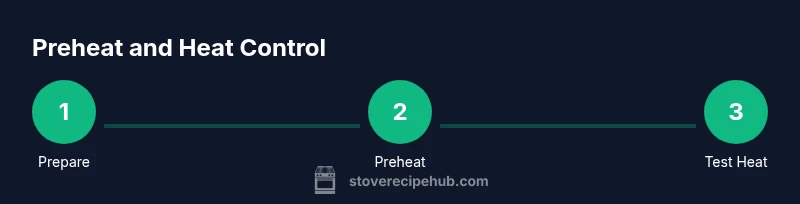
Preheat the pan gradually on medium heat
Turn the burner to a moderate setting and allow the pan to warm for about 1–2 minutes. Watch for uniform color on the pan surface and listen for a gentle sizzle as the surface becomes active. Avoid blasting heat to prevent warping or uneven heating.
Tip: If you’re unsure, err toward a lower heat and increase gradually. - 4
Add a small amount of oil or fat to test heat
Drizzle a tiny amount of oil or fat into the pan and observe its behavior. If the oil shimmers, the surface is hot enough for searing; if it smokes, lower the flame immediately. This is a reliable indicator of readiness without risking scorched food.
Tip: Use a high-smoke-point oil for initial tests if you plan to sear quickly. - 5
Maintain steady heat during cooking
Keep heat steady by making small adjustments to the flame. If you notice rapid bubbling or excessive splatter, reduce heat slightly. For delicate sauces, begin with lower heat and increase gradually as needed.
Tip: Avoid sudden, large flame changes that shock the pan and ingredients. - 6
Turn off heat and clean after cooking
When finished, turn off the burner and place the pan on a heat-safe surface to cool. Wipe away spills and let cookware cool in a safe location. Regular cleaning helps maintain efficiency and safety for future uses.
Tip: Always use pot holders when moving hot pans. - 7
Review safety practices and plan for next time
Take a moment to check the surrounding area for flammable items and ensure the hood vent is cleared. Consider any adjustments you might make based on the recipe or cookware used. Good habits compound over time and improve overall kitchen safety.
Tip: Note any cookware quirks you discover to tailor future preheats.
Common Questions
What is the best burner for preheating a pan?
A medium burner is typically ideal for preheating a pan of common size (10–12 inches) because it provides steady heat without hotspots. Larger burners can overheat edges, while small ones may be too slow.
A medium burner is usually best for preheating a typical pan, giving steady heat without hotspots.
How long should I preheat a pan?
Most pans reach the right temperature after about 1–2 minutes on medium heat. Cast iron may require a few extra minutes to achieve even surface warmth.
About 1–2 minutes on medium heat; cast iron may take longer.
Is it safe to preheat an empty pan?
Preheating an empty pan, especially at high heat, can warp cookware and damage nonstick coatings. When in doubt, add a small amount of oil to test heat first.
Usually not safe to preheat an empty pan; add a little oil to test heat.
How can I tell when my pan is at the right temperature?
Use a water test by sprinkling a few droplets on the surface; dancing droplets indicate readiness. Oil shimmering also signals the right heat. Avoid relying on sight alone for precise temperatures.
Watch for dancing water droplets or shimmering oil to know it's ready.
What should I do if the stove overheats or pan smokes?
Turn down the heat immediately and move the pan off the flame if needed. Ventilate the area and never pour water on hot oil; if a grease fire occurs, follow safety procedures.
Reduce heat right away; ventilate. If a fire starts, follow safety steps.
How do I maintain heat efficiency over time?
Regularly clean burners and reflectors, check gas flow for gas stoves, and inspect cookware for warping. Proper maintenance keeps heat distribution even and safer cooking.
Keep burners clean and inspect cookware for warping to maintain efficiency.
Watch Video
Top Takeaways
- Preheat gradually to avoid hotspots
- Match pan size to burner for even heating
- Test heat with a drop of water or oil
- Maintain steady heat and adjust in small increments
- Clean after heating to protect cookware