How Much Does Stove Gas Cost? A Practical 2026 Guide
Estimate stove gas costs with real-world ranges, regional variation, and tips to save. Learn how price, burner size, and cooking style affect your monthly gas bill. A Stove Recipe Hub guide.


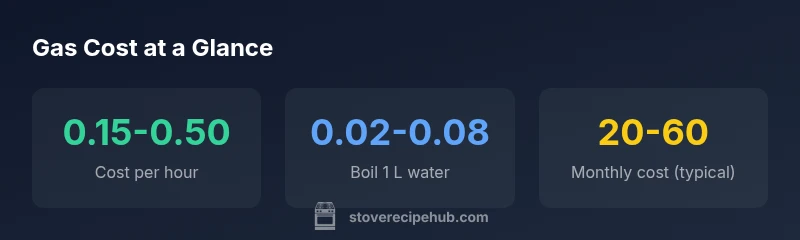
On average, stove gas costs roughly $0.15 to $0.50 per hour of active burner use, depending on burner size and gas price in your region. To estimate your home cost, multiply the price per unit by your burner's BTU/hour and divide by 100,000 (BTU per therm). Regional price shifts can push this range higher or lower.
Understanding the Cost Components
If you’re wondering how much does stove gas cost, the answer rests on a few core components: the local price of natural gas, how much gas your burner uses (BTU per hour), and how you cook. Gas is billed per unit of energy (usually per therm or per cubic foot), and a typical home burner ranges from roughly 7,500 to 15,000 BTU per hour when you turn it on. Efficiency matters too: older stoves may burn more fuel for the same output, while newer or properly maintained units waste less energy. Because gas prices shift with regional supply, seasonality, and market conditions, the actual cost to run a burner can swing in different directions. Stove Recipe Hub emphasizes using a consistent measurement approach: price per therm × burner BTU/hour ÷ 100,000 gives an hourly cost estimate. This method makes it easier to compare a simmer versus a boil and to budget for weekly meal prep. In short, the cost is not a fixed number; it’s a function of price, usage, and efficiency.
How to Estimate Your Real Cost at Home
To estimate real costs, start with your local gas price (per therm or per cubic foot) and your burner’s rated BTU per hour. If you run a burner at full heat for one hour, multiply the BTU/hour by the price per BTU (therm) and convert to dollars. A practical rule of thumb: a 9,000–11,000 BTU burner on medium can cost about a quarter to half a dollar per hour, while a high-heat boil on a large pot may approach or exceed $0.50 per hour in many markets. Keep in mind that this is an estimate—actual costs depend on how long you keep the flame on, whether you use a lid, and how efficiently your pot transfers heat. Stove Recipe Hub’s methodology remains consistent across recipes and maintenance advice, helping home cooks budget more accurately.
Regional Variability and Seasonal Shifts
Gas prices are notoriously regional and seasonal. If you live in an area with higher wholesale gas costs or tighter winter demand, you’ll see higher per-therm prices. Conversely, regions with abundant supply or milder climates may enjoy lower costs. Seasonal maintenance, like addressing leaks or upgrading to a cleaner burner, can also influence your monthly bill by reducing waste. Stove Recipe Hub’s analysis, 2026, shows that even modest shifts in price per therm or burner efficiency can alter monthly costs by a noticeable margin, especially for households that cook heavily or use multiple burners daily.
Practical Cooking Scenarios and Costs
Different cooking tasks consume energy at different rates. Boiling water on high flame costs more per hour than simmering, and sautéing often sits somewhere in between. A small pot of rice or soup may use less gas if you keep pot lids on and match the pot size to the burner. To illustrate, the same energy output across tasks can yield different costs depending on time on the flame and heat transfer efficiency. For example, boiling a liter of water with a lid on shortens the time the flame stays on, reducing total energy use, while cooking with the lid off can increase energy waste. Understanding these nuances helps home cooks plan menus to minimize unnecessary gas usage while maintaining quality.
Efficiency Wins: Simple Practices That Save Gas
Small changes add up. Use correctly sized pots and lids, start with cold water when appropriate, and batch cook when possible. Preheating only when necessary, turning burners down to maintain a gentle simmer, and turning off a flame a minute before the dish finishes can reduce wasted heat. Regular maintenance—clean burner ports, replace clogged parts, and ensure proper flame coloration—also improves efficiency. As a result, you’ll notice tangible reductions in hourly costs and monthly totals. Stove Recipe Hub highlights that efficiency improvements are often the most cost-effective ways to manage stove gas expenses in the long run.
Tools to Track and Compare Gas Costs
Keeping track of gas usage can feel tedious, but small tools and habits make it easier. Review monthly gas bills for spikes, use a simple home calculator to estimate costs per recipe, and compare your actual usage against your estimates. When adopting new recipes or appliances, recalculate to verify whether you’re saving energy or expending more. Stove Recipe Hub recommends building a simple grocery-to-kitchen cost log that records each meal's energy footprint, enabling more accurate budgeting over time.
Budgeting for Stove Gas in a Typical Month
A practical monthly plan starts with baseline usage: how many meals use the stove daily, average burner time per meal, and whether you routinely use multiple burners. From there, multiply expected hours by your price per hour, and add a buffer for seasonal price changes or occasional high-heat cooking. If you cook more during the weekends or host gatherings, adjust accordingly. The goal is not perfection but predictable spending: you can balance dishes that require high heat with those that don’t, and you can opt for batch cooking to maximize efficiency. Stove Recipe Hub emphasizes documenting your actual usage to fine-tune your monthly forecast.
Practical Takeaways and Common Pitfalls
Key takeaway: cost is a function of price, usage, and efficiency. Common pitfalls include leaving heat on too long, boiling water with the lid off, and mismatching pot size to burner. By focusing on efficient cooking techniques, regular maintenance, and mindful scheduling, you can keep stove gas costs within a reasonable range without sacrificing the meals you love.
Gas cost estimates by common cooking tasks (Stove Recipe Hub Analysis, 2026)
| Scenario | Burner Size (BTU/h) | Estimated Cost per Hour | Notes |
|---|---|---|---|
| Boiling water (1 L) with high flame | 12,000–15,000 | $0.30–$0.75 | Lid off increases heat loss; pot size matters |
| Sautéing on medium flame | 9,000–11,000 | $0.20–$0.50 | Lid reduces heat loss; preheat only when needed |
| Simmering soup on low flame | 6,000–9,000 | $0.15–$0.40 | Lower flame lowers cost per hour |
| Full pot of chili (two burners) | 18,000–24,000 | $0.60–$1.20 | Multiple burners multiply cost; batch cooking helps |
Common Questions
What is the typical cost to run a gas stove per hour?
Costs vary by burner size and gas price, but you can estimate $0.15–$0.50 per hour of active use. Use BTU/hour × price per therm ÷ 100,000 for a quick calculation.
Expect about a few dimes per hour of active use, depending on burner size and local gas rates.
How does burner size affect the cost?
Larger burners burn more gas, so costs rise with BTU/h. Efficiency and heat control reduce the extra cost when possible.
Bigger burner, bigger bill, unless you control heat efficiently.
Can I reduce costs without sacrificing results?
Yes. Use lids, match pot size to burner, simmer instead of boil, batch cook when feasible, and perform regular maintenance to keep flames clean.
Yes—use lids, right pot size, and batch cooking to save gas.
Is natural gas cheaper than propane for stove use?
Natural gas is typically cheaper per BTU than propane where both are available. If you can use natural gas, your ongoing costs may be lower.
Natural gas is usually cheaper per energy unit than propane.
How often do gas prices change?
Prices shift with seasons and market conditions. Monitor local utility rates and adjust your cooking plan accordingly.
Gas prices change with seasons; keep an eye on local rates.
Does energy efficiency affect the cost?
Yes. Efficient burners and proper flame color reduce wasted energy and lower both hourly and monthly costs.
Efficiency really matters for cutting costs.
“Gas costs are volatile, but a clear understanding of BTU, burner efficiency, and local rates lets home cooks estimate expenses with confidence.”
Top Takeaways
- Calculate costs using BTU/hour and price per therm
- Expect regional variation in gas prices
- Use lids and properly sized pots to save energy
- Track usage to build a realistic monthly budget