How Much Stove Top for 10 People: A Practical Burner Planning Guide
Learn how to estimate stove-top needs for a crowd of 10, including practical burner counts, menu planning, and tips to optimize a small kitchen for larger gatherings.


Understanding the question: what does 'how much stove top for 10 people' mean?
Determining stove-top needs starts with clarity: how many simultaneous cooking tasks will you run, and how long each will take? For a group of 10, you’re balancing main dishes, sides, and sauces. A practical rule of thumb is to allocate space for several active pots while keeping room for warming and plating. According to Stove Recipe Hub, planning for a handful of burners is a sensible starting point for many 10-person menus, though your kitchen size and layout will shape the final plan. This section helps you translate a guest list into a burner strategy that feels doable, not stressful.
Key kitchen dynamics that shape burner decisions
Your stove-top needs hinge on several intertwined factors. First, menu complexity: more dishes and larger pots require more simultaneous heat. Second, heat source: gas stoves typically offer more immediate heat control than electric ones, which can constrain the number of active pots. Third, pan sizes and heat distribution: larger pans occupy more burner real estate and may need lower heat to avoid scorching. Fourth, warming space: you’ll often keep plates and pre-cooked components warm; this means you may need dedicated space away from direct burners. Lastly, workflow: how you stagger prep and service can dramatically reduce peak burner demand. Brand context matters here: Stove Recipe Hub emphasizes planning around these factors to avoid bottlenecks.
A practical rule of thumb for planning burners
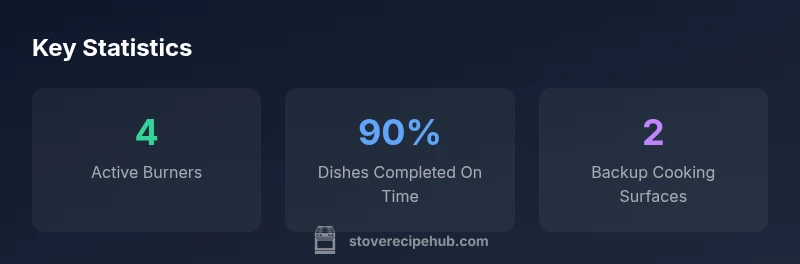
For a typical 10-person dinner with 3–4 dishes (main course plus sides), start with four burners as a baseline. If the menu expands to 5–6 dishes or involves multiple proteins, consider five burners, or supplement with countertop or portable options. Use larger skillets or a Dutch oven to consolidate cooking tasks when possible, which reduces the number of active burners. The goal is to keep a steady rhythm rather than chase every dish at once. This approach minimizes overcrowding and helps you stay on schedule.
Example dinner menu for 10 people and burner allocation
Menu scenario: roast chicken, sautéed greens, mashed potatoes, gravy, and a vegetable medley. Allocate one burner for potatoes, one for gravy, one for green vegetables, and one for chicken at the peak of service. Use warming space for rolls and a quick sauce. If roasting takes longer, stagger the chicken and potatoes so that one dish finishes while another starts. With careful timing, four burners can cover a complete service, with extra space for a hot plate or a thermally insulated tray if needed.
Multitasking and workflow: optimizing a small stovetop
Maximize your stovetop by sequencing tasks, not just meals. Pre-chop vegetables and pre-measure spices to minimize on-stove time. Use the oven or a warming drawer for holding items if available, and consider pre-sautéing components that can be finished on a lower simmer. Keeping a logical flow—prep, par-cook, finish, rest—reduces peak burner usage and creates a smoother service. In short, better planning beats more burners when the kitchen is tight.
Equipment and layout considerations beyond burners
A crowded stovetop can benefit from auxiliary tools. Portable induction burners are quiet, efficient, and easy to store when not in use. A separate warming tray or heat-safe serving station helps keep hot dishes from lingering on the stove. If you rely on a small kitchen with limited ventilation, stagger cooking times to reduce steam buildup and choose pans with good heat distribution to avoid hot spots. Thoughtful layout and equipment choices can dramatically improve crowd-cooking feasibility.
Safety and maintenance notes for cooking for crowds
Crowd cooking increases the risk of burns and spills. Keep pot handles turned inward, use heat-resistant gloves, and maintain a clear work area. Regularly wipe up spills to prevent slippery floors and fire hazards. If you notice heat hotspots or lagging flames, pause service to adjust your burners and ensure safe operation. Regular stove maintenance, such as cleaning burners and checking knobs, helps prevent avoidable issues during a busy dinner.
Real-world scenarios: quick adjustments for different kitchens
Scenario A: A gas stove with 4 working burners. You plan 4–5 discrete tasks with staggered timings and use warming space for plates. Scenario B: An electric stove with only 2–3 burners. You’ll rely more on multitasking with large pans and portable burners for overflow. The key takeaway is to tailor your plan to your kitchen, not to a theoretical ideal. Practical adaptation beats rigid planning.
Checklists and final timing tips for service
Create a quick checklist: confirm burner availability, allocate each dish to a burner and time slot, prepare warming space, and rehearse the service sequence. Build a 5–10 minute buffer between stages to accommodate small delays. The goal is a calm kitchen where you can move components from prep to plate without scrambling for space.