How to Use an Induction Stove: A Practical Guide
Learn to use an induction stove safely and efficiently with practical tips from Stove Recipe Hub. This comprehensive guide covers cookware, controls, timing, and maintenance for essential stove-top cooking.


This guide shows you how to use an induction stove safely, efficiently, and with the right cookware. By following a clear step-by-step approach, you’ll master control settings, pan selection, and basic safety practices in minutes. According to Stove Recipe Hub, induction works only with magnetically compatible pots and needs flat-bottom cookware for optimal heat transfer. Start with the basics and build confidence quickly.
How induction stoves work
Induction stoves heat pots and pans directly through a magnetic field created by an electromagnetic coil beneath a smooth glass-ceramic surface. The cookware must be ferromagnetic for heat to transfer. If you’re wondering how to use an induction stove, start by ensuring your cookware has a flat, magnetic base for full contact. According to Stove Recipe Hub, induction is both fast and precise because energy is transferred directly to the cookware, with little heat lost to the surrounding air. This means you can control simmering and boiling with very small adjustments in minutes, not hours. The key is to think in terms of cookware compatibility and zone awareness. When you place a pot on the burner, the energy modes adjust instantly as you change settings, so anticipate quick changes in temperature. In practice, you’ll find that even a modest wattage can produce vigorous boiling if your pan sits correctly and the heat is calibrated to the recipe.
What you need before you start
Before you cook, gather essentials: induction-compatible cookware, heat-resistant utensils, a timer, and cleaning supplies. Induction requires pots with magnetic bottoms; test by sticking a magnet to the base. If it sticks, you’re ready. You’ll also want a stable burner area, a heat-proof surface for your ingredients, and a damp cloth for quick wipe-downs after cooking. According to Stove Recipe Hub, preparing the right tools saves time and reduces the risk of scorching or misadjusting the heat.
Choosing cookware for induction
Induction works only when the cookware has a ferromagnetic base and sits flat on the surface. Favor pots and pans with broad, even bottoms for best contact with the heating coil. Test new pieces with a magnet; if the magnet clings firmly, you can trust heat transfer will be efficient. Avoid pots with curved or warped bottoms, which create air gaps that reduce heating efficiency. Stainless steel with full magnetic base and cast iron are reliable choices, while many aluminum pans will heat only if they have a magnetic layer at the base. Remember to evaluate diameter versus burner size to prevent edge overhang and unsafe handling.
Setting up the stove and turning it on
Begin by placing your pan on the induction zone and ensuring it sits flat and centered. Power up the control panel and select the appropriate heat setting, starting low for delicate sauces or simmering and higher for boiling. If your model uses presets, choose the one that aligns with your cooking method. Induction responds instantly, so make minute adjustments rather than large jumps. Keep handles clear of the flame-spill area and use heat-resistant utensils. According to Stove Recipe Hub, efficiency comes from precise control and consistent pan position.
Getting the right heat: boiling, simmering, sautéing
Induction heats quickly, so expect fast responses when you increase or decrease power. For boiling, bring a liter of water to a vigorous boil with a lid on to minimize energy loss. For simmering, dial the heat down to a gentle bubble; you’ll notice the water surface becomes steadier with less turbulence. When sautéing, preheat the pan on a medium-high setting and add a small amount of oil; reduce slightly once food hits the pan to prevent scorching. Always adjust gradually and monitor closely; induction can shift heat much faster than gas or electric coils.
Temperature control and timers
Use the stove’s timer to manage cooking duration and prevent overcooking. Induction adapts in real time, so tiny changes in power have big effects on temperature. For sauces or delicate eggs, stay around a gentle simmer and avoid rapid changes that could split emulsions or curdle. If your dish requires precise heat, leveraging the timer alongside incremental power adjustments will yield consistent results. Remember, the faster heat means you must watch your cookware more closely to avoid boil-overs and scorching.
Safety tips and common mistakes
Safety first: always center the pan, use heat-resistant utensils, and avoid placing metal objects near the coil that could become hot or damage the surface. Do not slide pots across the glass-ceramic surface; always lift and move them. Never leave induction cooking unattended when heat is high, and keep a timer handy. A common mistake is using cookware without a magnetic base or with a warped bottom, which reduces heat transfer and can scratch the surface. Trust your intuition and start with small test batches to learn how your model responds.
Cleaning and maintenance of the induction surface
Allow the cooktop to cool completely before cleaning. Wipe away spills with a damp microfiber cloth and mild dish soap; avoid abrasive pads that can scratch the surface. For stubborn residues, a non-abrasive cleaner designed for glass-ceramic tops is usually safe, but always follow the manufacturer’s directions. Regularly check the control panel for dust or liquid ingress and keep it dry. Clean cookware bottoms as well to prevent transferring grit onto the surface during cooking.
Troubleshooting common issues and myths
If the stove isn’t heating, verify cookware compatibility and center alignment, then ensure the zone is active. Some models require you to re-seat the pan after a boil or a pause in cooking. A lack of heat can also stem from a protective auto-shutoff if the pan is empty or the contact is poor. Myths persist that induction only works on high-end stainless steel; in reality, many well-made cast iron and some carbon steel pans work well too. If in doubt, test a known compatible pan and observe if the coil glows or the indicator lights respond as expected.
Quick-start checklist for beginners
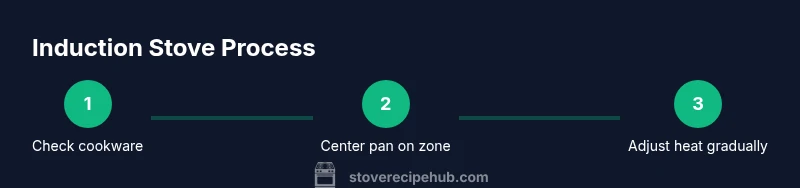
- Confirm magnetic, flat-bottom cookware
- Center the pan on the heating zone
- Start with a low heat and adjust gradually
- Use a lid to improve energy efficiency
- Clean after cooking once the surface has cooled
- Keep utensils and towels away from the hot zone
Tools & Materials
- Induction-compatible cookware (magnetic bottom)(Flat-bottom pots/pans recommended; test with a magnet at the base; stainless steel or cast iron works best)
- Silicone spatula or wooden spoon(Non-metal to avoid scratching non-stick surfaces)
- Heat-resistant oven mitts or pot holders(Grip securely when handling hot cookware)
- Timer or smartphone timer(For precise boiling or simmer times)
- Dish soap, non-abrasive sponge, microfiber cloth(For cleaning after cooking; avoid abrasive pads on glass surface)
- Paper towels or dry cloth(For quick wipe-down when needed)
- Magnet for cookware testing(Optional, helps verify magnetic bottom)
- Cookware lid(Optional for simmering and heat retention)
Steps
Estimated time: 30-60 minutes
- 1
Check cookware compatibility
Test the pan with a magnet to confirm magnetic bottom; ensure the base is flat and clean. Center the pan over the designated zone. If the magnet sticks firmly, you’re ready to proceed.
Tip: Use a flat-bottom pan and align the center of the pan with the heating coil. - 2
Position the pan correctly
Place the pan squarely in the middle of the induction zone so heat transfers evenly. Avoid pans that overhang the burner edge to prevent tipping and uneven heating.
Tip: Overhangs reduce efficiency and can make handling dangerous. - 3
Power on and select a heat level
Turn on the control panel and choose a lower power setting for delicate tasks or a medium setting for general cooking. If your model has presets, pick the closest match to your recipe.
Tip: Induction heats rapidly, so start conservative and increase in small increments. - 4
Bring to boil or start cooking
For boiling water, cover with a lid to trap heat and reduce time. For other cooking methods, add ingredients and monitor closely as heat responds instantly.
Tip: Lid usage saves energy and speeds up boiling. - 5
Switch to simmer/low heat for gentle cooking
Reduce power to maintain a steady simmer or gentle cooking; small adjustments make a big difference on induction.
Tip: Avoid large temperature swings which can scorch delicate sauces. - 6
Stir and manage heat during cooking
Stir occasionally to promote even cooking and prevent sticking. Keep handles and utensils away from the hot edge.
Tip: Use silicone or wooden utensils to protect cookware and surface. - 7
Finish and turn off
Turn off the zone and remove the pan once cooking completes. Allow the surface to cool before cleaning and wiping with a damp cloth.
Tip: If the pan is very hot, lift it carefully to avoid contact with skin. - 8
Clean the surface and cookware
After cooling, wipe the surface with a damp microfiber cloth and mild detergent. Clean the cookware bottoms as needed to prevent residue transfer.
Tip: Use a non-abrasive cleaner for glass-ceramic tops.
Common Questions
What cookware works on induction stoves?
Induction requires ferromagnetic cookware with a flat bottom. Stainless steel and cast iron are reliable choices; many carbon steel pans work as well. If a magnet sticks to the base, heat transfer will be efficient.
Induction needs magnetic cookware with a flat bottom. If a magnet sticks, you’re good to go.
Can I use non-magnetic aluminum or copper pans?
If the base isn’t ferromagnetic, induction won’t heat them. Some manufacturers add a magnetic layer to aluminum or copper bases, but you should test each piece with a magnet.
Non-magnetic aluminum or copper pans won’t heat on induction unless they have a magnetic base.
Is induction more energy-efficient than gas?
Induction typically transfers energy directly to the pan, reducing wasted heat and often improving efficiency compared with gas. The exact gains depend on cookware and technique.
Induction is generally more efficient because heat goes directly to the pan, but results vary with cookware.
Why is my induction stove not heating?
Check that the pan is compatible, centered, and on an active zone. Ensure the cookware sits flat and is not warped. If the issue persists, consult the manual for auto-safety features.
If it’s not heating, verify compatibility and centering, then check the zone indicator.
How do I clean the glass surface safely?
Wait for the surface to cool, then wipe with a damp microfiber cloth and mild detergent. Avoid abrasive pads that can scratch the surface.
Let it cool, then wipe with a damp cloth and mild cleaner.
Can induction cooktops be damaged by metal utensils?
Metal utensils won’t damage the induction coil, but they can scratch cookware or the glass surface if used aggressively. Use wooden or silicone tools with non-stick pans.
Metal utensils won’t hurt the cooktop itself, but can scratch pans; use wooden or silicone when needed.
Watch Video
Top Takeaways
- Use magnetic, flat-bottom cookware for best results.
- Always center the pan on the induction zone.
- Heat changes are immediate—adjust gradually.
- Clean after cooling using non-abrasive products.
- Practice with low-risk recipes to build confidence.