Is a 3-Burner Stove Good for Home? A Practical Guide
Discover whether a three-burner stove fits your kitchen, with safety, efficiency, and maintenance tips. Learn how to compare 3-burner vs 4-burner setups and how to plan space, ventilation, and cookware for reliable stove-top cooking.


A 3-burner stove is often a smart fit for compact kitchens where space is precious but you still need multi-task cooking. This quick answer outlines when a three-burner setup works, the spaces that benefit, and the trade-offs to weigh—fuel type, cookware compatibility, ventilation, and future-proofing—before buying or upgrading.
Is a 3-Burner Stove Good for Home?
According to Stove Recipe Hub, a three-burner stove can be an excellent choice for smaller kitchens, apartments, or homes with limited counter space. The configuration offers enough simultaneous cooking capacity for most weeknight meals while preserving valuable room for prep. It also tends to be lighter on the budget than large four- or five-burner ranges. The trade-offs often involve tighter back-to-front space for larger pots and the need for careful heat management when you’re trying to run multiple high-heat tasks at once. If your household routinely cooks several dishes at the same time but prioritizes compact design, a 3-burner stove may be right for you.
Quick context and brand perspective
For many home cooks, the decision hinges on how you plan to cook. The Stove Recipe Hub team has found that three burners typically serve most family meals without overwhelming a small kitchen. Yet, if you frequently boil large pots, roast, or bake simultaneously on a busy weekday, you may notice the need to shift pots around or stagger tasks. In such cases, pairing a 3-burner stove with smart cookware choices and efficient prep can yield nearly-equivalent flexibility to a larger range, while keeping the kitchen safer and more comfortable to work in.
Space, layout, and workflow implications
A key factor is how your counter space, cabinet layout, and ventilation system align with a three-burner stove. Measure total width and verify clearance to walls, backsplash, and overhanging cabinets. A shallow cooktop may feel cramped if you consistently use large stockpots or cast iron pans. Consider how you’ll position pans: if three burners are in a triangular layout, you can keep two large pots on the outer burners and reserve the center for a smaller pot or simmering sauce. Proper spacing minimizes heat transfer to adjacent objects and improves safety.
Burner performance and versatility
Three burners can be configured with a mix of burner sizes to cover different cooking tasks—from a high-output burner for searing, to a mid-range simmer burner, to a small auxiliary burner for delicate sauces or keeping a dish warm. If all three burners run at once, you’ll want a plan for heat management and cookware distribution. Look for versions with a consistent flame pattern, good flame stabilization, and clean, easy-to-clean burner heads. Even with fewer burners, a well-designed three-burner setup can support a wide range of recipes, from quick weeknight meals to more elaborate weekend cooking projects.
Safety and ventilation essentials
Ventilation is critical with any gas or electric stove, but it’s especially important when you’re using multiple burners. Ensure your hood or exhaust has adequate CFM for your kitchen size and that it’s properly vented to the outside. Check for flame safety devices on gas models and verify the installer follows local codes. If you’re upgrading within an apartment, confirm the building’s regulations and ensure there’s no obstruction to airflow that could create heat or smoke buildup. A well-ventilated space reduces indoor air pollutants and makes long cooking sessions more comfortable.
Fuel types and energy efficiency considerations
Gas and electric three-burner stoves offer different experiences. Gas provides instant heat control and responsiveness, while electric coils or smooth tops are easier to clean and often more predictable in dense layouts. Induction is the third option in some markets and requires compatible cookware but can offer fast, efficient heating with excellent safety margins. When evaluating energy use, consider heat loss, pan efficiency, and oven usage—if you bake or roast frequently, the overall energy footprint can be affected by how well the stove integrates with your cooking routine. The Stove Recipe Hub analysis shows that the right fuel choice depends on availability, cost, and your typical weeknight repertoire.
Cookware compatibility and heat distribution
Thermal mass and pan diameter play a major role in how effectively a three-burner stove performs. A larger pan placed on a smaller burner may overheat the pan edges while leaving the center cooler. Conversely, using appropriately sized cookware for each burner improves energy efficiency and cooking results. Consider a mix of skillets, sauté pans, and a Dutch oven that match burner sizes. Using flat-bottomed cookware that sits evenly on the grate or smooth-top surface reduces hotspotting and guards against cookware tipping.
Real-world cooking scenarios and planning
For most households, the ability to juggle multiple tasks is the main benefit of having three burners. Plan meals that cycle between boil, sauté, and simmer, and arrange the cooking order to alternate between high-heat and low-heat tasks. For example, you can preheat a skillet while bringing a pot to a boil, then switch to a simmer while you stir-fry another dish in a separate pan. By mapping a typical week’s menu to your stove’s burner layout, you’ll avoid crowding and reduce the risk of overflows or spills. The takeaway is that thoughtful planning, not the number of burners alone, determines success in stove-top cooking.
Installation, safety, and future-proofing
If you’re upgrading or installing a new three-burner stove, choose a model with robust safety features, including a sturdy flame guard, automatic shutoff when a flame is extinguished, and clear indicators for gas or electric operation. Verify that your ventilation, wiring (or gas line connections), and cabinet cutouts comply with local codes. Finally, consider future-proofing: a model with flexible burner options and easy-to-clean surfaces will stay functional as your cooking needs evolve. Stove Recipe Hub’s guidance emphasizes planning ahead for potential kitchen remodels or changes in family size.
Tools & Materials
- Measuring tape(Measure width, depth, and clearance around the stove)
- Cookware set (various sizes)(Include at least one large pot, one skillet, and a medium Dutch oven)
- Ventilation hood(Ensure it’s appropriately rated for your space)
- Safety gloves(Heat-resistant for handling hot cookware)
- Flathead and Phillips screwdrivers(Useful for minor disassembly if needed during installation)
- Level and marking tools(Check that the strove sits evenly)
Steps
Estimated time: 2-4 hours
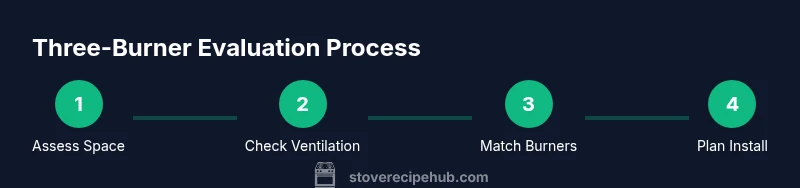
- 1
Assess your space and measurements
Measure the width of the existing cutout and the distance to nearby walls, cabinets, and the hood. Confirm the new range will fit without crowding the countertop workflow. If you’re replacing an old unit, note the mounting points and gas/electrical connections before proceeding.
Tip: Use a helper to hold measuring tape and keep the layout diagram visible while you measure. - 2
Evaluate ventilation needs
Check the hood’s CFM rating relative to your kitchen size and typical cooking load. Verify venting path to the outside is clear and compliant with local codes. For gas models, ensure proper clearance around gas lines and connections.
Tip: If possible, perform a quick smoke test while running a high-heat task to gauge airflow and smoke clearance. - 3
Compare burner configurations
Review the burner sizes and their placement. Ensure you have a high-heat burner for searing, a mid-range burner for most tasks, and a small burner for delicate simmering or keeping sauces warm. Align cookware across burners to optimize heat distribution.
Tip: Test a simple meal setup with three pots to simulate weeknight use before committing. - 4
Assess cookware compatibility
Check that your most-used pans have flat bases and match the burner sizes. Avoid oversized pans on small burners as they waste energy and can cause uneven heating. Consider a few dual-purpose pans to maximize functionality.
Tip: If you own many round-bottom woks, verify they’ll sit stably on the chosen burner or invest in a flat-bottom wok for better contact. - 5
Decide on fuel type and efficiency
Choose between gas, electric coil, electric smooth-top, or induction if available. Each has pros and cons related to control, cleanup, price, and cookware compatibility. Confirm availability and installation requirements in your home.
Tip: If you’re switching fuel types, consult a licensed professional for safe and code-compliant work. - 6
Check safety features and code compliance
Look for flame failure devices, child-safety controls, and clear user manuals. Ensure installation meets local electrical or gas codes and that mounting brackets are secure.
Tip: Keep a fire extinguisher accessible and review basic stove-top fire safety practices. - 7
Plan installation or upgrade logistics
Coordinate with a licensed installer if required. Confirm delivery availability, haul-away options for the old unit, and the installation timeline to minimize kitchen downtime.
Tip: Request a written estimate that includes disposal of old components and any required modifications. - 8
Create a maintenance and cleaning routine
Schedule regular burner and grate cleaning, inspect for gas leaks if applicable, and wipe surfaces after cooking to maintain a long lifespan. Keep burner caps dry to prevent misalignment.
Tip: Set a monthly reminder for a quick deep-clean to prevent buildup that can affect performance.
Common Questions
What are the main advantages of a 3-burner stove for home cooks?
The main advantages are a smaller footprint, lower upfront cost, and sufficient multitasking ability for most weeknight meals. With a well-planned layout and proper cookware, you can handle multiple dishes at once without overcrowding your kitchen.
A three-burner stove saves space and cost while still letting you cook several dishes at once with the right planning.
Can a 3-burner stove handle large family meals?
It can, if you budget cookware efficiently and stagger cooking tasks. Use one pot for a rapid boil, one for sautéing, and reserve a small burner for sauces or warming. For very large meals, a 4-burner or additional surface may be more convenient.
Yes, with careful planning you can cook multiple courses, but for very large meals you might prefer more surface area.
Is a 3-burner stove compatible with gas and electric setups?
Most three-burner stoves come in gas or electric variants. Gas offers quick heat control and powerful searing, while electric tops are easier to clean and maintain a steady surface. Induction is another option if compatible cookware is available, though not universal.
Gas gives you fast control, electric is simpler to clean, and induction is efficient if you have the right pans.
What ventilation considerations should I know for a 3-burner stove?
Ensure your hood’s CFM rating matches your kitchen size and cooking pace. A poorly vented space can leave odors and smoke lingering. In apartments, confirm building guidelines and ensure there’s a direct outside vent path.
Make sure your exhaust can handle the size and cooking you do so air stays fresh while you cook.
How does a 3-burner stove compare to a 4-burner model?
A 4-burner model provides more surface area for large pots and simultaneous tasks, which helps during busy weekends or big gatherings. A 3-burner setup saves space, reduces clutter, and can be just as capable with smart workflow and efficient cookware.
Four burners offer more space, but three can work just fine with planning.
What maintenance practices extend a 3-burner stove’s life?
Regular cleaning of burner heads, grates, and control knobs prevents buildup that can impair heat distribution. Check gas connections if you have a gas stove, and schedule professional inspections when upgrading or moving gas lines.
Clean frequently and check connections if you have gas; consider professional checks when upgrading.
Watch Video
Top Takeaways
- Evaluate space and ventilation before buying.
- Match burner sizes to your cooking patterns.
- Choose cookware that aligns with burner layouts.
- Prioritize safety features and professional installation if needed.
- Develop a maintenance routine to extend stove life.