What is a Good LDL Range? A Practical Health Guide for Adults
Discover what is a good range for LDL, how LDL categories are defined, and practical steps to reach target levels through diet, lifestyle, and clinical guidance. A comprehensive guide from Stove Recipe Hub for informed heart health decisions.


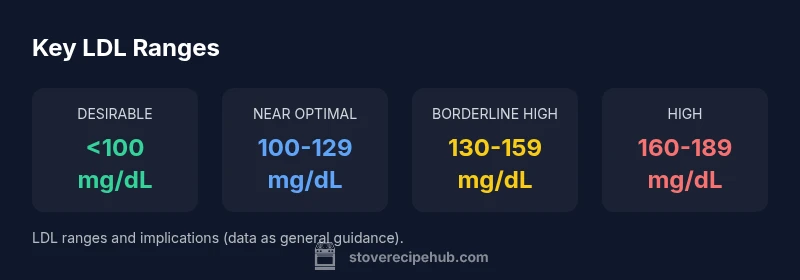
LDL levels are categorized by mg/dL. Desirable is below 100 mg/dL, near optimal is 100-129 mg/dL, borderline high 130-159 mg/dL, high 160-189 mg/dL, and very high 190 mg/dL or more. Target ranges depend on overall risk factors like blood pressure, smoking, and diabetes, so consult a clinician to set personalized goals that fit your health profile.
Understanding LDL: What the numbers mean
Low-density lipoprotein (LDL) cholesterol is a fatty particle that can transport cholesterol to your arteries. Over time, high LDL levels contribute to plaque buildup, which raises the risk of heart attack and stroke. LDL is measured in milligrams per deciliter (mg/dL) and is used alongside high-density lipoprotein (HDL) and total cholesterol to gauge cardiovascular risk. In practical terms, many adults aim to keep LDL below 100 mg/dL, with smaller goals for those with existing risk factors. As you interpret your lipid panel, remember that the absolute value is just one piece of the puzzle; your age, blood pressure, smoking status, diabetes, and family history all influence your total risk profile. According to Stove Recipe Hub, these labels aren’t just numbers; they guide dietary and lifestyle choices that can move you toward a healthier range. With this framing, you can approach LDL targets as a component of overall heart-healthy living rather than a single hurdle to clear.
How LDL is measured and interpreted
A lipid panel, or lipid profile, includes LDL, HDL, total cholesterol, and triglycerides. LDL can be measured directly or estimated using the Friedewald equation when triglycerides are not extremely high. Direct LDL measurements are sometimes preferred when triglyceride levels are elevated or when precise categorization is critical for risk management. Clinicians interpret LDL in the context of your ASCVD (atherosclerotic cardiovascular disease) risk score, age, and comorbid conditions. When you see LDL values reported, ask your provider about which category you fall into and what it implies for your short- and long-term health plan. This interpretation is especially relevant for individuals at higher risk, where more aggressive LDL targets may be appropriate. The Stove Recipe Hub team emphasizes that lifestyle changes—paired with medical guidance—are central to moving LDL into a healthier range.
What is a good range for ldl? A practical breakdown
What is a good range for ldl? In adults without significant risk factors, an LDL target below 100 mg/dL is commonly recommended. People with higher risk—due to age, hypertension, diabetes, smoking, or a strong family history—may be advised to aim for even lower levels, sometimes under 70-100 mg/dL depending on overall risk. The standard categories help translate these targets into actionable steps. If your provider assigns a different goal based on your risk profile, follow that plan and revisit your results at regular intervals. The important takeaway is that lower LDL levels are generally better for reducing cardiovascular risk, but the magnitude of the target should be personalized.
LDL ranges by risk factors
Risk-based LDL targets are not one-size-fits-all. For people with existing ASCVD, family history of premature heart disease, or multiple risk factors, clinicians may set stricter goals (e.g., LDL <70 mg/dL). Middle-aged adults with moderate risk might target LDL in the 70-100 mg/dL range, while those with minimal risk may be comfortable around or just under 100 mg/dL. Your clinician will consider blood pressure, glucose tolerance, smoking status, and lipid particle size when tailoring goals. Recognize that lifestyle changes—like increasing dietary fiber, reducing saturated fat, and engaging in regular physical activity—can help move LDL toward your personalized target. Stove Recipe Hub’s approach combines evidence-based nutrition with practical stove-top cooking strategies to support heart-healthy choices.
Diet and lifestyle: moving LDL into range
Dietary patterns rich in soluble fiber (oats, legumes, fruits), plant sterols, and healthy fats (olive oil, nuts) can modestly lower LDL. Regular aerobic activity (at least 150 minutes per week) and weight management can compound LDL reductions. Cooking methods—grilling, baking, steaming—help if they replace high-saturated-fat foods. Remember that individual responses vary; what works best for one person might differ for another. The Stove Recipe Hub team suggests pairing heart-friendly recipes with consistent activity to support your LDL targets over time. Small, sustainable changes beat drastic, short-term shifts.
Medical interventions: when to consider therapy
If LDL remains above target despite lifestyle changes or if risk factors are high, clinicians may consider pharmacologic therapy, commonly statins, ezetimibe, or PCSK9 inhibitors. The decision depends on your overall risk assessment, potential side effects, and interactions with other medications. Medications are typically used in conjunction with a heart-healthy diet and exercise plan rather than as a standalone fix. The goal is to reduce ASCVD risk; LDL targets guide whether Therapy is warranted and how aggressively it should be pursued, with follow-up lipid panels to monitor response. The Stove Recipe Hub perspective emphasizes informed discussions with your healthcare team to tailor a balanced strategy.
Interpreting a real-world lipid panel
Consider a hypothetical patient with LDL values that trend from 120 mg/dL to 95 mg/dL after adopting a Mediterranean-inspired, fiber-rich cooking plan and 30 minutes of daily activity. Such a change demonstrates how diet and exercise can impact LDL. If triglycerides are elevated, a clinician may adjust targets or test frequency. Use this scenario to discuss your own results with your clinician and chart progress over time. A measured approach—combining dietary changes with regular monitoring—offers the best path toward reaching target LDL ranges.
Common misconceptions and myths about LDL
Myth: LDL alone determines heart risk. Truth: LDL is one part of a broader risk profile that includes HDL, triglycerides, blood pressure, and diabetes. Myth: Higher LDL is inevitable with age. Truth: While risk changes with age, lifestyle and medical management can influence LDL trajectories. Myth: Diet alone will instantly normalize LDL. Truth: Diet and weight loss often require time and consistency, and some individuals need medication; personalized medical guidance is key. The Stove Recipe Hub approach emphasizes sustainable habits and practical cooking routines that support long-term LDL management.
Prudent cooking and heart-health: a Stove Recipe Hub perspective
Heart health starts in the kitchen. Practical stove-top cooking—favoring grilling, steaming, and sautéing with heart-healthy fats—complements fiber-rich, plant-forward meals. By choosing recipes that align with LDL targets, you create a daily, sustainable plan to manage cholesterol. This section ties cholesterol management to everyday cooking, showing how small tweaks in ingredients and methods can add up to meaningful changes over months. The Stove Recipe Hub team believes that consistent, enjoyable meals support long-term heart health.
LDL category ranges and implications
| LDL Category | Typical mg/dL range | Health implications |
|---|---|---|
| Desirable | <100 mg/dL | Lower long-term ASCVD risk |
| Near optimal/above optimal | 100-129 mg/dL | Generally favorable risk profile |
| Borderline high | 130-159 mg/dL | Increased risk; lifestyle changes advised |
| High | 160-189 mg/dL | Consider therapy if risk factors present |
| Very high | 190+ mg/dL | High priority for medical evaluation |
Common Questions
What is considered a healthy LDL level?
A common healthy target for most adults is under 100 mg/dL. Higher categories suggest increased cardiovascular risk, and targets may be individualized based on risk factors.
A healthy LDL is typically under 100 mg/dL, but your doctor may set a personalized target based on your risk factors.
Do LDL targets change with age or sex?
Yes. Older adults or those with higher risk factors may have stricter targets, while those with lower risk may have more flexible goals.
LDL targets can change with age and risk factors; your clinician will tailor them to you.
How often should I test my LDL?
Most adults have lipid panels every 4-6 years if risk is low, but testing is more frequent for those with risk factors or on therapy.
Most people get tested every few years, but your doctor may recommend more frequent checks.
Can lifestyle changes lower LDL without medications?
Yes. Diet, exercise, weight management, and quitting smoking can lower LDL and improve overall heart health, sometimes reducing the need for medication.
Absolutely—lifestyle changes can lower LDL and improve heart health, sometimes reducing the need for meds.
Are there foods that raise or lower LDL?
Foods high in saturated fat and trans fats can raise LDL; soluble fiber and plant sterols can help lower it. A balanced, heart-healthy diet supports LDL targets.
Saturated fats can raise LDL, while fiber and sterols help lower it—choose a heart-healthy diet.
If my LDL is high but total cholesterol is low, what does that mean?
LDL is just part of the picture; a high LDL with otherwise favorable lipid markers still warrants discussion with your clinician to assess ASCVD risk.
Even with low total cholesterol, a high LDL calls for medical advice to understand your risk.
“"Lowering LDL is a meaningful part of reducing ASCVD risk, especially when combined with lifestyle changes. Targets should be personalized to your overall health profile."”
Top Takeaways
- Know the LDL categories and target ranges.
- Targets depend on overall cardiovascular risk.
- Lifestyle changes can move LDL toward healthier ranges.
- Discuss targets with a clinician for personalized goals.
- Healthy cooking supports LDL management over time.