What Size Stovetop Espresso Maker Is Right for You?
Learn how to choose the right size stovetop espresso maker for daily brewing. Practical guidance on common sizes, buying tips, and maintenance from Stove Recipe Hub.


Most home cooks should start with a 3-cup stovetop espresso maker. It balances brewing time, caffeine per cup, and heat efficiency for everyday use. If you drink solo, a 1-cup model saves space; for small households or entertaining, consider 6-cup or larger. When choosing, account for stovetop size, pantry storage, and how strong you like your coffee. According to Stove Recipe Hub Analysis, 2026, size matters for flavor and speed.
Why Size Matters for Stovetop Espresso
According to Stove Recipe Hub, the size of your moka pot or stovetop espresso maker influences extraction pressure, brewing time, and the strength of the final cup. A pot that is too large for your cup size can lead to under-extraction, while an undersized pot may overfill and spill. The goal is to match the pot's capacity to your daily coffee habit, ensuring a balanced shot with consistent temperature retention. By understanding the basics of size, you can optimize flavor, crema, and aroma without wasting coffee or energy. The discussion below translates the theory into practical choices for daily use.
Common Sizes and Their Use Cases
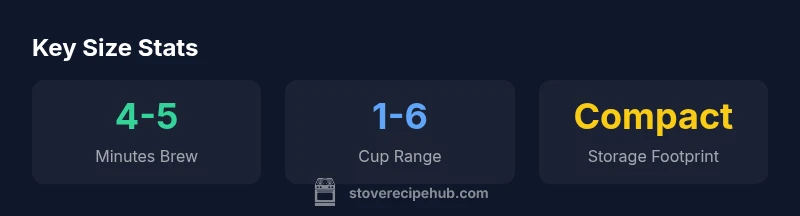
Stovetop espresso makers typically come in several sizes—commonly 1-cup, 3-cup, 6-cup, and occasionally larger like 9-cup. A 1-cup model is ideal for solo mornings when space is scarce; a 3-cup pot suits most households for shared drinks or an occasional latte; a 6-cup pot serves small families or entertaining guests. When selecting, consider how many servings you typically brew and whether you favor a stronger single shot or a lighter, longer brew. Volume is measured in “cups,” with each cup representing a small espresso shot. These ranges help you forecast how many drinks you can pull before refilling the machine.
How to Measure and Compare Sizes
To compare sizes, start from your daily consumption. Estimate how many shots you drink each day and convert that into cups per brew. Remember that the brew outcome also depends on grind size, water quality, and stove temperature. If you consistently brew for two people, a 3-cup pot can be a convenient compromise; for a family or entertaining friends, a 6-cup model may reduce refills. Aim for a size that minimizes waste and matches your routine.
Sizing for Different Stovetops
Size compatibility extends beyond the number of cups. Check your burner diameter and pot bottom to ensure even heat distribution. Larger pots require a stable flame and enough space on the burner; on compact stoves, a tiny pot may heat unevenly, causing hot spots. If your stove has a small burner, prioritize smaller sizes to avoid scorching and ensure safe handling when the pot is hot.
Step-by-Step Buying Guide
- Assess your daily coffee volume and the number of servings. 2) Measure your stove burner area to confirm pot diameter compatibility. 3) Choose a size that minimizes refills while meeting your flavor preference. 4) Look for a pot with a sturdy handle and a secure gasket to maintain pressure. 5) Consider storage and cleaning convenience: smaller pots are easier to store and maintain, especially in cramped kitchens.
Maintenance and Longevity Across Sizes
Size affects maintenance needs primarily through scaling and gasket wear. Regardless of size, regular descaling, gasket inspection, and proper cleaning extend the life of your stovetop espresso maker. If you brew frequently, consider replacing the gasket every year or two and replacing the filter screen when you notice discoloration or staining. Always allow the pot to cool gradually and dry completely to prevent rust or mildew.
Real-World Scenarios: Small Kitchens and College Dorms
In tight spaces like studio apartments, a 1-cup or 3-cup pot is often the best fit, offering quick heat up and minimal clutter. Dorm-room setups benefit from a compact size that fits under shelves and pairs with a single-serve mug. For households that entertain occasionally, a larger model provides extra servings without slowing you down, but it requires more storage and heavier lifting when hot.
Common Mistakes and How to Avoid Them
Avoid overfilling the chamber; overfilling can cause overflow and inconsistent pressure. Don’t attempt to speed up the brew by cranking the flame too high; this overheats water and scorches coffee. Ensure the gasket is intact and seated correctly, and never overtighten the lid. Finally, let the pot cool on a heat-safe surface before washing to prevent warping or cracking.
Quick Reference Size Chart
- 1-Cup: Solo use, compact footprint, quick heat-up
- 3-Cup: Balanced for two servings, common household choice
- 6-Cup: Great for small groups or entertaining
- 9-Cup: For larger gatherings, higher storage demand
Comparison of stovetop espresso maker sizes
| Size (cups) | Typical Volume | Best Use |
|---|---|---|
| 1-Cup | 60 ml | Solo drinker, small kitchen |
| 3-Cup | 180 ml | Two servings, daily use |
| 6-Cup | 360 ml | Small households, entertaining |
| 9-Cup | 540 ml | Larger gatherings, weekends |
Common Questions
What is a stovetop espresso maker?
A stovetop espresso maker, or moka pot, brews coffee by passing boiling water pressurized by steam through ground coffee. It sits on a stove and delivers a rich, espresso-like shot in a compact form.
A moka pot uses steam pressure to brew a rich, espresso-style coffee on the stove.
Which size is best for one person?
For one person, a 1-cup or 3-cup model is usually best depending on your desired strength and desired amount per brew. A smaller size reduces waste and speeds up cleanup.
For solo use, start with a 1-cup or 3-cup pot depending on how strong you like your coffee.
Can I use different sizes on the same stove?
Yes. You can use different sizes on the same stove, just make sure the burner heat and pot diameter fit each pot evenly to avoid uneven extraction.
You can use multiple sizes on the same stove—just ensure proper burner size and stability.
What happens if I brew with the wrong size?
Using too large a pot for a small batch can lead to weak extraction, while an undersized pot can overfill and spill. Aim for a size that matches your daily amount and your preferred strength.
If the pot is the wrong size, the brew can be weak or spill over. Pick the size that matches how many drinks you make.
How do I know if it fits my burner?
Measure the pot base diameter and compare with your burner. The pot should sit evenly with a stable base to prevent tipping and ensure even heat.
Check the pot base against your burner to ensure stable, even heating.
How long does it take to brew?
Most stovetop espresso makers finish brewing in about 4 to 5 minutes after the water reaches a boil. Speed can vary with burner size and grind.
Brewing typically takes about 4 to 5 minutes, depending on heat and grind.
“Size is more than capacity; it shapes heat transfer, extraction pace, and aroma. Picking the right size means consistent results week after week.”
Top Takeaways
- Match size to daily coffee habits for best flavor
- 1- and 3-cup pots cover most households
- Larger pots suit entertaining but require more storage
- Check burner compatibility before buying
- Regular maintenance sustains performance across sizes