What to Buy: Oven or Microwave?
Compare oven and microwave purchases to decide what to buy oven or microwave, covering cost, speed, texture, space, and long-term value for home cooks.


If you're asking what to buy oven or microwave, consider how you cook, your space, and your budget. A microwave handles speed, reheating, and small meals, while an oven excels at baking, roasting, and family-sized dishes. For many homes, a microwave plus a separate oven offers the best balance. Consider layout, replacement timing, and energy use.
Core Differences in Performance and Use
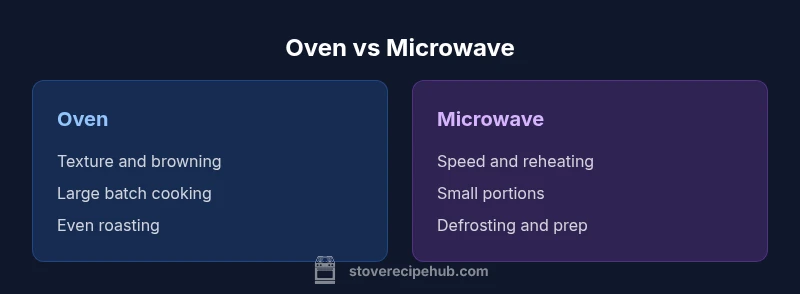
According to Stove Recipe Hub, the central question of what to buy oven or microwave hinges on how you cook today and what you anticipate needing tomorrow. A microwave is optimized for speed, reheating leftovers, defrosting, and cooking in short bursts. An oven, by contrast, provides dry heat that browns, crisps, and roasts food more evenly over longer periods. Size, layout, and electrical supply matter as well: compact apartments may support a small microwave plus a dedicated oven, while larger kitchens can host both full-size appliances. When choosing, map out your weekly routines—how often you bake bread, roast vegetables, or bake casseroles—and weigh those patterns against the extra footprint and upfront cost. The goal is to minimize routine friction while maximizing cooking quality. Home cooks who value hands-on roasting and flaky crusts will tend toward the oven, while those who prize speed and convenience lean toward the microwave. In practice, many households find the optimal configuration uses both, planned to fit their kitchen workflow and energy profile. This approach echoes a broader lesson: align tool capabilities with your actual tasks to reduce friction in daily cooking.
Speed, Energy, and Cooking Methods
Microwaves excel at speed and efficiency for small portions, reheating, steaming vegetables, and defrosting. They use electromagnetic energy to excite water molecules directly, which means shorter cook times and minimal preheating. Ovens rely on convection or radiant heat, which takes longer but creates browning, caramelization, and texture that microwaves struggle to reproduce. If your meals revolve around quick lunches or single-serving dinners, a microwave can dramatically cut daily cooking times. Conversely, when you bake cookies, roast a chicken, or casserole a dish that feeds a crowd, the oven’s dry heat delivers better results with more predictable textures. From a power-consumption standpoint, a microwave often uses less energy per minute, but if you routinely cook lengthy meals, an oven’s efficiency per batch becomes comparable. The takeaway for energy-conscious households is to deploy each appliance for tasks it handles best: microwave for speed; oven for depth of flavor and volume.
Baking, Roasting, and Texture: What Each Appliance Does Best
An oven is designed to create browning, crust, and even heat distribution across large containers. It shines in baking bread with a horizon of humidity control; it roasts vegetables and meats with crisp exteriors and juicy interiors; it maintains consistent heat over time, which supports long, slow cooks like braises. A microwave, meanwhile, is superb for quick reheats, steaming vegetables, and softening butter or chocolate without scorching. It’s less reliable for wide-area browning or textured crusts, though newer convection microwaves can simulate some oven-like outcomes. If your priority is texture—crusty pizza bottoms, golden roasted carrots, or a crispy finish on casseroles—the oven wins. If your main goal is fast meal assembly and reheating, the microwave wins. For many households, the best path is to reserve the oven for dishes that benefit from dry heat and reserve the microwave for reheating and quick prep tasks.
Cost, Ownership, and Long-Term Value
Price is a practical factor that often governs the decision. Countertop microwaves are typically lower in initial cost than built-in ovens or full ranges, but lifetime value depends on usage. A basic microwave may cost a fraction of an oven, yet if you bake daily you’ll quickly value the oven’s versatility. For mid-range capacities, common kitchen setups range from modest to robust, with wall ovens or freestanding ranges occupying a broader price band. When planning, consider maintenance, replacement cycles, and potential repairs. Both appliances have useful lifespans, but ovens may require more routine calibration and parts replacement if used intensively. Stove Recipe Hub analysis shows that households that carefully balance usage across both appliances tend to achieve better overall cooking variety without sacrificing efficiency. In any case, budget for a safe, properly vented installation area and plan for energy efficiency features like insulation and convection in ovens. A two-appliance strategy often offers the best mix of upfront value and long-term flexibility.
Space, Layout, and Kitchen Workflow
Appliance footprint matters. A standard countertop microwave can be tucked into a corner, freeing up stove space, but it still occupies counter real estate and creates cable clutter. A traditional oven or a built-in wall oven requires cabinet integration and, in many kitchens, a dedicated venting system. The layout decisions are not just about size; they shape how you cook. For example, placing the microwave near the prep zone minimizes steps for reheating and finishing sauces; putting the oven on a lower shelf or in a separate wall section makes it easier to retrieve heavy roasts and baking sheets. If you’re aiming for a sleek, single-appliance kitchen, you’ll need to be honest about volumes and timelines. The practical approach is to design a zone strategy: define a reheating zone (microwave) and a roasting/baking zone (oven), with clear access to pots, pans, and baking sheets. That separation reduces cross-traffic and streamlines meal prep.
Safety, Energy Efficiency, and Maintenance Basics
Safety is about placement, user age, and maintenance habits. Microwaves pose fewer burn risks when used with microwave-safe containers, and convection models require proper ventilation. Ovens demand careful handling of hot racks, pans, and doors; self-cleaning cycles can help, but some models flash warning codes if insulation or seals are worn. From an energy perspective, modern microwaves with inverter technology and sensors optimize consumption, while energy-efficient ovens rely on convection and properly sealed doors to limit heat loss. Routine cleaning prevents odors and residue buildup. For longevity, keep coils and seals clean, check door latches, and follow manufacturer guidelines for use. Regular descaling is relevant for steam ovens or combination devices that include steam features. Stove Recipe Hub emphasizes that proper maintenance reduces repair risk and prolongs appliance life. In practice, a simple monthly wipe-down, seasonal inspection, and mindful use can extend performance and safety.
Real-World Scenarios and Recommendations
Consider how your week unfolds. If breakfast and lunch are picked up on the go, a microwave dramatically reduces cooking friction. If you host weekend dinners or bake weekly, an oven adds texture and confidence. If you live in a small apartment, a compact microwave with a small countertop oven can cover most needs; in a larger kitchen, a full-size oven paired with a microwave offers the most flexibility. For households with kids, the microwave can be used by older children for quick meals, while the oven handles more involved cooking under supervision. Evaluate recipes that define your week—bread, roasted vegetables, casseroles, reheated leftovers—and map them to appliance capabilities. In practice, most cooks benefit from this two-appliance approach, which minimizes compromises while preserving quality.
How to Choose If You Have Constraints
Space: measure counter depth, cabinet height, and clearance. Budget: list prime needs and assign a cap for both appliances. Wiring: ensure your electrical panel can handle high-frequency appliance use; in many kitchens, a microwave is a lower-demand addition. Aesthetics: ensure finish and controls match your kitchen design. If you’re stuck, start with a versatile countertop microwave and a modest oven or range combination; this dual approach provides immediate benefits while you gauge long-term needs. If you anticipate frequent baking or roasting, upgrade the oven first; if you expect more meals rely on quick prep, pick the microwave first. The goal is to minimize fit and friction while maximizing long-term cooking outcomes.
Two-Appliance Setups: Practical Layout and Budget
Two-appliance configurations can yield a balanced kitchen. Place the microwave near prep zones for easy reheating and sauce finishing; install the oven where you can manage heavy trays and large dishes. Budget-wise, start with mid-range options and upgrade as needed. Look for energy-efficient features such as true convection ovens, inverter microwaves, and smart sensors that adjust power automatically. If you’re renovating, consider pairing a wall oven with a separate over-the-range microwave to minimize countertop clutter. For renters, portable countertop microwaves and compact countertop ovens offer temporary, flexible solutions.
Quick-Start Plan and Kitchen Test
Before you buy, draft a simple two-week test plan to simulate typical meals and test speeds. Track time to complete common tasks, note textures and browning quality, and measure energy use if possible. During the test, keep a log of how often you use each appliance and which tasks remain friction points. Use this data to decide whether you should add either an oven or another microwave; you’ll have a clearer sense of the right balance between speed and flavor. Finally, read model reviews focused on reliability and service; no appliance is perfect, but understanding typical failure modes helps you plan maintenance.
Maintenance and Cleaning Tips for Longevity
Regardless of which appliance you choose, a routine cleaning schedule extends life and preserves performance. Wipe down interiors after heavy cooking, clean crumb trays on microwaves, and run a maintenance cycle on ovens when recommended by the manufacturer. For microwaves with turntables, ensure the plate is correctly seated; for ovens, inspect door seals and gaskets monthly. Keep ventilation clear and avoid covering vents with towels or foil. Consider descaling steam ovens or combination devices as needed; follow guidance in your manual and avoid harsh chemicals. Regular service checks by a qualified technician, especially for high-use ovens, can catch issues before they escalate.
Comparison
| Feature | Oven | Microwave |
|---|---|---|
| Primary purpose | Baking/roasting and long cooks | Fast reheating and quick cooking |
| Cooking speed | Slower for large batches; needs preheating | Very fast for reheating and small portions |
| Food quality outcomes | Excellent browning and texture | Good for reheating but limited browning |
| Energy consumption | Higher per session but efficient per batch when baking | Lower per minute; efficient for short tasks |
| Space requirements | Larger footprint; built-in options require cabinet space | Compact; fits on counters or shelves |
| Price range | Mid-to-high range for built-ins; installation considerations | Low-to-mid range for countertop models |
| Best for | Baking, roasting, large meals, texture control | Speed, reheating, small portions, convenience |
Upsides
- Clarifies task-specific strengths for better decision making
- Encourages a balanced kitchen workflow with two dedicated appliances
- Improves long-term versatility and meal variety
Downsides
- Requires more space and higher upfront cost
- Maintenance and repair considerations across two devices
- Potential energy use if both are active simultaneously
Two-appliance setup offers the best versatility for most homes
A microwave handles speed and small tasks, while an oven handles texture and volume. For most households, combining both minimizes compromises and expands cooking options.
Common Questions
Should I buy an oven or microwave first if I have a tight kitchen?
In small spaces, start with a compact microwave to cover quick tasks and a modest oven or range for essential baking and roasting. This minimizes footprint while streamlining daily cooking. If space remains tight, consider a compact second oven model or an over-the-range microwave to reduce countertop clutter.
If your kitchen is tight, start with a compact microwave and a modest oven or range; this covers quick tasks now and leaves room for future upgrades.
Can a microwave fully replace baking or roasting?
A microwave cannot fully replace baking or roasting when texture and crust are important. You can simulate some results with convection modes, but for truly browning, crisping, and large batch cooking, the oven remains essential.
A microwave can’t fully replace baking or roasting if you want real browning and texture; use an oven for those tasks.
Are there combo appliances that do both cooking methods?
Some combo appliances combine microwave functions with convection or steam cooking, but they rarely match the performance of a dedicated oven for baking textures. They’re convenient for small spaces, but plan to still rely on an oven for best results.
There are combo units, but they don’t always replace an oven for baking textures; they’re great for small spaces though.
What should I budget for a two-appliance setup?
Budget for a mid-range microwave and a solid oven or range. Consider installation, venting, and energy features. If renovating, allow for future upgrades; if renting, prioritize portability and repair reliability.
Budget for a mid-range microwave plus a solid oven, with room for installation and future upgrades.
How can I maintain both appliances safely?
Follow manufacturer guidelines for cleaning and safety. Wipe interiors, clean seals, check ventilation, and schedule regular professional checks for high-use ovens. Keep cords and outlets safe and unplug appliances during heavy cleaning.
Clean regularly, check seals, and schedule occasional professional checks for heavy use ovens.
Top Takeaways
- Assess weekly meals and space before buying
- Use microwave for speed; save oven for baking and roasting
- Plan a two-appliance setup for maximum versatility
- Factor in maintenance and energy when budgeting