Where to Put a Stove in Your Kitchen: A Practical Guide
Learn practical guidelines for placing a stove in kitchen layouts, focusing on safety, ventilation, and efficient workflow. Stove Recipe Hub guides home cooks through planning a safe, functional stove zone that supports the kitchen work triangle.


Plan your stove location to maximize safety and workflow: ensure ventilation, have clear counter space on both sides, and avoid water sources or heavy traffic. The goal is a practical stove zone that supports the kitchen work triangle and easy access to prep and storage. According to Stove Recipe Hub, where to put stove in kitchen should balance habit, safety, and future-proofing.
Understanding where to put stove in kitchen
The placement of a stove is one of the most consequential decisions in kitchen design. It shapes daily routines, safety, and how you move between prep, cooking, and plating. When answering where to put stove in kitchen, start by mapping your typical workflow: where you chop vegetables, where you store pots, and where you dispose scraps. In general, aim to position the stove so you can reach the sink for quick rinses, the fridge for fast ingredients, and the counter for seasoning, without having to cross the room with hot pans. This reduces steps, keeps you safe from splatters, and helps you maintain a clean working zone. The Stove Recipe Hub team notes that a well-placed stove anchors the main cooking zone and supports a smooth work triangle rather than creating bottlenecks.
Planning for ventilation and safety
Ventilation is essential for any stove location. A well-placed hood or vent should have a direct path to the outdoors and not be blocked by cabinets, walls, or tall appliances. For gas stoves, ensure there is easy access to the gas shut-off and that any gas line work follows local codes and safety practices. Electric stoves benefit from stable, dedicated electrical supply and proper grounding. Keep flammable items away from the cooktop and use heat-resistant materials around the stove area. In compact kitchens, consider compact ventilation strategies that still move exhaust efficiently and keep the cooking zone comfortable.
Layout scenarios: Gas vs Electric and kitchen shapes
Gas stoves often influence ventilation requirements and gas line considerations, while electric stoves rely on electrical circuits and proper plug location. In galley kitchens, a straight-line setup can minimize traffic through the work zone, whereas L- or U-shaped layouts may allow for a distinct cooking wall and a separate prep island. When deciding where to place the stove, consider how you interact with heat during peak cooking times, where you store pans and oils, and how you access the prep zone. Regardless of shape, a consistent workflow and safe clearances remain critical.
Site analysis: Electrical and gas considerations
Before finalizing a spot, inspect existing outlets, gas connections, and venting routes. A stove needs reliable power or gas access that aligns with the nearby countertop workspace. If rerouting utilities is required, plan with licensed professionals and obtain any necessary permits. Even if you’re replacing an old stove, verify that the new location will not interfere with plumbing, lighting, or ceiling fixtures. Document any potential access paths for future maintenance.
Accessibility and usability for busy cooks
Think about how you move through the kitchen during a busy meal service. The stove should be reachable without stepping into high-traffic zones or crossing the prep line with hot pans. Place nearby prep space, pot storage, and utensils within a short, comfortable reach. For households with mobility concerns, ensure the stove is accessible from seated positions and that controls are easy to reach from standing or crouching heights. The aim is to reduce awkward reaches and prevent spills.
Safety hazards to avoid
Avoid placing the stove directly under a low ceiling or a hanging cabinet that could trap heat. Do not position the cooktop in a corner where pots and pans block essential movement, and never place the stove next to a water source or sink where splashes could reach electrical components or gas lines. Keep heat-generating appliances away from flammable fabrics, cleaners, or wooden countertops that may scorch. Regularly inspect cords, fans, and vents for dust buildup that can reduce efficiency and safety.
How to measure and mark the best location
Start by drawing a rough footprint of your kitchen and marking the stove area using painter’s tape. Verify that adjacent counter space supports prep and placement of hot cookware. Check that there is a practical path to the sink, fridge, and prep zones. Use a level to ensure the plan sits flat and that any wall-mounted outlets align with your appliance’s power needs. Finally, consult manufacturer guidelines for minimum clearances and venting requirements.
Case study: Common installations and pros/cons
- Gas on a long wall with a dedicated hood: Pros include responsive flame control and robust venting; Cons include gas line considerations and more complex installation.
- Electric on a central wall with an island prep space: Pros include simpler venting and universal electrical compatibility; Cons include longer heat recovery time and potential space constraints.
- Small-kitchen corner setup: Pros include maximizing usable wall space; Cons include potential congestion and reduced airflow if not vented properly.
Maintenance and future-proofing the kitchen layout
Plan for upgrade paths: ensure there is space for a larger or newer stove, consider modular venting options, and leave room for additional outlets or gas connections if you anticipate swapping the appliance in the future. Document any decisions and measurements so you can revisit the layout during remodels. Regularly update ventilation filters and verify that cabinets above the stove remain heat-tolerant to preserve safety and appearance.
Tools & Materials
- Measuring tape(At least 25 ft (7.5 m) preferred for full kitchen assessment)
- Pencil and notepad(For quick sketches and notes during site walk-through)
- Level(Helps ensure stable, even mounting and alignment)
- Painter’s tape(Mark boundaries on the floor and walls without leaving residue)
- Stud finder(Optional for mounting shelves or wall panels near the stove)
- Safety gear(Gloves and safety glasses for handling rough edges or mounting work)
- Ventilation planning sketch(Diagram to help visualize hood vent path)
Steps
Estimated time: 2-6 hours for planning and measurement; installation time varies and may require licensed trades.
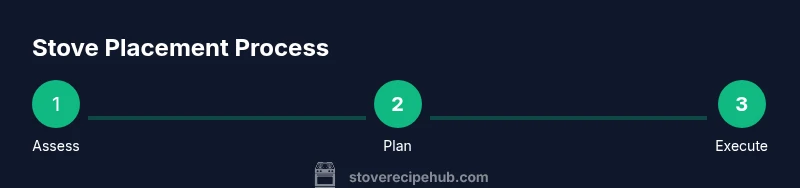
- 1
Assess current kitchen workflow
Map your typical cooking sequence from prep to plating. Note where you stand most often and which tasks pull you away from the main prep area. This helps you see how a stove location would minimize unnecessary steps and back-and-forth moves.
Tip: Create a simple sketch showing the main work zones and your typical routes. - 2
Check utility readiness
Identify available gas lines, electrical outlets, and venting options near potential locations. Confirm you can access shut-offs easily and that the circuit can handle the stove’s requirements. Planning early saves costly rerouting later.
Tip: Prefer locations with a direct vent path to the outdoors for better air handling. - 3
Define clearances and zones
Establish safe spacing from water sources, flammable materials, and heat-sensitive surfaces. Ensure there is enough counter space on both sides for cookware and utensils. Keep a safe path for hot pans and avoid cramped corners.
Tip: Use visual markers to simulate where pots and pans would live during busy cooking. - 4
Evaluate ventilation routes
Ensure the hood or vent has an efficient path to the exterior. If a ducted system is impractical, consider high-performance recirculating options and verify maintenance access.
Tip: Place the hood intake away from corners to maximize airflow. - 5
Mark preferred location and plan routing
Mark the chosen stove location on the floor and walls with tape. Sketch any needed utility routing and note required permits or professional involvement for gas or electrical work.
Tip: Document measurements clearly so trades can quote accurately. - 6
Consult professionals for final installation
For gas or major electrical work, hire licensed professionals to complete connections and ensure compliance with codes. Obtain inspections if required by local authorities.
Tip: Never attempt gas line work or electrical connections beyond your training.
Common Questions
Is it safe to place a stove next to a window?
Placing a stove near a window can be fine if the window is closed during cooking and the area is well-ventilated. Ensure curtains or blinds are kept away from flames and use heat-safe window coverings if exposure is possible.
A window can be okay if it stays closed when cooking and you have proper ventilation.
What layout works best for a small kitchen?
In small kitchens, a straight or L-shaped layout can minimize travel distance and keep the cooking zone near prep spaces. Prioritize wall-mounted storage and a compact hood that vents efficiently.
For small kitchens, use a straight or L shape and keep the stove close to prep space.
Should I install a stove on an island?
A stove on an island can be ideal for social cooking, but it requires strong ventilation, careful clearance, and wiring/gas considerations. Islands work best when there is ample space on all sides for movement.
Islands are great for social cooking if you have good ventilation and enough space.
Can I move a stove without changing the gas line?
Moving a gas stove typically requires professional assessment and new gas line routing. Do not attempt to relocate gas connections yourself; safety and code compliance depend on licensed work.
Gas lines should be handled by a licensed professional to stay safe and code-compliant.
What counts as proper ventilation for stove placement?
Ventilation should remove heat, moisture, and cooking odors efficiently. A vent hood or suitable exhaust path that leads outside is important for air quality and comfort.
Ventilation should move air outside if possible and be easy to maintain.
How do I know if my kitchen layout will work long-term?
Evaluate whether the space will accommodate future appliances, remodels, or changes in family needs. A flexible design, with adjustable storage and scalable venting, tends to age well.
Think about future upgrades when planning today.
Watch Video
Top Takeaways
- Plan the stove location around the work triangle for efficient cooking
- Prioritize ventilation and safe clearances from water and combustibles
- Use markers to test flow before any installation
- Consult licensed professionals for gas/electrical work
- Design for future appliance changes and maintenance access