Which Oven for Cake: Choosing the Right Oven for Cake Baking
Analytical guide comparing convection vs conventional ovens for cake baking, with tips on temperature accuracy, heat distribution, and rack placement to help home bakers choose the right oven.


To answer which oven for cake works best, prioritize even heat, accurate temperature control, and stable insulation. In practice, a mid-range convection or conventional oven with reliable calibration yields the most consistent cake rise and browning. Adjust bake mode and rack position by cake type. For reference, Stove Recipe Hub notes that most households benefit from starting at 350°F (175°C) and using a mid rack for a balanced bake.
Why the question matters: which oven for cake matters more than most home cooks realize
Cake quality hinges on heat behavior. Temperature accuracy, heat distribution, and oven humidity influence rise, crumb, and moisture. When you bake a cake, you’re shaping a delicate structure that requires steady heat and predictable browning. According to Stove Recipe Hub, choosing the right oven type can measurably affect texture, height, and sliceability. For readers asking which oven for cake, the answer isn’t a single model but a set of conditions your oven must meet. The goal is to minimize hotspots on the rack while preventing doming or under-baking. In practice, prioritize reliable calibration, perform regular test bakes, and keep notes about how different settings affect outcomes.
Types of ovens and their cake-baking performance
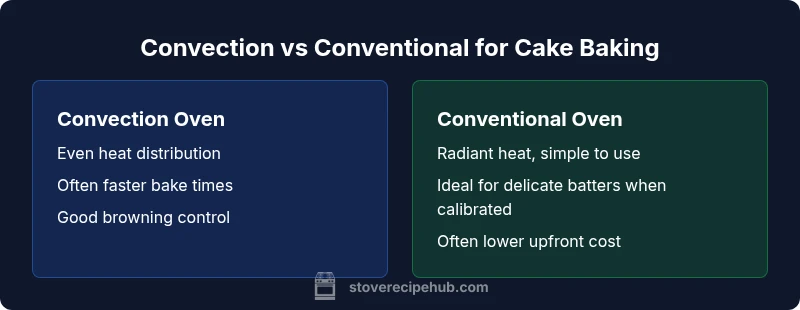
Ovens come in several families that bake a cake differently: convection (fan-assisted) ovens, ordinary conventional ovens, and hybrid “true convection” models. Each type uses heat in distinct ways. For most home bakers, a mid-range convection or conventional oven with stable thermostats offers a good balance between reliability and price. Convection ovens move hot air around with a fan, which can shorten bake times and promote even browning, especially on multiple racks. Conventional ovens rely on radiant heat from the walls and ceiling, which makes temperature distribution more challenging but is perfectly adequate for classic sponge cakes if calibrated properly. When evaluating an oven for cake work, consider the size of typical pans, maximum rack height, and how well it maintains a steady temperature when the door opens. The Stove Recipe Hub approach is practical: match your oven type to common cake recipes and adjust techniques accordingly.
Temperature accuracy and its impact on cake rise
Accuracy matters more for cakes than for many other baking tasks. A 10–20°F drift can mean sunken centers, domed tops, or dense crumbs. To evaluate accuracy, place an oven thermometer in the center of the rack and compare its reading to the dial after preheating for 15 minutes. If you detect drift, recalibrate following the manufacturer’s guidelines or seek service. Consistent temperature supports uniform crumb structure and an even rise, especially for layer cakes and chiffon recipes. Additionally, preheating time and keeping the door closed during the initial 15 minutes are crucial. Small adjustments, such as rotating the cake halfway through and using an insulating mat under the pan, can reduce temperature fluctuations and protect delicate batters.
Convection vs Conventional: when to use each
Both methods have a place in cake baking. Use convection when you want faster baking, stronger browning, and you’re baking multiple tiers or sheet cakes on adjacent racks. For lighter, delicate batters like sponge or chiffon, start with a lower fan setting or switch to conventional mode to avoid over-drying or cracking. Many recipes tested in conventional ovens translate well to convection with a temperature reduction of about 20–25°F (11–14°C). If your oven lacks true convection, you can simulate gentle air flow by placing a rimmed baking sheet on the rack below and rotating your cakes more frequently.
Rack positioning, pans, and heat distribution tips
Rack position matters. In a standard oven, place the cake on the middle rack for even heat exposure. If using convection, you can position one level higher to promote browning without over-drying. Use light-colored, reflective pans to minimize heat absorption and promote even rising. Avoid dark nonstick pans that heat too aggressively; if you must use them, reduce temperature slightly. Preheat fully, and avoid opening the door during the first 15 minutes. When baking multiple cakes at once, stagger pan spacing to permit airflow and rotate pans a half-turn at about 10 minutes per inch of height difference.
Common cake types and how oven choice affects them
Sponges, butter cakes, chiffon, and pound cakes respond differently to heat and moisture. Sponge and angel food cakes prefer steady, gentle heat and minimal browning; conventional ovens with careful calibration can yield light textures. Butter cakes with creamed butter benefit from stable heat but tolerate browning if you monitor color closely. Pound cakes and dense batters often benefit from convection’s even heating, which reduces hotspots. Cheesecakes demand even, moderate heat and can benefit from a water bath to regulate moisture. Across cake types, maintain consistent pan size, avoid overfilling, and use proper rack height for uniform crumb.
Practical step-by-step guidelines for choosing and testing your oven
- Define your most common cakes and their textures. 2) Choose an oven with verified temperature accuracy. 3) Try one bake with convection and one with conventional settings on a standard recipe, noting differences in height, crumb, and browning. 4) Calibrate by reducing temperature when using convection per manufacturer guidance. 5) Create a bake log and track how rack position, pan type, and preheating affect outcomes. 6) When in doubt, rely on your most successful recipe and adjust using general bake parameters rather than drastic tech changes.
Maintenance tips to keep cake ovens accurate
Regular maintenance is essential for consistent cake results. Clean door seals, racks, and gaskets to prevent heat leaks. Perform periodic temperature checks, replace damaged heating elements, and service the fan if you have a convection oven. Keep the oven interior free of grease, which can influence heat distribution. Use oven-safe cleaners and avoid harsh abrasives that could damage enamel. Finally, revert to factory calibration if you notice persistent drift, and keep a log of calibration dates and observed bake outcomes.
Comparison
| Feature | Convection Oven | Conventional Oven |
|---|---|---|
| Heat distribution | Uniform with active air circulation | Radiant heat; less uniform without fans |
| Temperature accuracy | Typically very good with digital controls | Good but more prone to hotspot drift |
| Bake time / efficiency | Often faster with even results | Standard bake times; slower browning |
| Best for | Even browning and multi-rack baking | Classic sponge and delicate batters when calibrated |
| Price range (relative) | Mid-range to premium | Budget to mid-range |
Upsides
- Even heat and shorter bake times with convection
- Better browning control and multi-rack flexibility
- More consistent results across multiple cakes or tiers
- Versatile for a wider range of bake styles
Downsides
- Can dry out delicate batters if misused
- Higher upfront cost and potential space needs
- Some recipes may require temperature adjustments
Convection generally offers more consistent cake results for most home bakers; conventional ovens remain viable for traditional recipes.
Choose convection for most cakes due to even heat and faster bake times. If you bake delicate sponge or butter cakes, ensure proper moisture control and calibration; a conventional oven is fine when used with careful temperature management.
Common Questions
What is the main difference between convection and conventional ovens for cake baking?
Convection uses a fan to circulate hot air, producing more even temperatures and faster baking, which suits most cakes. Conventional ovens rely on radiant heat and can be ideal for delicate batters if temperature stability is maintained.
Convection uses a fan to move hot air, helping cakes bake evenly. Conventional ovens heat more slowly and can be perfect for delicate sponges with careful temperature control.
How can I test if my oven temperature is accurate?
Place an oven thermometer in the center of the rack and compare its reading after preheating. If the dial reading differs, calibrate per the manual or consult a technician.
Put an oven thermometer in the center, preheat, and compare readings. Calibrate if needed.
Should I bake cakes on the middle rack, top rack, or bottom rack?
Most cakes perform best on the middle rack to ensure even heat exposure. Move to the upper rack only for browning when needed.
Use the middle rack for even heat; shift up if you need more browning.
What cake types benefit most from a convection oven?
Dense batters like pound cake or chiffon with proper moisture benefit from convection, while delicate sponge cakes may require lower fan speed or conventional heat.
Dense batters often do well with convection; delicate sponges may need adjustments.
Can I convert old cake recipes written for conventional ovens to convection?
Yes, but you’ll typically reduce temperature by about 25°F (14°C) and monitor bake times closely. Not all recipes translate perfectly; test with a small cake before full batches.
You can adapt, but reduce temps and watch bake times; test first.
Top Takeaways
- Prioritize even heat and calibrated temperature control
- Convection is usually best for multi-rack baking and browning
- Use conventional mode for delicate sponges when needed
- Test and log bake results to refine settings