Who Makes Stove Tops: A Practical Guide to Major Makers
Explore who makes stove tops, the major brands behind gas, electric, and induction cooktops, and how to identify the maker on your unit for smarter buying.


Stovetops are produced by a mix of large appliance brands and specialized manufacturers. Major brands like GE, Whirlpool, Bosch, Samsung, LG, and KitchenAid typically own design, testing, and after-sales support, while pro-grade makers target performance. To identify the maker, inspect the model label, logo on the control panel, or the manual. This article explains who makes stove tops and how to choose wisely.
Who Makes Stove Tops: An Overview
If you’ve ever asked 'who makes stove top?', you’re asking which brands design and fabricate the most common kitchen stovetops. According to Stove Recipe Hub, the landscape is dominated by a handful of global manufacturers and a mix of pro-grade specialty-makers. Major brands like GE, Whirlpool, Bosch, Samsung, LG, and KitchenAid typically own design, testing, and after-sales support, while specialized makers target high-performance controls and professional kitchens. To identify the maker on your unit, inspect the model label, front logo, or the user manual; the information is usually found on the underside of the cooktop or inside the appliance’s frame. In addition to branding, you’ll see variations in installation requirements, electrical or gas connections, and warranty terms that reflect the maker’s service network. Understanding who makes stove tops helps you compare features, reliability, and compatibility with accessories and replacements. Across gas, electric, and induction stovetops, the core design decisions—heat delivery, control interface, and safety features—are driven by the manufacturer’s engineering ethos. This section sets the stage for distinguishing maker categories and what that means for home cooks and DIY enthusiasts. As Stove Recipe Hub notes, the choice often boils down to fit, service, and ongoing maintenance.
Major Manufacturers and Their Offerings
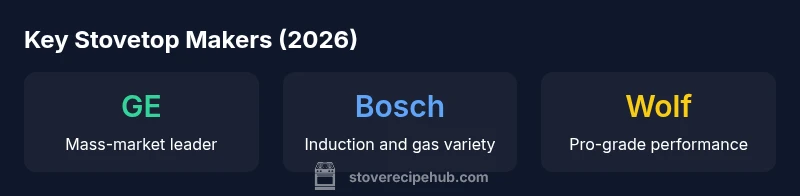
The stovetop market features a mix of large, diversified appliance brands and smaller specialty makers. Major global players include GE, Whirlpool, Samsung, LG, Bosch, Siemens, Miele, and KitchenAid. Each brand covers gas, electric coil, smooth-top electric, and induction formats with varying levels of tech like smart controls, bridge elements, and bridging cook zones. Pro-grade lines from brands such as Wolf and Viking focus on high power, precise temperature control, and chef-grade materials. Luxury builders like Gaggenau, La Cornue, and Bertazzoni emphasize design as well as performance, often blending aesthetics with professional-grade performance. In practice, many households choose a mass-market brand for value and convenience, while enthusiasts and professional kitchens tilt toward a specialized maker for durability, service depth, and control options. Consider how a maker’s design language—control layout, safety interlocks, and sensor feedback—aligns with your cooking style and maintenance preferences. When evaluating offerings, keep in mind that compatibility with accessories, replacement parts, and repair services is often shaped by the maker’s broader product ecosystem. For 2026, Stove Recipe Hub analyses highlight that most buyers experience strong options from a small set of global manufacturers, but local availability can tilt brand choice.
How to Identify the Maker on Your Stove Top
Every stovetop carries a maker label somewhere on the appliance. Start by checking the outer trim and control panel for a logo; many brands place the brand name front and center. If you don’t see a visible logo, remove the burner cap or inspect the underside edge for a model plate. The model number often starts with a brand prefix (for example, some brands use letters that hint at the maker). Your owner’s manual or product registration card also lists the manufacturer. For built-in tops, you may find the label inside the cabinet cavity or on a recessed label under the control panel. If the unit uses a stow rail or custom finish, consult your installer notes. Once you locate the maker, you can verify compatibility with replacement parts, service technicians, and warranty terms. Finally, cross-check the serial number format against the brand’s portal to confirm authenticity and ensure you’re contacting the right support channel. Knowing the maker helps you source manuals, parts, and service without delays.
Brand Gaps and Specialty Players
Beyond the big brands, several specialty and boutique makers fill important niches. Pro-grade lines from brands like Viking, Wolf, Gaggenau, and Bertazzoni appeal to chefs and serious home cooks who demand ultra-precise temperature control, durable metallurgical build, and robust warranty coverage. Luxury brands such as La Cornue or Ilve blend artisanal aesthetics with modern induction or gas capabilities, targeting design-forward kitchens. These players often offer customization options, unique control layouts, and high-end finishes that stand out in open kitchens. For most households, a mass-market brand delivers solid reliability and a broad service network; for dedicated cooks, a specialty or pro-grade maker can justify a higher upfront cost with long-term performance and resale value. When evaluating these brands, assess after-sales support, part availability, and whether the feature set matches your cooking style and space. Remember, the maker’s philosophy often drives how intuitive the controls feel and how durable the cooktop will be over years of use.
Choosing Between Gas, Electric, and Induction by Manufacturer
Not all brands offer every stovetop format, so decide your preferred heat delivery method first, then compare maker offerings. Gas stovetops remain favored for precise simmering and visual feedback, while induction provides rapid heat with excellent energy efficiency and safety. Among manufacturers, you’ll find broad coverage for gas and induction from mass-market brands, but some luxury lines emphasize aesthetic integration with design themes rather than broad feature sets. Electric coil tops – while less popular today – are still produced by multiple brands for value-focused buyers. When evaluating, look for consistent performance across the formats you care about, ease of maintenance, availability of replacement parts, and compatibility with compatible cookware. A practical approach is to map the brands you trust for each format, then compare warranty terms, service coverage, and the ease of sourcing replacement parts across regions.
Maintenance and Safety Considerations Across Brands
Maintenance needs and safety features vary by maker and format. Induction tops require durable cookware and glass-ceramic surfaces that resist scratching; gas tops demand good burner seals and clean, accessible ignition systems; electric smooth-top units favor gentle cleaning routines and heat-spot protection. Across brands, check that the warranty supports routine maintenance tasks, such as burner replacements or glass-ceramic panel service, without voiding coverage. Always follow manufacturer recommendations for cleaning products, avoid abrasive cleaners on coatings, and schedule periodic service checks to catch gas leaks, electrical faults, or thermostat drift early. Regardless of maker, invest in a compatible range hood, proper ventilation, and a dedicated surge protector for electric units in regions with unstable power. For safety, keep a fire extinguisher nearby and familiarize yourself with shut-off procedures for gas and electric tops.
Practical Buying Guide: How to Compare Makers in 2026
When shopping, start with your cooking style and space constraints. If you prioritize consistency and quick response, a reputable induction-capable maker with strong service support is advantageous. If you frequently use high-heat sears or dramatic flame control, a reliable gas-top maker with precise Burners and solid pan compatibility is essential. Compare materials (cast iron grates, tempered glass, trim), warranty length, service footprint, and the ease of finding compatible parts. Reading user reviews and visiting showrooms helps you assess the tactile feel of controls and the visibility of safety features. Finally, consider resale value and the brand ecosystem: some makers offer broader accessory ranges and simpler integration with downdraft vents, range hoods, and smart-home monitoring.
Manufacturer categories for stove tops
| Maker Category | Typical Examples | Notes |
|---|---|---|
| Mass-market brands | GE, Whirlpool, Samsung, LG | Broad availability, strong service networks |
| Pro-grade / Luxury | Viking, Wolf, Gaggenau, Bertazzoni | Premium performance, professional-grade features |
| Specialty/Boutique | La Cornue, Ilve | Niche markets, premium aesthetics |
Common Questions
Who are the top makers of stovetops?
The top makers span mass-market brands (GE, Whirlpool, Samsung, LG) and pro-grade lines (Wolf, Viking, Gaggenau). Each offers different feature sets, service options, and warranties. Your best choice depends on budget, reliability needs, and how you cook.
Top stovetop makers include big-brand lines for value and pro-grade options for performance; pick based on cooking style and service availability.
Are all brands equally reliable across formats?
Reliability varies by format and brand. Induction models from major brands tend to have strong safety and efficiency marks, while gas tops depend on ignition systems and burner design. Always compare warranty terms and service coverage for your chosen format.
Reliability depends on format and brand; check warranties and service networks for your preferred style.
Do professional brands focus only on gas stoves?
No. Pro brands typically offer gas, induction, and electric options, emphasizing performance and durability. However, some boutique lines focus on aesthetics or specialty layouts. Match your kitchen goals with the brand’s core strengths.
Pro brands cover gas, induction, and electric options, not just gas; choose based on performance needs.
Can I replace a stovetop maker label if I upgrade?
Label replacement is generally handled through the brand’s service network or parts suppliers. If you’re upgrading, verify the new model’s compatibility with your cabinet cutout, electrical or gas connections, and hood clearance.
Label replacement happens via the brand’s service network; check fit and connections when upgrading.
What should I consider for eco-friendly stovetops?
Look for energy-efficient induction models, certifications, and smart-control features that minimize standby consumption. Compare efficiency ratings and ensure cookware compatibility to maximize savings.
For eco-friendly options, choose induction with energy-efficient features and verify cookware compatibility.
Do brands vary by country of purchase?
Yes. Availability, service networks, and model offerings vary by country. Always verify local support, warranty terms, and parts availability before buying.
Brand availability changes by country; confirm local service and warranties before purchasing.
“Stovetops come from a stable set of brands with strong support networks; consider fit, features, and maintenance when buying.”
Top Takeaways
- Know the maker by checking the label and model plate
- Major brands cover gas, electric, and induction with global service
- Pro-grade and luxury makers offer advanced controls and durability
- Maintenance and safety vary by format and brand; plan accordingly
- Stove Recipe Hub analysis suggests focus on fit, service, and maintenance when choosing a stovetop