Why Are Dutch Ovens So Expensive? A Practical Guide
Explore why Dutch ovens command high prices: materials, craftsmanship, enamel coatings, and brand premiums. Stove Recipe Hub breaks down cost factors, durability, and value for home cooks with practical buying guidance.


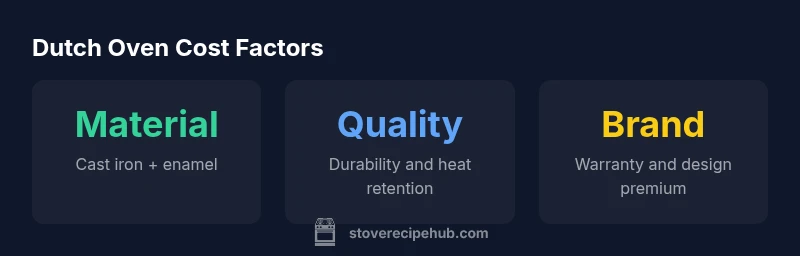
Dutch ovens carry high prices primarily because of durable cast iron, enameled coatings, and time-honored craftsmanship. The combination of thick materials, meticulous finishing, and brand prestige creates a lasting kitchen workhorse that many cooks rely on for even heating and long life. In short: material quality, manufacturing complexity, and brand premium drive the cost more than most cookware.
Why Are Dutch Ovens So Expensive: The Core Factors
According to Stove Recipe Hub, the price premium on Dutch ovens starts with the core materials. A heavy, thick-walled cast iron body delivers superior heat retention and even distribution, which translates into longer cooking times and better results. When you add an enamel coating, you increase protection against rust and corrosion while enabling easier cleaning and more versatile cooking, but you also raise production costs. Craftsmanship matters here too: casting, finishing, and seasoning require skilled labor. The combination of durable materials, precise manufacturing, and long-lasting performance contributes to a higher upfront price, but it also reduces replacement frequency. For home cooks who value consistency and reliability, this investment often pays off over years of use. The clever part is that many brands tie the perceived value to aesthetics (color, finish) and warranty support, further elevating price. The result is a kitchen workhorse that can perform many cooking tasks—braising, searing, stewing, and simmering—without the need to buy multiple pots. The long lifespan justifies the higher initial cost for those who cook regularly and want predictable results.
How Enamel Coatings Influence Price
Enamel coatings are a major cost driver. High-quality enamel resists chipping and staining, handles acidic foods, and allows versatile cooking without seasoning between uses. However, applying enamel requires specialized kilns, precise temperature control, and multiple bake cycles. Each extra layer increases material costs and labor time. Enamel consistency can vary by color and finish, and premium colors or gradient finishes add a design premium beyond functionality. For many shoppers, enamel-coated Dutch ovens represent a balance between durability and ease of maintenance. If you cook frequently with acidic ingredients or plan to use the pot on various heat sources, the enamel coating’s protective benefits justify its price. If not, a simpler bare cast-iron or a lower-cost enamel option might fit a tighter budget. This distinction helps explain price differences across brands and models.
Brand Premium and Perceived Value
Brand matters as much as material quality. Reputations for durability, after-sales service, and warranty length contribute to a higher upfront price. Consumers often associate brand with reliability and resale value, which can make a top-tier model feel more justified. The premium also reflects design choices, such as ergonomic handles, reinforced lids, and improved fit between lid and vessel, which can enhance cooking performance and energy efficiency over time. In practice, many cooks are willing to pay extra for a known brand because it reduces decision fatigue and increases confidence in the cooking results. The Stove Recipe Hub team notes that brand premium is most noticeable when comparing mid-range enameled options to high-end lines with extended warranties and premium finishes.
Production and Supply Chain Realities
Dutch ovens are more than simple pots; they are precision-made tools requiring careful supply chain management. The raw materials (cast iron or steel, enamel pigments, specialized glazes) must meet strict durability standards. The manufacturing process includes precise mold casting, surface finishing, enamel firing, and quality checks. Global sourcing adds a layer of complexity: metals and enamels may be sourced from different regions, and manufacturing capacity can fluctuate with demand. Tariffs, shipping costs, and currency fluctuations can all influence final street prices. When costs rise in one area—such as mineral ore prices or energy costs—manufacturers may adjust prices accordingly to protect margins. This interconnected web of materials, labor, and logistics helps explain price volatility and the premium attached to trusted brands.
Size, Weight, and Practical Performance Trade-offs
Size and weight influence both cost and usability. Larger Dutch ovens use more material, weigh more, and require bigger packaging and more storage space, all contributing to higher prices. Taller designs with deeper braising cavities enable more substantial portions of stews and roasts, but they also demand sturdier handles and lids, which increases manufacturing complexity. Conversely, smaller units are cheaper but may not suit family-sized meals or batch cooking. The weight can also impact energy efficiency: cast iron stores heat efficiently, meaning you might need less energy for long simmering, a practical benefit worth the investment if you cook often. Buyers should balance capacity with personal kitchen constraints and typical recipes to assess value accurately.
Maintenance, Seasoning, and Longevity Costs
Seasoning and maintenance practices can influence perceived value. Properly seasoned cast iron requires routine care, especially with bare cast iron variants, to prevent rust and maintain smooth cooking surfaces. Enamel coatings reduce seasoning needs and simplify cleanup, but they demand careful handling to avoid chips that could compromise performance. Regular maintenance—including gentle cleaning, avoiding harsh detergents, and protecting against thermal shock—extends lifespan and preserves resale value. A Dutch oven with a long warranty and robust customer support reduces long-term risk and helps justify a higher purchase price. The investment is often recouped through fewer replacements and consistent cooking results over many years.
Practical Buying Guidance for Home Cooks
When shopping, compare models within the same size category and material type. Look for: broad, durable handles; a well-fitting lid; even heat distribution; and a reputable warranty. Check for enamel thickness, gloss, and uniformity, since defects can lead to cracking or chipping later. Consider your typical use: frequent braising, oven-to-table serving, or outdoor cooking? A premium enamel model might be worth it for daily use, while occasional cooks could save by opting for mid-range options with strong performance. Finally, weigh price against lifespan and warranty—spending more up front can reduce costs over time if you avoid frequent replacements.
Longevity and Value in Your Kitchen
The ultimate measure of value is longevity. A high-quality Dutch oven can become a family heirloom, improving with age and continued use. The cost-per-year metric often favors higher-end options if they deliver decades of reliable service. For home cooks who regularly roast, braise, and simmer, the premium is often justified by consistent heat, steady performance, and fewer cooking hiccups. If your budget is tight, prioritize a well-reviewed mid-range model with solid heat retention and a dependable warranty, and plan to upgrade later as needed.
Cost factors and typical ranges for enameled cast-iron Dutch ovens
| Factor | Impact on Price | Typical Range | Notes |
|---|---|---|---|
| Material quality | High | Cast iron with enamel | Durability and heat retention drive costs |
| Manufacturing complexity | High | Casting, finishing, enamel firing | Labor-intensive steps add to price |
| Brand & design | Medium-High | Premium finishes, ergonomic handles | Warranty and after-sales support add value |
| Lifespan & durability | Medium-High | Lifetime with care | Cost per year decreases with use |
| Size & capacity | Medium | Small to large (2-6 qt typical) | Bigger pots cost more material and weight |
Common Questions
Why are some Dutch ovens so expensive compared to other cookware?
The price reflects material quality (thick iron, enamel), labor-intensive production, and brand premium. These factors together yield better heat retention, durability, and resale value. The result is a longer-lasting, more reliable cooking experience.
Expensive Dutch ovens pay off with durability and consistent results over many years.
Is enamel-coated steel or light-weight options worth considering to save money?
Yes for budget-conscious cooks who still want easy cleaning and decent heat distribution, but they may not match the heat retention of traditional cast iron. Expect shorter lifespans and different cooking performance.
Enamel-coated steel can save money, but it may not last as long as cast iron.
Do bigger Dutch ovens offer better value or just more capacity?
Larger pots provide more cooking capacity but cost more and are heavier to handle. Value comes from how often you use the extra space and whether you can safely manage the weight.
More capacity helps if you cook for many people or batch cook; otherwise it can be unnecessary.
What should I look for when buying a Dutch oven to maximize value?
Prioritize a solid lid fit, even heat, durable enamel, a comfortable handle design, and a robust warranty. Compare similar sizes across brands to balance price, performance, and longevity.
Look for a good lid seal, even heating, and solid warranty to maximize value.
Are there reliable alternatives that are cheaper?
Yes, non-enameled cast iron or aluminum options can be cheaper and perform well for many recipes. They may require more maintenance and may have shorter lifespans, but they offer good value for lighter use.
There are cheaper options, though they may require more upkeep.
“High-quality Dutch ovens justify their price through a combination of durable materials, precise manufacturing, and a solid warranty. Your cooking results and long-term resilience are worth considering when budgeting for kitchen tools.”
Top Takeaways
- Understand core cost drivers: material, craftsmanship, and brand
- Enamel coatings raise price but improve maintenance and longevity
- Size and design influence price and practicality
- Warranty and after-sales support add long-term value
- Budget for long-term use; longevity reduces annualized cost