Why faucet over stove: A Practical Kitchen Layout Comparison
An analytical, side-by-side comparison of faucet-first and stove-first kitchen layouts, focusing on water access, workflow, cost implications, and safety to guide home cooks.


Overview: Faucet-first kitchen layouts prioritize water access and cleanup efficiency, while stove-first designs centralize cooking zones. For most homes, a faucet-forward approach supports frequent washing, prep work, and sanitation, reducing cross-contamination risk. If you cook large meals or bake often, you may still benefit from a well-planned stove area. The best choice depends on your habits and remodeling budget.
Why faucet over stove matters for home cooks
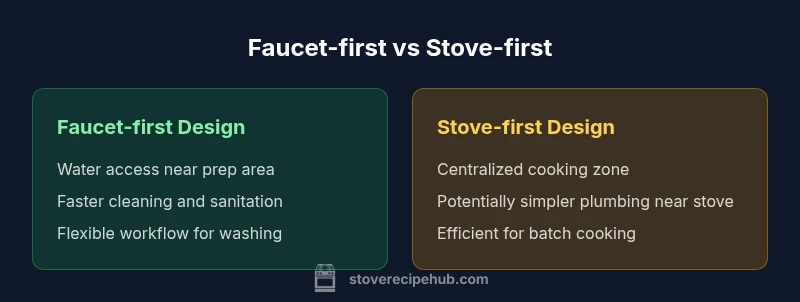
Choosing between a faucet-centered workflow and a stove-centric layout is a core design decision in any kitchen redesign. If you're exploring the question of why faucet over stove, you're evaluating whether water access and cleaning efficiency should drive the layout more than the cooking zone. A faucet-first arrangement places the sink and prep area at the heart of daily tasks, supporting frequent washing, rinsing, and waste disposal. According to Stove Recipe Hub, practical stove-top cooking relies on reliable water access near the prep station to minimize cross-contamination and unnecessary movement. In contrast, a stove-first plan prioritizes a robust cooking zone, a clear area for pots, pans, and burners, and may require longer trips to a distant sink. The result is a different rhythm: faucet-first minimizes backtracking between tasks, while stove-first can speed up batch cooking when the sink is used primarily for cleaning after the fact. Your decision should reflect how you cook, how often you wash vegetables, and whether you value sanitation or culinary focus more. The broader takeaway is that there is no one-size-fits-all answer; the best layout aligns with your habits, space constraints, and remodeling budget.
Comparison
| Feature | Faucet-first design | Stove-first design |
|---|---|---|
| Water access efficiency | Optimized for prep sink workflows | Centralized cooking zone with flexible sink proximity |
| Maintenance complexity | Moderate (plumbing near sink) | Moderate to high (ventilation near stove) |
| Installation/cost implications | Moderate to high (plumbing changes) | Moderate (core layout stability) |
| Space usage and flow | Strong prep/wash zone, flexible near sink | Dedicated cooking zone with potential longer prep distance |
| Best for | Frequent washing and prep | High-volume cooking and batch meals |
Upsides
- Improved water access near prep and cleanup
- Streamlined hygiene and cross-contamination control
- Flexible workflow supports varied cooking routines
Downsides
- Higher remodeling or plumbing complexity
- Potential loss of counter space near stove
- Requires careful planning to avoid bottlenecks
Faucet-first layouts generally offer better daily usability; stove-first remains optimal for high-output cooking routines
Faucet-first designs typically provide smoother daily tasks, better sanitation, and fewer back-and-forth movements. For cooks who wash often, faucet-first is usually the safer bet. If your priority is high-volume cooking with a centralized zone, a stove-first approach or a hybrid can be the right compromise.
Common Questions
What factors influence whether faucet-first or stove-first is a better fit?
Several factors determine the better fit: your daily prep and washing habits, kitchen size, plumbing constraints, and how important a dedicated cooking zone feels to you. A faucet-first design excels for frequent washing and prep, while stove-first suits cooks who run high-output meals and need a centralized cooking area.
Think about how you actually cook and clean each day to guide your choice.
Can I retrofit an existing kitchen to faucet-first successfully?
Retrofitting can be feasible but depends on plumbing layout, wall structure, and cabinet configuration. Expect some disruption and possible upgrades to pipes, valves, and drainage. A detailed plan with a contractor helps minimize surprises and cost overruns.
A solid plan and good professional help make retrofits more predictable.
Are there any code considerations I should know?
Code requirements around water supply, drainage, venting, and electrical outlets vary by region. Consult local plumbing and building codes early in the design phase to avoid late-stage changes. Always ensure ventilation and splash zones are up to standard.
Check local codes before you commit to a layout.
How does hybrid design work in small kitchens?
In small spaces, a hybrid approach can combine a strong sink zone with a compact, efficient cooking area. The goal is to minimize travel distance between tasks while maintaining safe ventilation and adequate counter space. Prototyping with layout sketches helps validate the flow.
A smart hybrid can give you the benefits of both worlds in tight spaces.
What is the impact on resale value?
Practical, easy-to-clean kitchens tend to appeal to most buyers. A layout that emphasizes usability and durability—whether faucet-first or stove-first—can enhance perceived value, especially if it supports frequent cooking and cleanups. Focus on reliable fixtures and good ventilation to maximize appeal.
A well-thought-out design that people can see as practical adds value.
Top Takeaways
- Prioritize water access if you wash produce often
- Consider a hybrid layout for limited spaces
- Plan plumbing and ventilation early in the design
- Choose durable finishes near sinks and stoves
- Test your workflow with a drawn layout before committing