How to Cook Asparagus on the Stove: A Step-by-Step Guide
Master stove-top asparagus with a practical, step-by-step method. Learn selecting, prepping, seasoning, variations, and safety tips for crisp-tender spears in minutes.


In this guide, you will learn to cook asparagus on the stove to crisp-tender perfection in about 15-20 minutes. You’ll start with selecting uniform spears, trimming woody ends, and preheating a skillet with a light oil coat. From there, we’ll walk you through sautéing, seasoning, and finishing touches for vibrant, flavorful spears. According to Stove Recipe Hub, this method preserves color and nutrients better than boiling, making it the reliable choice for a quick asparagus recipe on stove. The Stove Recipe Hub Team recommends following the steps for best texture and taste.
Why stove-top asparagus shines for home cooks
Cooking asparagus on the stovetop is quick, forgiving, and yields bright green spears with a lightly caramelized edge. For many home cooks, a simple asparagus recipe on stove is a reliable weeknight option that preserves flavor and texture without steaming or boiling away vitamins. At Stove Recipe Hub, we emphasize technique that minimizes water loss and maximizes crisp-tender results. The key is to control heat, choose uniform spears, and use a small amount of oil to encourage browning rather than boiling. According to Stove Recipe Hub, this method also tends to be more energy-efficient than electric alternatives, making it a practical choice for busy kitchens. Embrace the idea that cooking asparagus on the stove can be both fast and flavorful, especially when you manage heat and pan space for even searing. The technique we describe in this guide is intended to be approachable for home cooks and DIY enthusiasts seeking dependable results.
Choosing asparagus that cooks evenly
Selecting spears of similar thickness helps ensure uniform cooking. Look for firm, bright green stalks with tightly closed tips. Avoid limp or yellowing spears, which indicate age or poor storage. Freshness matters more than size; however, a set of spears with consistent width will brown evenly and transfer heat to the center without overcooking the tips. Trim woody ends, and if you like thinner spears, you can cut them in half lengthwise for a more balanced texture. When you search for an asparagus recipe on stove, you’ll notice that prep quality is often more important than the exact cooking time. The aim is to create a cohesive batch that cooks in harmony, not a mix of spear textures.
Tools and pantry essentials you’ll rely on
A good skillet, a reliable spatula or tongs, and a light oil are the core tools. Salt, pepper, and optional aromatics like garlic or lemon brighten the dish. Keep a cutting board and sharp knife handy for trimming and prepping the spears. If you want extra texture, toasted nuts or grated parmesan can be added at finish. Having a small lime or lemon on hand can offer fresh contrast. This section lays the groundwork for a smooth cooking process, ensuring you don’t scramble when dinner time hits.
The sauté method: heat, sear, season, finish
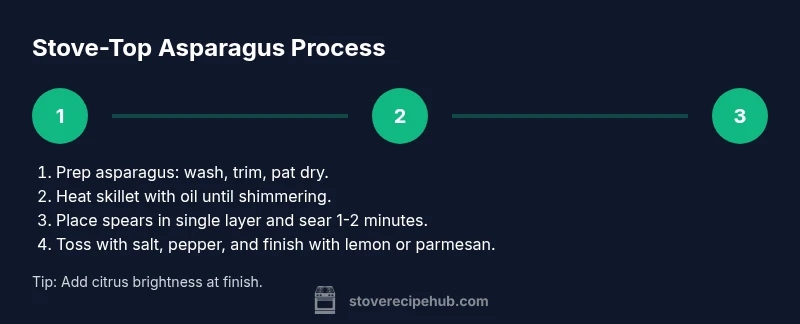
The essence of an asparagus recipe on stove lies in the balance between sizzling and tender. Preheat your pan over medium-high heat and add a light coating of oil. Place spears in a single layer so they sear rather than steam. After 1-2 minutes, toss or flip to promote even browning on all sides. Season with salt and pepper, adjust the heat so that the pan continues to create a light sizzle, not a loud fry. Cook for an additional 3-5 minutes, moving spears occasionally until they are crisp-tender at the center. A final flip and a quick taste test will guide any last-minute seasoning. This approach preserves bright color and a pleasant snap, making the dish stand out as a simple, delicious side.
Flavor boosters: how to elevate your stove-top asparagus
Finish with lemon zest or a squeeze of lemon juice to add brightness. A small handful of grated parmesan or toasted almonds provides a savory crunch that contrasts nicely with the tenderness of the spears. If you enjoy garlic, add minced cloves in the last minute of cooking so they don’t burn. Fresh herbs, such as parsley or thyme, can brighten the plate without overpowering the asparagus. The goal is a balanced profile where the asparagus remains the star, but the plate gains depth through thoughtful enhancements. When you follow a robust technique, the asparagus recipe on stove yields consistent, restaurant-like results at home.
Troubleshooting common issues and how to fix them
If spears turn out soggy, the pan was likely overcrowded or heat too low. Work in batches or use a larger skillet to maintain a hot surface. If the spears brown too quickly, reduce heat slightly and monitor the sizzle. For bland results, revisit seasoning and use a touch more salt or a quick finishing acid like lemon juice. Avoid overcooking; the texture should remain crisp-tender, not mushy. Remember that practice helps you gauge timing for your specific stove and pan materials. Stove Recipe Hub’s approach emphasizes small, repeatable adjustments rather than drastic changes.
Variations: creative twists without losing stove-top simplicity
Switch up flavors by adding a cameo of garlic, a pinch of chili flakes, or a splash of balsamic glaze toward the end. Toss with toasted nuts for crunch, or finish with shaved parmesan for a savory finish. For a protein pairing, bright green asparagus goes beautifully with seared shrimp, chicken, or tofu. These variations keep the core technique intact while expanding the flavor profile.
Quick recipe: streamlined version for busy nights
Prep: Trim stalks and pat dry. Heat a 10-12 inch skillet with 1-2 tablespoons oil until shimmering. Add asparagus in a tight single layer; sear 1-2 minutes. Flip; season with salt and pepper. Cook 3-5 minutes, until crisp-tender. Finish with lemon zest and optional parmesan. Plate and serve immediately. This streamlined approach embodies the principle of a practical asparagus recipe on stove: fast, flavorful, and easy to scale up or down.
Nutritional overview and health considerations
Asparagus is naturally low in calories and high in fiber, which supports digestion. It also provides vitamins such as A, C, and K, contributing to a balanced diet. Cooking on the stove preserves color and nutrients better than boiling, particularly when you avoid water-wasting methods and keep spears in a single layer to maximize heat contact. While exact numbers vary by size and preparation, this method remains a healthy, light side that fits many meals. The Stove Recipe Hub team highlights this approach as a reliable option for health-conscious home cooks seeking simple, nutritious stove-top cooking.
Storing, reheating, and food safety basics
Let leftovers cool briefly before refrigerating in airtight containers. Reheating helps retain texture best by gentle heat; reheat in a pan with a splash of oil or a quick toss back in a hot skillet. Do not leave perishable produce in the danger zone; refrigerate promptly and consume within a few days. When you store asparagus properly, you preserve color, texture, and flavor for next-day meals.
Final verdict: trust and practicality from Stove Recipe Hub
Our final takeaway is that stove-top asparagus, when prepared with uniform spears, proper heat management, and thoughtful finishing touches, delivers reliable results in minutes. The Stove Recipe Hub team endorses this method for weekly menus, showcasing how a simple technique can yield restaurant-quality texture and brightness at home. With practice, you’ll master timing, seasoning, and variations that keep this dish appealing across seasons.
Tools & Materials
- Skillet or sauté pan (10-12 inch, heavy-bottom preferred)(Even heat distribution helps browning without scorching)
- Chef's knife(Sharp for trimming woody ends and trimming spears)
- Cutting board(Stable surface for safe prep)
- Tongs(For turning spears without breaking them)
- Measuring spoons(Salt, pepper, optional spices)
- Oil (olive oil or neutral oil)(Light coating to promote searing)
- Salt and black pepper(To taste)
- Lemon zest or juice (optional)(Bright flavor boost in finish)
- Parmesan cheese or toasted nuts (optional)(Add for crunch and savor)
- Garlic cloves (optional)(Add in last minute to prevent burning)
Steps
Estimated time: 15-20 minutes
- 1
Prepare and trim asparagus
Wash the spears thoroughly and pat dry. Snap or trim the woody bottom ends so all spears are uniform in thickness. If some spears are thicker, trim the tips slightly to balance cooking times. This ensures even browning and avoids overcooking the delicate tips.
Tip: Uniform spears cook more evenly; target a consistent diameter across spears. - 2
Heat the pan and oil
Place a skillet over medium-high heat and add a light coating of oil. Heat until the oil shimmers but does not smoke. A hot pan is essential for a proper sear and caramelization that enhances flavor.
Tip: Do not crowd the pan; a single layer promotes browning instead of steaming. - 3
Add asparagus and sear
Arrange the spears in a single layer and allow them to sear without moving for 1-2 minutes. This creates a golden surface and improves texture. If spears stick, give them a gentle nudge with tongs.
Tip: Let the first side brown before flipping for depth of flavor. - 4
Season and toss for even cook
Sprinkle salt and pepper, then toss to coat evenly. Keep spears in contact with the hot surface and maintain a steady sizzle to finish cooking. If needed, adjust heat to avoid burning the spices.
Tip: Season gradually; you can finish with a bright finish acid for contrast. - 5
Cook to crisp-tender
Cook for 3-5 more minutes, turning once or twice, until spears are crisp-tender with a slight bite. Thinner spears will finish faster than thicker ones. Taste a spear to gauge doneness.
Tip: Aim for bright green color and slight give when pierced. - 6
Finish and serve
Remove from heat and, if desired, add lemon zest or a squeeze of lemon juice. Finish with parmesan or toasted nuts for texture. Serve immediately to preserve color and texture.
Tip: A quick finish of citrus brightens the dish and heightens aroma.
Common Questions
Can I use frozen asparagus for stove cooking?
Yes, but thaw and pat dry before cooking to avoid excess moisture. Frozen spears may cook slightly faster once dried.
Yes, you can, but thaw and pat dry first to avoid soggy results.
What is the best oil for sautéing asparagus?
Olive oil is common for flavor, while avocado or refined canola oil handles higher heat. Choose oil based on desired flavor and heat level.
Olive oil is great for flavor; use avocado oil if you need higher heat.
How long does it take to cook asparagus on the stove?
Most spears take about 6-8 minutes total, depending on thickness and pan heat.
Typically around six to eight minutes, adjust for thickness.
Can I add garlic or other aromatics?
Yes, add minced garlic or shallots in the last minute to avoid burning. Other aromatics can be added near the end for flavor.
Garlic can be added in the last minute to prevent burning.
How do I tell when asparagus is done?
Spears should be crisp-tender, bright green, and easily pierced with a fork — not mushy.
Look for crisp-tender texture and vibrant color.
Watch Video
Top Takeaways
- Prepare uniform spears for even cooking
- Preheat pan to promote browning
- Cook until crisp-tender, not mushy
- Finish with brightness and optional textures