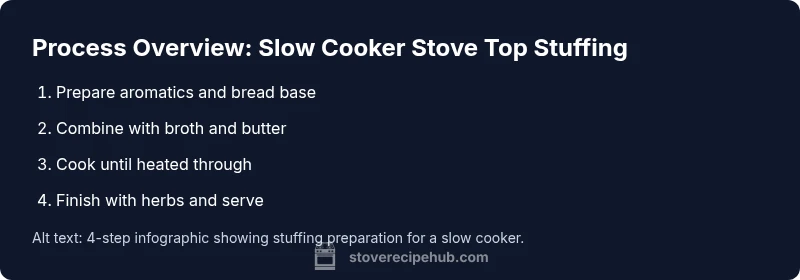
Slow Cooker Stove Top Stuffing: Easy, Flavorful Tips
Learn to make slow cooker stove top stuffing with easy steps, flavorful mix-ins, and practical timing tips. This guide from Stove Recipe Hub covers ingredients, substitutions, and how to store leftovers.


Learn to make slow cooker stove top stuffing with easy steps, flavorful mix-ins, and practical timing tips. This guide from Stove Recipe Hub covers ingredients, substitutions, and how to store leftovers. With a few simple techniques, you can achieve moist, fluffy stuffing that pairs perfectly with holiday mains or weeknight roasts.
Why slow cooker stove top stuffing works
When you want a reliable side that stays moist without babysitting the pan, the slow cooker stove top stuffing delivers. The gentle heat of a slow cooker lets bread cubes rehydrate steadily while absorbing flavorful stock, butter, and aromatics. This method helps prevent the stuffing from drying out, which can happen when reheated on a hot stove or in the microwave. According to Stove Recipe Hub, the keys to success are using a sturdy stuffing mix (or well-cubed day-old bread) and building a modest, well-balanced flavor base. Start with a classic base of onions, celery, and butter to create depth that carries through the long, gentle simmer. You’ll typically add broth gradually to avoid sogginess, then finish with a light fold of fresh herbs or a splash of pan drippings for color. The result is a side dish that tastes like it was prepared with hands-on attention, even when your schedule is tight. This approach also adapts to holiday crowds, weeknight dinners, or meal-prep plans.
Ingredient foundation and substitutions
The backbone of slow cooker stove top stuffing is the bread base, aromatic vegetables, and a flavorful liquid. Choose bread that has a little staling for texture; day-old cubes or toasted sourdough pieces work beautifully. If you’re gluten-free, swap in a gluten-free stuffing mix or use cornbread cubes with a gluten-free broth. For flavor, onions, celery, and butter are standard, but you can enrich the mix with garlic, fresh sage, thyme, or dried marjoram. Liquids matter: use low-sodium chicken or vegetable broth and a little melted butter to boost moisture and richness. If you prefer a lighter finish, add a touch of white wine or a splash of apple cider for brightness. Mix-ins such as cooked sausage, cranberries, or apples are delicious but should be added toward the end to keep texture intact. The goal is a balance between moist, fluffy interior and a lightly crisp exterior from the container’s edges.
Equipment and prep you need
A good slow cooker is essential; a 4 to 6 quart model gives you enough space for even cooking and easy stirring. You’ll also want a sturdy skillet for browning aromatics, a knife for prep, cutting board for dicing, measuring cups and spoons, and a mixing bowl for combining components. Have a whisk or spoon handy to blend wet and dry ingredients, and keep a ladle nearby for portioning. Prep all components before you start: dice onions and celery, cut bread into even cubes, and warm your stock so it’s ready to add. If you’re using sausage or apples, pre-cook or sauté these separately to keep them from releasing excess moisture into the stuffing. Finally, lay a light mist of nonstick spray inside the slow cooker to ensure easy release and clean-up later.
Flavor development and texture tips
Layer flavor by sautéing onions, celery, and garlic in butter until they’re translucent and fragrant. Deglaze the pan with a small amount of broth to lift browned bits, then blend this into your stuffing mix. Add herbs like sage, thyme, and a pinch of pepper for warmth without overpowering the bread’s sweetness. When you pour broth into the bread, do it gradually; you want a cohesive, moist crumb, not soup. Stir gently to avoid mashing the bread, then cover and cook on low until the mixture is heated through and the bread has rehydrated evenly. If you like a crisper top, finish under the broiler for a minute or two after removing from the slow cooker. Taste and adjust salt last, since some broth varieties are salty by default. A final fold of chopped parsley brightens the dish just before serving.
Dietary variants and mix-ins
This method accommodates many dietary needs. For vegetarian meals, use stock made from vegetables and skip sausage. For gluten-free versions, ensure your stuffing mix is certified gluten-free or use gluten-free bread. For dairy-free options, substitute olive oil or a dairy-free butter replacement and omit butter entirely from the base. To boost protein, fold in sautéed mushrooms or chickpeas; for a touch of sweetness, add diced apples or dried cranberries. If you want extra crisp edges, reserve a handful of bread cubes to sprinkle on top in the final 15 minutes. The flexibility of slow cooker stuffing means you can tailor flavors to your family’s tastes or accommodate guests’ restrictions without sacrificing texture.
Troubleshooting and common mistakes
A common pitfall is adding too much liquid, which yields a heavy, mushy result. If your mixture looks soupy, remove the lid and cook on high for 10-15 minutes to reduce moisture before finishing. Another mistake is not browning aromatics; this step builds depth that you’ll taste in every bite. If you’re using a low-wattage slow cooker, coarsely chop bread to reduce sogginess and ensure heat distributes evenly. Avoid overmixing, which can compact the stuffing; use a gentle folding motion to preserve light crumb. Finally, beware steam when lifting the lid; let the cooker cool briefly and use a dry towel to protect your hands. With patience, your stuffing’s texture becomes uniformly tender and flavorful rather than uneven.
Storage, reheating, and serving ideas
Leftover slow cooker stove top stuffing stores well in the refrigerator for up to four days. Reheat gently in a microwave or in a small skillet with a splash of broth to restore moisture. For longer storage, portion and freeze in airtight containers for up to two months; thaw overnight in the fridge then reheat slowly. To serve, spoon into a warm serving dish and whisk in a tablespoon of butter to re-emulsify the crumb and enhance shine. A bright herb finish — parsley, chives, or dill — adds color and aroma. This dish pairs beautifully with roasted turkey, chicken, or a hearty vegetable main, and it can be prepared ahead for holiday meals or weekend gatherings.
Tools & Materials
- Slow cooker (4-6 quart)(Fits standard stuffing amounts and allows even cooking)
- Skillet or sauté pan(For browning aromatics and optional sausage)
- Cutting board(Prep vegetables and bread cubes)
- Chef’s knife(Sharp for chopping onions, celery, and any add-ins)
- Measuring cups and spoons(Accurate for broth, butter, and seasonings)
- Mixing bowl(Combine dry and wet ingredients)
- Wooden spoon or spatula(Gentle folding to avoid crushing bread)
- Bread cubes or stuffing mix(Day-old bread works best for texture)
- Broth (chicken or vegetable, low-sodium)(Adds moisture without oversalting)
- Butter or dairy-free alternative(Melted into aromatics and moisture)
- Herbs and spices (sage, thyme, salt, pepper)(Adds depth; adjust to taste)
- Optional mix-ins (sausage, apples, cranberries)(Use toward the end to maintain texture)
Steps
Estimated time: 25-40 minutes
- 1
Gather ingredients
Collect all required items and measure them so everything is ready for smooth execution. This minimizes delays and ensures you can adjust adaptively as you cook.
Tip: Keep your mise en place within arm’s reach for speed. - 2
Brown aromatics
Sauté onions and celery in butter until translucent and fragrant. The caramelized edges add depth that carries through the entire dish.
Tip: Avoid over-browning; aim for light golden edges to preserve brightness. - 3
Toast bread and prepare liquids
Toast bread cubes until lightly golden and warm your broth with melted butter before mixing. This helps the crumb absorb moisture evenly without becoming mushy.
Tip: If using sausage, cook it here and drain excess fat first. - 4
Combine dry and liquids
In a large bowl, mix bread with aromatics, then gradually stir in broth until the crumb is cohesive but not soggy. Fold gently to avoid crushing the bread.
Tip: Less is more; you can always add more liquid if needed after mixing. - 5
Cook in slow cooker
Transfer the mixture to the slow cooker and cook on low until hot throughout and flavors meld, usually a short, steady simmer. Keep lid on to trap moisture.
Tip: If your cooker is prone to dry edges, rotate halfway or stagger bread pieces to avoid dry corners. - 6
Finish and serve
Remove from heat, let rest briefly, then fluff with a fork and adjust seasoning. A final sprinkle of fresh herbs adds color and aroma before serving.
Tip: A splash of pan drippings or a pat of butter adds sheen and extra flavor.
Common Questions
Can I use store-bought stuffing mix in a slow cooker?
Yes; you can use a boxed stuffing mix in the slow cooker. Follow the package instructions and reduce added liquid to prevent a soggy result.
Yes, you can use store-bought stuffing mix in the slow cooker. Just follow the package directions and use less liquid to avoid sogginess.
Is it safe to leave the slow cooker unattended while cooking stuffing?
Yes, on a low setting it can cook without constant attention. Do not run on high for long periods; use a timer and check for hot, safe temperatures.
Yes, you can leave it on low, but use a timer and avoid high heat for long runs.
Can I freeze leftovers after cooking?
Yes; allow leftovers to cool, then store in airtight containers or freezer bags. Reheat slowly to restore moisture and texture.
Yes, you can freeze leftovers and reheat later, preserving moisture with a gentle heat.
Can I make this gluten-free?
Yes; use gluten-free bread or a certified gluten-free stuffing mix and ensure broth is gluten-free.
Yes, just swap in gluten-free bread and broth.
What if my slow cooker runs hot and dries out the stuffing?
If the dish dries, reduce cook time next time or add a splash more broth during mixing. Keeping the lid on helps retain moisture.
If it dries, use less heat next time and add a bit more broth. Keep the lid on to retain moisture.
Watch Video
Top Takeaways
- Choose a bread base with some staling for best texture
- Brown aromatics to build depth of flavor
- Add liquids gradually to reach the right moisture
- Customize with mix-ins while preserving crumb structure