What to Oven Roast Potatoes At: Temperature & Time Guide
Learn the optimal oven temperature and roasting times for potatoes, with practical tips for crispy exteriors and fluffy centers. A practical, data-informed guide from Stove Recipe Hub.


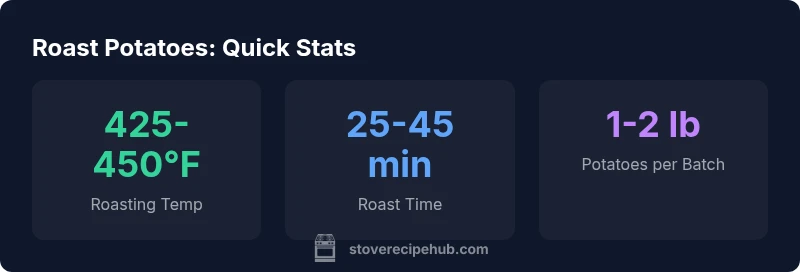
Roast potatoes at 425-450°F (220-230°C) for 25-45 minutes, depending on size and potato variety. Dry thoroughly, toss with oil and salt, and spread in a single layer. Flip halfway for even browning, then finish under high heat if you want extra crispness.
What to oven roast potatoes at: Temperature, textures, and timing
To achieve the classic crisp-on-the-outside, fluffy-inside roast, you need a reliable baseline temperature and a predictable roasting rhythm. The exact target depends on your oven and the potato variety, but a strong starting point is a hot oven that promotes browning without drying too quickly. If you’re asking yourself what to oven roast potatoes at for weeknight sides, this guidance provides practical, science-informed steps. The Stove Recipe Hub team notes that heat distribution and surface moisture management are the two levers that determine crust formation and interior tenderness. In practice, you’ll season, dry, and space the potatoes to give heat access to every face, then monitor browning so you don’t overshoot. Remember: different potatoes (russet, Yukon Gold, or maris piper) respond to the same temperature a bit differently, so expect small adjustments. By starting with a common range and then tailoring to your oven, you’ll consistently land on a crispy exterior and a tender center.
Potato varieties and how they affect roasting
Potatoes come in starchy, waxy, and all-purpose varieties. Russets yield crisper exteriors due to their high starch, while Yukon Golds stay creamier with a more buttery bite. Red-skinned potatoes hold their shape well and can stay a touch firmer, which affects how you time their browning. For best results, choose varieties that convert well to a roast: their moisture content and starch level influence how quickly they brown and how fluffy the interior becomes. The Stove Recipe Hub Team recommends testing a small batch with your chosen potatoes to nail the timing before committing a full tray to the oven. This approach also accounts for oven hot spots and rack position. When you know your specific potato type, you can tune temperature and time to maximize browning and interior tenderness.
Prep steps: washing, drying, and par-drying
The key to crispy potatoes starts with surface dryness. Rinse and scrub the potatoes, then cut them into uniform pieces. Pat dry thoroughly with a clean towel to remove surface moisture, and consider a quick air-dry or par-dry on the counter for a few minutes. Moisture on the surface steams instead of browns, which softens edges and reduces crunch. Once dry, toss with oil and salt. Oil coats the surface, helps heat transfer, and encourages browning. This is where careful portioning matters: overcrowding traps steam and creates soggy edges. If you’re batch-roasting, use multiple sheet pans or roast in batches to maintain a single-layer layout for even browning.
Oil, salt, and seasonings: balancing flavor and crunch
Oil is the catalyst for browning and flavor. A light coat prevents stickiness without greasing the potatoes into greasiness. Olive oil brings fruity notes, while neutral oils keep flavors clean; you can mix in garlic powder, paprika, dried herbs, or pepper for aroma and depth. Salt is essential for crust formation and flavor development; consider a little sea salt per pound to anchor the potatoes. For a bolder profile, add fresh minced garlic toward the end of roasting or toss with chopped herbs like rosemary once the potatoes come out of the oven. The goal is a balanced crust with a tender interior, not a wet or greasy surface. The Stove Recipe Hub approach emphasizes simple seasonings that enhance the potato’s natural sweetness and starch-driven crunch.
Roasting strategies: pan choice, spacing, and turning
Sheet pans, cast iron skillets, or high-quality baking trays are all viable; what matters most is even heat distribution and spacing. Use a 1/4 to 1/2 inch thickness for uniform browning across each piece. Avoid crowding; potatoes should sit in a single layer with space around each piece. Turn or flip the potatoes at least once during roasting to promote even browning on all sides. The rack position affects browning: an upper rack yields quicker browning, while a lower rack offers steadier heat and more interior tenderness. If you notice uneven browning, swap to a hotter rack or adjust the pan’s position to capitalize on hot spots. The Stove Recipe Hub Team recommends checking early in the time window and adjusting time based on color and texture rather than chasing a specific minute mark.
Finishing touches: broil, resting, and serving
For extra crispness, a brief finish under high heat or broil can push the crust to a deeper color. Keep a close eye to prevent burning, rotating if necessary to evenly brown. Rest the roasted potatoes for a few minutes after removing from the oven; this rest allows moisture to redistribute and helps the crust set. Serve with a simple dip, a herb-heavy gremolata, or a squeeze of lemon to brighten the flavors. Resting also helps the starches reconfigure, resulting in a more satisfying bite. The Stove Recipe Hub approach emphasizes using resting time as part of the process, not as an afterthought. With a little planning, roasted potatoes become a reliable, scalable side dish for weeknight dinners and weekend feasts.
Common mistakes and how to fix them
Crowded pan, under-seasoning, and skipping the drying step are the most common errors. Crowding traps steam and leads to soggy edges; ensure ample space between pieces. Skipping the drying step leaves surface moisture that inhibits browning. If your potatoes aren’t browning evenly, switch to a hotter oven or use a convection setting if available. Adjust oil lightly to improve crispness, and consider tossing with coarse salt for a satisfying crunch. Finally, avoid peeling all potatoes if you prefer more texture; skins add flavor and color and can contribute to a more robust roast.
Variations and make-ahead options
Want a different flavor profile? Try rosemary and garlic, chili flakes for a heat kick, or smoked paprika for a warm note. Make-ahead option: par-cook peeled potatoes in cold water, drain, and refrigerate overnight to speed up roasting later. When ready to bake, drain any residual moisture, pat dry, and proceed with your usual oil and seasoning. This approach can reduce overall roast time and still deliver a crispy crust. The Stove Recipe Hub Team notes that experimenting with herbs and aromatics can tailor roasted potatoes to different meals without changing the core technique.
Roasting guidelines for potato textures
| Aspect | Guidance | Rationale |
|---|---|---|
| Temperature | 425-450°F (220-230°C) | Promotes browning while preserving interior moisture |
| Cut Size | 1-2 inch chunks | Ensures even cooking and browning |
| Oil Amount | 1-2 tbsp per lb | Covers surface without greasing |
| Spacing | Single-layer with space | Prevents steaming and promotes crust |
Common Questions
What temperature is best for oven-roasted potatoes?
Most potatoes roast well at a hot range of 425-450°F (220-230°C). This promotes browning without drying the interior. Always consider your oven quirks and adjust slightly for best results.
Roast at around 425-450°F for best browning, but adjust for your oven.
Should I parboil potatoes before roasting?
Parboiling can speed up cooking and help with texture, but it’s not required. If you’re short on time, drying and roasting directly works well; for extra tenderness, a brief parboil helps break down starch and leads to fluffier interiors.
Parboil if you want extra tenderness; otherwise, roasting directly also works.
What size should I cut potatoes for roasting?
Aim for uniform pieces around 1-2 inches. This size balances interior tenderness with a crisp exterior. Smaller pieces brown faster; larger pieces stay soft inside.
Keep potato chunks about 1-2 inches for even cooking.
Can I roast potatoes with other vegetables?
Yes, but choose vegetables with similar cooking times and cut sizes. Root vegetables like carrots and parsnips pair well. Keep to a single layer and monitor to prevent overwhelming the pan.
Yes—roast with other veggies that have similar cook times.
Is it necessary to dry potatoes completely?
Yes. Surface moisture steams the potatoes instead of browning, reducing crispness. Pat dry thoroughly before oiling and seasoning.
Dry thoroughly to get that crispy finish.
Can I reuse roasting oil from a previous batch?
Reusing oil is possible if it’s clean and not degraded, but for best flavor and browning, fresh oil is recommended. Avoid reusing oil that smells off or looks dark.
Fresh oil yields better flavor and crispness.
“Heat distribution and surface moisture management are the keys to achieving crispy, evenly browned roasted potatoes.”
Top Takeaways
- Roast at 425-450°F for reliable browning and tenderness
- Dry potatoes well and space them evenly for crisp edges
- Flip midway to promote uniform browning on all faces
- Season with balanced oil and seasonings for flavor and crunch
- Finish with a brief broil if you want extra crust
- Allow a short rest after roasting to consolidate texture