How to cook a steak on the stove: A practical guide
A complete, stove-top method for searing a steak to perfection, with tips on prep, pan choice, doneness, resting, and common mistakes.


Learn how to cook a steak on the stove to achieve a crisp sear and juicy interior. This guide covers prep, pan heat, timing, doneness, and resting, using common kitchen tools. By following the steps, you’ll master stove-top steak in under 25 minutes.
Why cooking a steak on the stove matters
Cooking a steak on the stove gives you precise control over heat, crust development, and doneness without needing outdoor equipment. When you learn the stovetop method, you can recreate a restaurant-quality crust with a flavorful, juicy interior using a single pan. According to Stove Recipe Hub, mastering pan-seared steaks on the stove is a practical skill for home cooks who want reliable results with ordinary tools. The core idea is simple: start with a hot, well-seasoned surface, pat the meat dry to promote crust formation, season generously, and let theMa heat do the work. In this guide, you’ll see how to balance temperature, timing, and resting to achieve even doneness. The approach works best with slightly thicker cuts where you can form a crust without overcooking the center.
Core techniques for a perfect sear
A great stove-top steak hinges on a few core techniques. First, dry the surface completely; moisture is the enemy of crust formation. Salt the steak generously just before cooking or 15–20 minutes ahead to draw out surface moisture and initiate flavor concentration. Preheat a heavy skillet (preferably cast iron) until it is smoking hot, then add a small amount of high-smoke-point oil to shimmer. Place the steak in with a confident lay and resist the urge to move it for 1–2 minutes to let a crust form. When it releases easily, flip and apply butter or aromatics if you want richer depth. Throughout, manage heat so the pan stays hot but not so hot that it burns the crust before the center finishes cooking. Keeping the pan you use consistent helps with even browning and predictable results. For a touch of flavor, baste lightly toward the end with butter, garlic, and thyme, tilting the pan to pool the melted butter and spoon it over the top of the steak.
Choosing the right steak and prepping
The best steaks for stove-top cooking are thick-cut ribeye, New York strip, or filet mignon, with a balanced fat cap for flavor and moisture. Bring the meat to room temperature before cooking, which typically means 15–30 minutes out of the fridge. Pat dry again after resting to remove surface moisture, then season well on all sides. A simple seasoning of kosher salt and freshly ground pepper is enough to highlight natural beef flavors; you can add a pinch of garlic powder or a touch of smoked paprika if you like. If you plan to sear and finish to a particular doneness, decide your target in advance and adjust rest time accordingly. While resting at room temperature helps the interior cook more evenly, avoid leaving the meat out too long for safety and quality reasons. Thickness matters: thicker steaks need longer searing with heat control, while thinner cuts cook quickly and risk drying out if overdone.
Pan setup and heat management
A well-seasoned cast iron skillet is ideal for a durable crust, but stainless steel can work too. Heat your pan over medium-high until it is well heated, testing with a drop of water; it should dance and evaporate immediately. Add a thin layer of neutral oil to coat the bottom and prevent sticking. If using butter, add it after the initial sear to avoid burning when your pan is very hot. You’ll want a hot surface to kick-start crust formation, but you must monitor it to prevent scorching. Keep the pan steady and avoid crowding; cooking one steak at a time yields the best browning. As you monitor, look for a deep brown crust forming on the bottom before flipping.
Tip: If the pan starts to smoke aggressively, reduce the heat slightly and wait 15–30 seconds before placing the steak back in. This keeps the crust intact and avoids bitter flavors from burnt fats.
Temperature targets and finishing touches
Doneness on the stove is a balance between time and temperature. Use an instant-read thermometer for confidence, or gauge doneness by feel and color if you prefer not to use a thermometer. When the steak reaches your target, remove it from the pan and let it rest. Resting allows juices to re-center and redistribute, ensuring the slice remains moist. Slice against the grain for the most tender bites, and serve with a simple pan sauce or butter. The quality of your final result depends as much on the resting period as on the sear. Small adjustments in heat control, seasoning, and resting can elevate a good steak to a great one.
Common mistakes and fixes
Common mistakes include overcrowding the pan, searing with insufficient heat, not drying the surface, and flipping too early. Crowding lowers heat and prevents crust formation; fix by cooking in batches or using a larger pan. Dry the steak thoroughly to promote a crackling crust, and avoid moving it during the first minute of searing. If the crust forms unevenly, adjust the steak’s position and rotate 90 degrees to optimize browning. If you notice excessive smoke, lower the heat and remove the steak briefly to let the pan cool slightly before continuing. With practice, you’ll dial in your preferred timing and doneness without sacrificing texture.
Putting it all together
With the right pan, heat, and resting approach, you can consistently cook a steak on the stove that rivals a grill or broiler. Start with a well-seasoned skillet, dry surface, and proper seasoning; treat the sear as a surface conversation between beef and metal. The rest period is your friend, letting juices settle and flavors mingle. As you become more comfortable, you can experiment with finish temperatures and aromatics to tailor your steak to personal taste.
Tools & Materials
- Heavy skillet (preferably cast iron)(Preheat until surface is very hot to promote a strong crust; 10-12 inch size is ideal for thick steaks)
- Tongs(Grip should be firm enough to flip without piercing the meat)
- Instant-read thermometer(Helps verify doneness without cutting into the steak)
- Salt (kosher or flaky)(Season generously on both sides, either just before cooking or 15–20 minutes ahead)
- Freshly ground black pepper(Adds aroma and flavor; add at the start or just before searing)
- Neutral oil with high smoke point(Examples: canola, grapeseed; thin layer prevents sticking and promotes crust)
- Butter (optional)(Use for basting at the end to enrich flavor)
Steps
Estimated time: 15-25 minutes
- 1
Prepare and season
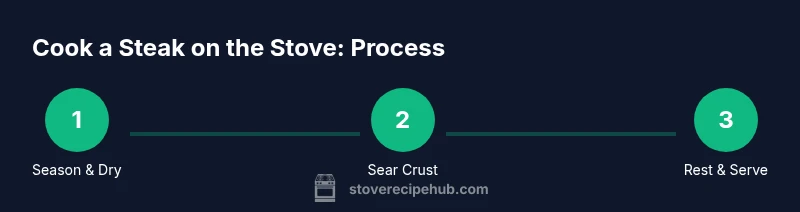
Pat the steak dry with paper towels, then season generously on all sides with salt and pepper. If time allows, let stand 15–20 minutes to improve surface flavor and crust development.
Tip: Dryness is critical; moisture on the surface hinders crust formation. - 2
Preheat the pan
Place the skillet on the stove and heat over medium-high until the surface is shimmering hot. Add a thin layer of oil and wait for it to shimmer before placing the steak in the pan.
Tip: A hot pan creates a quick, caramelized crust that locks in juices. - 3
Sear the first side
Carefully lay the steak in the pan away from you to avoid splatter. Do not move it for 1–2 minutes to form a crust before flipping.
Tip: If sticking, give it another 15–30 seconds; forcing a flip too early damages crust. - 4
Flip and baste (optional)
Turn the steak and add butter and aromatics if using. Tilt the pan and baste the steak with the melted butter for 1–3 minutes to deepen flavor.
Tip: Basting adds richness and helps finish flavor, especially with leaner cuts. - 5
Check doneness
Use the thermometer to check your preferred doneness level—remove the steak just before it finishes to account for carryover cooking.
Tip: Taste and feel determine doneness when you’re familiar with your pan and steak thickness. - 6
Rest and slice
Transfer the steak to a resting surface and let it rest 5–10 minutes. Slice against the grain and serve.
Tip: Resting redistributes juices; cutting too soon causes juicier losses.
Common Questions
What cut is best for stove-top steak?
Ribeye, NY strip, and filet mignon all perform well on the stove; choose based on fat content and preferred texture. Thickness matters for even cooking.
Ribeye, NY strip, and filet mignon work well on the stove; pick based on fat and texture, with thickness guiding cooking time.
Can I cook a steak from frozen on the stove?
Cooking from frozen is possible but harder to control; thawing first yields more even sear and interior doneness.
You can cook from frozen, but it’s better to thaw first for even sear and consistent doneness.
Should I use butter while cooking?
Butter adds flavor but can burn if cooked too hot. Use it toward the end or for basting combined with a high-heat oil.
Butter is great for flavor, but add it toward the end or for baste to avoid burning.
Is a cast iron pan necessary?
Cast iron is ideal for crust and heat retention, but a well-seasoned stainless pan can also produce a good sear with careful heat control.
Cast iron is ideal, but stainless steel can work with proper heat management.
How long should I rest the steak?
Rest for about 5–10 minutes after cooking to let juices redistribute for a juicier slice.
Rest for 5–10 minutes to keep juices inside the meat.
What if the steak sticks to the pan?
If it sticks, wait an extra 15–30 seconds and resist the urge to move it. A properly heated pan should release the steak as a crust forms.
If it sticks, pause and wait briefly; once a crust forms, it will release.
Watch Video
Top Takeaways
- Season well before searing
- Preheat a hot pan for crust formation
- Don’t flip too soon; allow crust to form
- Rest before slicing to preserve juiciness