How to Cook a New York Strip on the Stove
Master pan-searing a perfect New York strip on the stove with crusty exterior, juicy center, and flavorful butter finish. This guide covers prep, technique, timing, doneness, and tips for home cooks.


Pan-sear a well-seasoned New York strip in a hot, oiled skillet to develop a caramelized crust, then baste with butter and aromatics for depth of flavor. Rest the steak 5–10 minutes before slicing to lock in juices. Key requirements: heavy skillet (cast iron preferred), dry surface, and a meat thermometer to confirm doneness.
The sizzle science: Maillard reaction and crust development
The moment the New York strip meets a hot pan, proteins and sugars react to form a rich, brown crust through the Maillard reaction. This crust isn’t just about appearance; it locks in juices and deeply flavors the meat. Achieving a perfect crust requires a dry surface, a hot pan, and a bit of patience. If the surface is moist, the steak will steam rather than sear, which dulls color and texture. To maximize crust, pat the steak dry with paper towels, ensure the pan is preheated, and avoid touching the meat too soon after it hits the surface. According to Stove Recipe Hub, dryness before searing is a simple yet powerful trick for restaurant-quality results. This is the foundation of a steak that looks as good as it tastes.
Selecting, prepping, and resting the NY strip
Choose a well-marbled NY strip that is uniform in thickness for even cooking. If possible, let the steak come to room temperature for 20–30 minutes before cooking; this promotes even heat distribution and reduces the risk of a cold center. Pat the surface dry again, season generously with salt and pepper, and set aside on a rack or plate. Resting after cooking is equally important: a brief pause allows juices to redistribute, keeping slices moist instead of pooling on the cutting board. Stove Recipe Hub notes that proper resting improves juiciness and tenderness, especially for thicker cuts.
Equipment and ingredients: what you truly need
A heavy skillet is non-negotiable for a proper sear. Cast iron is ideal because it holds heat well and distributes it evenly. Gather neutral oil with a high smoke point, salt, pepper, and optional butter for finishing. Tongs keep the steak intact during flipping, while a meat thermometer ensures you hit the desired doneness without guesswork. If you plan to add garlic or herbs, have them ready but add them toward the end so they don’t burn. The goal is a blistered crust and a warm, rosy center that sings with buttered aromatics.
Temperature and heat management: owning the stove-top
Preheat your pan on high heat until a drop of water dances and evaporates within seconds. Then lower to medium-high so the steak sizzles but does not burn. If the pan smokes excessively, reduce heat slightly and give the steak more time on the other side. Managing heat is essential: too hot and you’ll burn the crust before the interior cooks; too cool and you’ll miss the browning you crave. Consistency matters, so keep the pan at a steady, moderate-high temperature through the searing phase.
The butter-baste finish and aromatics
During the final minute of cooking, add a couple of tablespoons of butter, crushed garlic, and fresh herbs if you like. Tilt the pan and spoon the melted butter over the steak to enrich flavor and keep the surface glossy. Basting also helps conduct heat toward the center without overcooking the exterior. Remove the steak when the thermometer reads 5–10 degrees below your target, because carryover cooking will carry the rest of the way as the meat rests.
Common mistakes and how to fix them
Common missteps include overcrowding the pan, not drying the surface, and flipping too soon. Overcrowding reduces the heat at the cooking surface, leading to steaming rather than searing. If you notice a pale crust forming, increase heat slightly or allow more time per side. Another mistake is cooking to a fixed time without checking internal temperature—thickness matters, as does fat content. Use a thermometer to avoid overcooking and to refine your technique as you gain experience.
Variations: doneness, thickness, and finishing touches
Cooking times vary with thickness. For a 1-inch NY strip, expect 2–4 minutes per side for medium-rare, longer for mid or well-done. For thicker steaks, consider finishing in the oven after searing, or utilize a two-pan method with lower heat to avoid scorching. Flavor boosters include a light sprinkle of finishing salt, a dab of herb butter, or a squeeze of lemon. Each variation offers a slightly different texture and taste profile, but the core technique—dry surface, hot pan, accurate temp—stays constant.
Tools & Materials
- Cast iron skillet (10–12-inch preferred)(Heavy pan, good heat retention for even browning)
- High-smoke-point oil (canola, grapeseed, or avocado)(Thin layer to promote crust without smoking excessively)
- Salt (kosher or sea salt) and freshly ground black pepper(Season generously; salt helps draw out moisture for crust)
- Tongs(Grip steak without piercing; flip confidently)
- Butter (unsalted) for baste(Adds richness and gloss during final minute)
- Garlic cloves (crushed) and fresh herbs (optional)(Aromatics for basting if desired)
- Meat thermometer(Target ~130–135°F for medium-rare; adjust for doneness)
- Rest rack or clean plate(Let rest 5–10 minutes for juicier slices)
Steps
Estimated time: 15-25 minutes active cooking, plus 5-10 minutes resting
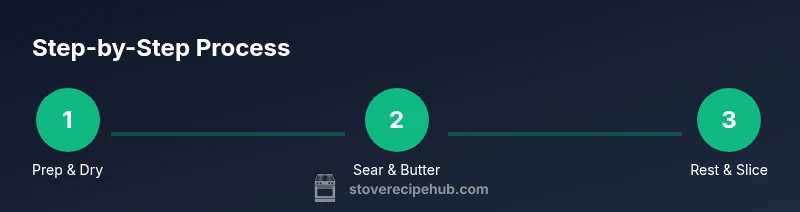
- 1
Prepare steak and pan
Pat steak dry, remove excess moisture, and let it sit at room temperature for 20–30 minutes if possible. This helps even cooking and crust formation. While it rests, gather tools and prepare your seasoning.
Tip: Dry surface is crucial for crust; moisture leads to steaming. - 2
Preheat the pan to high heat
Place the skillet on the stove and heat on high until it is very hot but not smoking hard. A properly heated pan will instantly sear the surface, forming a crust within the first minute.
Tip: Water droplets should bead and dissipate quickly to indicate readiness. - 3
Season generously
Season both sides with salt and pepper just before searing. If you have time, lightly salting an hour prior can draw out moisture for a deeper crust, but avoid salting too early for best texture.
Tip: Salt supports crust development when applied to dry surfaces. - 4
Add oil and set the steak down
Carefully add 1–2 tablespoons oil to the hot pan and swirl to coat. Place the steak in the pan away from you to avoid splatters and let it sear undisturbed for 2–4 minutes.
Tip: Don’t move the steak too soon; crust won’t form if you keep turning it. - 5
Sear the first side
Let the first side form a deep brown crust; cook until the edges turn opaque about halfway up the sides. A thinner steak will finish faster; thicker cuts need more browning time.
Tip: Aim for a crust that releases cleanly from the pan before flipping. - 6
Flip and baste
Flip the steak and reduce heat slightly. Add butter, crushed garlic, and herbs if using. Tilt the pan and shower the butter over the steak to enrich flavor and texture.
Tip: Basting helps distribute fat and heat evenly, enhancing doneness control. - 7
Check temperature and finish
Use a meat thermometer to approach your target doneness. Remove the steak when it’s 5–10°F below target to account for carryover cooking.
Tip: Carryover cooking will finish the steak while it rests. - 8
Rest and slice
Transfer the steak to a resting rack or plate and tent loosely with foil for 5–10 minutes. Slice against the grain for tenderness and serve.
Tip: Resting is essential for juiciness; slicing too early lets juices escape.
Common Questions
What pan should I use to cook a New York strip on the stove?
A heavy cast-iron skillet is ideal for a thick, even sear and reliable heat retention. A heavy stainless steel pan can work, but cast iron provides the classic crust most home cooks want.
Use a cast-iron skillet for the best crust; stainless steel is okay if cast iron isn’t available.
How do I know when the steak is done?
Use a meat thermometer to check internal temperature: about 125°F for rare, 130-135°F for medium-rare, 140-145°F for medium. Remove the steak a few degrees early to account for carryover cooking.
Check with a thermometer and account for carryover cooking by removing early.
Can I cook a NY strip to well-done on the stove?
Yes, but it requires longer searing and more careful heat management to avoid a dry, tough result. Consider finishing in the oven for even doneness and moisture retention.
You can, but it’s easier to avoid overcooking by aiming for medium and using the oven for extra doneness if needed.
Is resting really important for a steak?
Absolutely. Resting lets juices redistribute and reabsorb, leading to a juicier, more flavorful slice. 5–10 minutes is typically enough for a 1-inch to 1.5-inch steak.
Resting is crucial; it makes the steak juicier and easier to slice.
How do I season NY strip for the best flavor?
Season generously with salt and pepper right before searing. If time allows, salt at least 15–60 minutes before cooking for deeper crust and flavor.
Salt well and season just before cooking for best surface flavor and crust.
Watch Video
Top Takeaways
- Season early if possible to strengthen crust.
- Dry surface is essential for a deep sear.
- Use a thermometer to hit desired doneness.
- Rest before slicing to maximize juiciness.