How to Make a Burger on the Stove
Master a juicy stove-top burger with our comprehensive guide from Stove Recipe Hub. Learn patty prep, searing, cheese melt, bun toasting, and assembly for restaurant-quality results at home.


You will learn to make a juicy stove-top burger using an 80/20 beef blend, proper patty sizing, a hot skillet, careful searing, cheese melt, and toasted buns. Essential tools include a heavy skillet, a thermometer, and quality buns. Follow these steps for reliable, restaurant-quality results.
Why this method matters
Cooking burgers on the stove gives you reliable control over heat, timing, and seasoning, even when outdoor grilling isn’t possible. According to Stove Recipe Hub, the most dependable stove-top burgers start with thoughtful patty prep, a hot pan, and patient timing. If you’re exploring how to make a burger on the stove, this approach emphasizes a crisp crust and juicy interior achieved through measured searing, precise resting, and smart ingredient choices. A strong foundation—80/20 beef, quality buns, and well-prepared toppings—delivers texture and flavor that rival restaurant results. This section explains the philosophy behind the technique and why these steps matter for texture and taste, not just speed.
The core idea: heat, timing, and balance
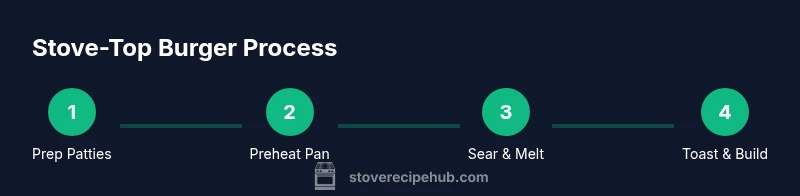
The skillet’s heat must be hot enough to form a crust quickly without overcooking the interior. Patience matters: flipping too soon or pressing the patty too hard can squeeze out juices and create a dry bite. Balance comes from the beef fat-to-meat ratio, the patty diameter relative to the bun, and the moment you add cheese for melt without overcooking. By following a deliberate sequence—from patty prep to bun toast—you’ll consistently achieve a savory, juicy burger every time.
A note on ingredients and equipment
The recipe relies on straightforward ingredients you probably already have in your kitchen. A standard 12-inch heavy skillet, preferably cast iron, ensures even browning. An instant-read thermometer makes it easier to hit safe temperatures without guesswork. Buns should be sturdy enough to hold toppings without collapsing. With the right tools and quality ingredients, you can control crust development, moisture retention, and overall mouthfeel — essential elements of an excellent stove-top burger.
Sizing, shaping, and patty behavior
Form patties slightly larger than the buns, about 1/4 to 1/3 pound of beef per patty for regular sandwiches. Create a shallow indentation in the center of each patty to compensate for surface tension during cooking, which helps prevent bulging in the middle. Avoid overworking the meat; gentle handling preserves tenderness and texture. Chill formed patties for a short period if you have time; this helps them hold shape during searing and reduces shrinkage.
Finishing touches that elevate flavor
Toast the buns in the same pan to capture leftover fond and add a touch of richness. Place cheese on the patties during the final minute so it melts into a creamy layer. Assemble quickly for a warm, cohesive bite—condiments, greens, tomato, onions, and pickles should complement the beef’s flavor rather than overpower it. These small steps—timing, temperature, and assembly—collectively elevate a simple stove-top burger to something special.
Tools & Materials
- Ground beef (80/20 blend)(About 1/4 to 1/3 lb per patty)
- Burger buns(Sesame or brioche; split and toast lightly)
- Cheese slices(American, cheddar, or Swiss; optional but recommended)
- Salt(Kosher or fine sea salt)
- Freshly ground pepper(To taste)
- Neutral oil with high smoke point(Canola, grapeseed, or light olive oil)
- Skillet or frying pan (heavy-bottom, ~12 inch)(Cast iron preferred for even searing)
- Spatula(Wide, sturdy blade for flipping)
- Thermometer(To confirm internal temp ~160°F / 71°C)
- Optional toppings(Lettuce, tomato, onions, pickles, condiments)
Steps
Estimated time: 30-40 minutes
- 1
Shape and portion the beef
Divide beef into equal portions slightly larger than your bun diameter. Gently form into flat discs with a shallow center indentation to prevent puffing during cooking.
Tip: Keep portions cold before shaping to improve searing and reduce sticking. - 2
Preheat the skillet
Place a heavy skillet on the stove over medium-high heat. Allow it to heat for 2–3 minutes until a drop of water sizzles and evaporates quickly.
Tip: A properly heated pan creates a crisp crust and even browning. - 3
Season patties just before cooking
Season patties with salt and pepper only moments before they hit the pan to preserve surface moisture and maximize crust.
Tip: Avoid pre-salting too early to prevent soggy edges. - 4
Sear patties
Place patties in the hot pan without crowding. Sear 3–4 minutes per side for standard thickness, until a robust crust forms.
Tip: Do not press down on the patties; pressing squeezes juices and dries the burger. - 5
Add cheese and rest
Top patties with cheese during the last minute and cover the pan briefly to melt. Rest on a rack for 3–5 minutes after cooking.
Tip: Rest helps redistribute juices and improves bite. - 6
Toast buns
Butter the cut sides of buns and toast in the pan until golden and lightly crispy.
Tip: Toast to build texture and prevent soggy bites when toppings are added. - 7
Assemble and serve
Spread condiments on buns, add patties, cheese, and toppings in your preferred order. Serve immediately.
Tip: Layer toppings strategically to avoid sogginess and maximize flavor in every bite.
Common Questions
What is the best meat ratio for stove-top burgers?
A common recommendation is 80/20 beef to fat for juiciness and flavor; leaner blends dry out faster on the stove.
Use an 80/20 blend for juicy stove-top burgers.
What internal temperature should burgers reach?
Ground beef should reach 160°F (71°C) for safety. Use a thermometer for accuracy.
Cook to one hundred sixty degrees for safety.
Can I put cheese on the patty while cooking or after?
Cheese is typically added during the last minute to melt evenly; cover the pan briefly to help melt.
Add cheese in the last minute and cover to melt.
Why should I rest the burger after cooking?
Resting lets juices redistribute, improving flavor and mouthfeel rather than leaking out with the first bite.
Resting helps juices redistribute for better flavor.
What if my patties brown but stay undercooked inside?
Check internal temperature with a thermometer and consider lowering heat slightly to prevent burning while finishing cooking inside.
Use a thermometer to ensure doneness; adjust heat if needed.
Watch Video
Top Takeaways
- Season patties right before cooking.
- Preheat the pan for optimal crust.
- Rest patties briefly after cooking.
- Toast buns for texture and flavor.
- Assemble quickly to enjoy molten cheese and hot toppings.