How to Make Stew Beef on the Stove: A Complete Guide
Learn a reliable stove-top beef stew method with browning, deglazing, and slow simmering. Practical tips for tender meat, rich gravy, and perfect vegetables.


By following this stove-top beef stew method, you’ll yield tender meat, rich gravy, and evenly cooked vegetables. You’ll brown the beef, build flavor with aromatics, deglaze, simmer gently, and finish with vegetables that hold their shape. You’ll need a heavy pot, a stove, trimmed beef chuck, onions, carrots, stock or broth, tomato paste or crushed tomatoes, and patience for low, steady simmering.
Why this stove-top beef stew method works
Beef stew on the stove relies on three pillars: proper browning, flavorful aromatics, and slow, gentle simmering. Browning develops the Maillard flavor that defines the dish, while a well-seared fond sticks to the bottom of the pot and becomes the flavor base when deglazed. Low, steady heat prevents the meat from becoming chewy and lets collagen break down into silky gel. According to Stove Recipe Hub, the order of operations matters: sear, deglaze, simmer, then tighten the sauce with a bit of starch from vegetables or a small amount of flour. When you control moisture and temperature, you get a richer, more balanced gravy and meat that falls apart without overcooking the edges.
- Sear to develop flavor and color
- Deglaze to lift fond and concentrate taste
- Simmer gently to tenderize and thicken the sauce
Selecting the right beef and aromatics
For stove beef stew, choose a well-marbled, affordable cut such as beef chuck. Cut it into 1.5–2 inch pieces so every bite is tender without drying out. Pat the meat dry before searing to promote browning. Aromatics are the flavor engine: onions and garlic form a fragrant base, while carrots and celery add sweetness and texture. Use thyme, bay leaves, and a splash of tomato paste or crushed tomatoes to deepen color and acidity balance. These components set the stage for a cohesive, satisfying sauce.
Temperature and simmering technique
Maintain a gentle simmer rather than a vigorous boil. High heat crowds the meat, making it tough instead of tender and causing uneven cooking. Use a heavy pot and monitor with a timer: you want just a few bubbles breaking the surface, not a rolling boil. If the liquid reduces too quickly, add more stock or water. Partially cover the pot to trap steam while allowing some evaporation, which concentrates flavors.
Building flavor: deglazing and add-ins
After searing, deglaze the pot with wine, stock, or a combination to lift the fond. Scrape the bottom with a wooden spoon to release every caramelized bit into the sauce. Stir in tomato paste for color and depth, then return the beef to the pot with enough liquid to barely cover. Add herbs like bay leaves and thyme; salt and pepper to taste. Optional add-ins like a splash of Worcestershire or a few mushrooms can boost complexity.
Vegetable timing and texture
Carrots and potatoes (if used) join the simmer after the beef has begun tenderizing. This prevents them from overcooking to mush. Depending on size, carrots take 20–30 minutes; potatoes, if used, 25–35 minutes. For a creamier texture, reduce the lid and simmer a few extra minutes to concentrate the sauce. Taste and adjust seasoning before serving.
Troubleshooting and common mistakes
Common issues include underseasoning, uneven tenderness, and a thin or greasy sauce. If the stew is too salty, add a small potato to draw out salt; if too thick, splash in hot water or stock. If the meat is still chewy after long simmering, keep the pot at a true gentle simmer and check the meat size. Watch for burning on the bottom; deglaze early if fond scales form.
Serving ideas and storage
Serve with crusty bread, mashed potatoes, or buttered noodles to soak up the rich gravy. Store leftovers in the fridge for up to four days or freeze for two to three months. Reheat gently on the stove or in a microwave, adding a splash of stock if the sauce thickens too much. The flavors often deepen after a day, making this a great make-ahead dish.
Variations and make-ahead tips
Enable flexibility: swap wine for extra stock, swap thyme for oregano, or add roasted root vegetables. This recipe scales well for batch cooking: double the meat, adjust the liquid by 20–30 percent, and freeze in portions. You can also finish with a pat of butter or a drizzle of olive oil for shine just before serving.
Tools & Materials
- Heavy, oven-safe pot with lid (4-6 qt)(Cast iron or Dutch oven works best)
- Sharp chef's knife(For trimming and chopping)
- Cutting board(Stable surface, non-slip if possible)
- Tongs(For searing and turning meat)
- Wooden spoon(Heat-resistant for scraping fond)
- Measuring cups and spoons(Accurate stock, paste, and salt measurements)
- Beef chuck, cut into 1.5–2 inch pieces(Trim fat but keep some marbling)
- Yellow onion(Chopped)
- Carrots(Chopped or chunked)
- Garlic cloves(Minced)
- Tomato paste or canned tomatoes(Adds color and depth)
- Beef or chicken stock (low-sodium preferred)(Enough to barely cover meat)
- Bay leaves(Optional)
- Dried thyme(Optional)
- Salt and black pepper(To taste)
- All-purpose flour(Optional thickener)
Steps
Estimated time: Total time: 2 hours 15 minutes
- 1
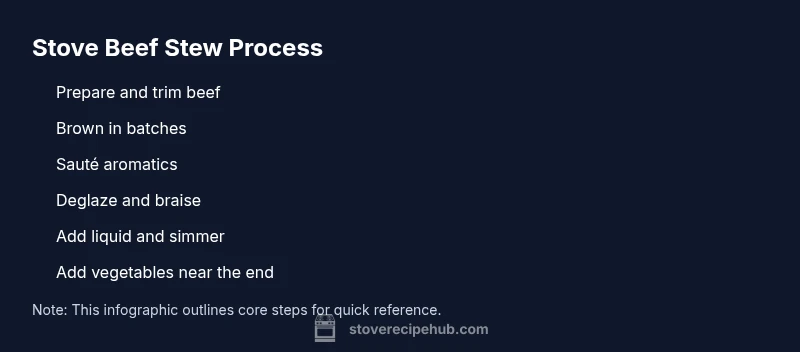
Prepare and trim beef
Trim excess fat and cut beef into uniform 1.5–2 inch pieces. Pat dry with paper towels to remove surface moisture, which helps browning. Set aside with salt and pepper ready for searing.
Tip: Dry surfaces and uniform pieces ensure even searing. - 2
Brown beef in batches
Heat a heavy pot over medium-high heat and add a small amount of oil. Sear beef in batches without crowding the pan until deeply browned on all sides, then remove.
Tip: Crowding creates steaming; browning requires space. - 3
Sauté aromatics
In the same pot, add chopped onions, carrots, celery (optional), and garlic. Cook until softened and fragrant, about 5–7 minutes.
Tip: Use a wooden spoon to loosen any browned bits from the bottom. - 4
Deglaze the pot
Pour in wine or stock and scrape the bottom to lift the fond. Let it reduce 1–2 minutes to concentrate flavor.
Tip: Deglazing binds the browned bits into the sauce for depth. - 5
Add liquid and seasonings
Return beef to the pot. Add stock to barely cover meat, stir in tomato paste, bay leaves, and thyme. Season with salt and pepper and bring to a gentle simmer.
Tip: Season gradually; you can adjust later as flavors meld. - 6
Simmer until tender
Partially cover and simmer gently for 60–90 minutes, or until beef is fork-tender. Skim fat as needed.
Tip: Maintain a soft simmer; vigorous boiling makes meat tough. - 7
Add vegetables and finish
Stir in carrots (and potatoes if using) in the last 20–30 minutes. Check tenderness, adjust salt, and finish with a butter pat if desired.
Tip: Avoid overcooking vegetables; they should hold shape.
Common Questions
What cut of beef is best for stove-top beef stew?
Beef chuck works best; it's affordable and rich in collagen that breaks down into a tender sauce. Cut into uniform pieces to ensure even cooking.
Beef chuck is ideal; cut into even pieces for uniform tenderness.
Is browning the beef essential for flavor?
Yes. Browning creates depth of flavor via fond. Skipping it can leave the sauce flatter and less robust.
Yes, browning matters for depth of flavor.
Can I skip deglazing?
You can, but you’ll miss the fond that concentrates flavor. If you skip, add a splash of stock when returning meat to the pot.
Deglazing adds depth; you can skip, but flavor will be flatter.
How long should it simmer on the stove?
Typically 60–90 minutes, depending on cut and chunk size, until the beef is fork-tender.
Around 1 to 1.5 hours, check tenderness.
Can I refrigerate or freeze leftovers?
Leftovers keep in the fridge for up to four days and can be frozen for two to three months. Thaw and reheat gently.
Yes—refrigerate up to four days; freeze for 2–3 months.
Can I make this in a slow cooker?
Yes, but timing and steps differ. Sear the beef first for flavor, then braise and add veggies later for best texture.
It can adapt to a slow cooker; adjust timing and steps.
Watch Video
Top Takeaways
- Brown meat in batches for even searing
- Sauté aromatics to build flavor
- Maintain a gentle simmer for tenderness
- Add vegetables at the right time for texture
- Taste and adjust seasoning before serving