Stove to Oven Filet Mignon: A Chef's Step-by-Step Guide
Learn how to transition filet mignon from stove to oven for a perfect crust and tender center. This comprehensive guide covers searing, oven finishing, timing, resting, and serving with insights from Stove Recipe Hub.


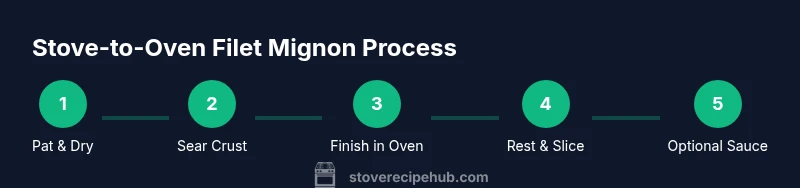
Goal: master a stove-to-oven filet mignon with a perfect crust and even doneness. This method sears in a hot skillet, then transfers to a preheated oven to finish to your target temperature. You’ll need a heavy, oven-safe skillet, tongs, a meat thermometer, and a clean work area to succeed. This approach minimizes flare-ups and preserves juiciness, making it reliable for weeknight dinners and special occasions.
Why this stove-to-oven filet mignon method shines
According to Stove Recipe Hub, this approach blends two proven techniques to deliver restaurant-quality results at home. A hot, rapid sear develops a rich, caramelized crust through the Maillard reaction, while a gentle oven finish ensures the center reaches your target doneness without overcooking. Because the pan stays on the stove during searing, you can monitor browning, control fat rendering, and adjust timing based on thickness. The method also minimizes flare-ups and smoke when performed in a well-ventilated kitchen.
To succeed, start with a dry surface, pat the steaks thoroughly, and avoid crowding the pan. Use a heavy, oven-safe skillet that holds heat well, so the crust forms evenly. Let the meat come to room temperature for around 15-30 minutes before cooking to promote even cooking. Keep your thermometer handy to verify internal temperature, and be prepared to adjust oven time if your steak is particularly thick or thin. When done correctly, the skillet’s short sear plus a brief oven rest produces a crusty exterior with a tender, rosy center that slices beautifully.
Essential equipment and prep
Before you begin, assemble the right tools and gather ingredients. A heavy, oven-safe skillet (preferably cast iron) is essential because it tolerates high heat and retains heat for a uniform crust. Have long-handled tongs, a reliable instant-read thermometer, and a rimmed baking sheet or resting rack for after the oven finish. Keep unsalted butter, neutral oil, and sea salt and cracked black pepper within easy reach. Pat the filets dry and let them rest at room temperature for 15-20 minutes to promote even browning. Preheat your oven to a hot setting (around 400°F / 204°C) and ensure your rack is centered. If you’re cooking multiple filets, work in batches to avoid overcrowding, which inhibits browning.
Choosing the right filet mignon and prepping
Filet mignon offers remarkable tenderness that benefits from immediate searing and careful rest. Look for evenly thick meat with a bright color and a clean surface. Pat dry, season generously with salt and pepper or a simple blend of salt, pepper, and optional garlic powder if desired. Let the seasoned steaks rest on a rack for 10-15 minutes to form a light crust-ready surface. This room-temperature step helps the inside cook more predictably when the oven finishes the cook. If you grill instead, adjust accordingly, but this guide focuses on stove-to-oven results.
The sear: building a crust without burning
Place the skillet on the hottest burner and add a thin film of oil with a high smoke point. When the oil shimmers, lay the filets in the pan, spacing them so they don’t touch. Do not move the meat for 1.5-2 minutes to allow browning to begin; then flip and sear the other side for another 1.5-2 minutes. If you notice smoke, lower heat slightly and adjust. The goal is a deep brown crust, not a burnt exterior. You can add a small pat of butter toward the end of the sear, along with garlic and fresh thyme, if desired. Basting with the melted fat can add flavor but isn’t strictly necessary.
Finishing in the oven: timing and temps
Transfer the skillet to the preheated oven and set a timer. Because thickness varies, rely on internal temperature rather than time alone. For medium-rare, target 125-130°F (52-54°C) after resting; for medium, 135-140°F (57-60°C). Remove the pan when the steak is 5-10°F below goal; carryover cooking finishes it to the final temperature. Let the beef rest on a warm plate for at least 5-10 minutes, loosely tented with foil. The juices redistribute, yielding a juicy slice with a uniform pink center. If you prefer a firmer bite, continue to the higher end of the range.
Resting and serving for best juiciness
After removing from the oven, place the filets on a clean cutting board or plate and loosely cover for 5-10 minutes. Resting allows the muscle fibers to reabsorb juices, making each bite more flavorful. Slice against the grain in bold, even cuts to maintain tenderness. Serve with a simple pan sauce or a knob of herb butter, and consider pairing with roasted vegetables or a crisp green salad for balance.
Common mistakes and how to avoid them
Overcrowding the pan prevents browning. Always give each filet space. Cooking too cold meat or not patting dry can steam the meat, preventing crust formation. Relying on time instead of temperature leads to under- or over-done centers. Finally, skipping the resting step results in juice loss when you cut into the steak. Keep your heat controlled and use a thermometer for consistency.
Variations and doneness levels
You can tweak the recipe by finishing with compound butter or a splash of cognac in the pan sauce. For different doneness levels, adjust the oven time and target temperatures; remember that carryover heat will continue to cook the steak after removal from the oven. For thicker filets, increase sear time or finish in the oven for longer. Thinner cuts will reach desired doneness faster, so monitor temperature closely.
Troubleshooting: what to do if the crust sticks or the center isn't cooked
If the crust sticks, deglaze with a splash of stock or wine before basting, and avoid scraping when flipping. If the center isn’t cooked enough, return to oven briefly in short intervals rather than extending the total time, to avoid over-browning. A low-and-slow finish might save a marginally undercooked steak; use a thermometer to monitor internal temperature every few minutes.
Quick-start checklist
- Choose a thick filet mignon with even color
- Pat dry and season generously
- Preheat pan and oven
- Sear both sides until deep brown
- Finish in hot oven and monitor temperature
- Rest before slicing and serve
Tools & Materials
- Heavy, oven-safe skillet (cast iron preferred)(Retains heat for crust formation)
- Long-handled tongs(For safe turning without burns)
- Instant-read meat thermometer(Verify doneness precisely)
- Rimmed baking sheet or resting rack(For resting after oven finish)
- Butter (optional) and neutral oil(Oil for searing; butter for optional basting)
- Salt and cracked black pepper(Season generously)
- Paper towels(Pat steaks dry before searing)
- Chef’s knife and cutting board(Trimming or slicing after rest)
Steps
Estimated time: 25-45 minutes
- 1
Pat steaks dry and bring to room temperature
Pat the filets dry with paper towels to remove surface moisture, which helps crust formation. Arrange on a rack or plate and let them sit 15-20 minutes. A dry surface and moderate temp prevent steaming when the sear begins.
Tip: Dryness is the secret to a crisp crust; don’t rush this step. - 2
Season generously
Season both sides evenly with salt and pepper, and add optional garlic powder if you like. If possible, salt 15-20 minutes before searing to enhance flavor penetration and crust.
Tip: Salt is not the enemy; it helps form a flavorful crust when given time. - 3
Preheat pan and oil until shimmering
Place the skillet on high heat and add a thin film of oil with a high smoke point. Wait until the oil shimmers before laying in the steaks. This ensures an immediate sear and prevents sticking.
Tip: Maintain high heat but avoid smoking the oil; adjust if you see excessive smoke. - 4
Sear filets without moving
Lay the filets in the pan with space between them. Do not touch or flip for 1.5-2 minutes to achieve a deep brown crust, then flip and sear the other side for another 1.5-2 minutes. Optional: add a knob of butter and aromatics toward the end.
Tip: Use tongs to flip and avoid piercing the meat; this preserves juices. - 5
Finish in the oven and monitor temperature
Carefully transfer the skillet to a preheated oven (about 400°F / 204°C). Rely on internal temperature rather than time. Remove when the steak is 5-10°F below target to account for carryover.
Tip: Check temperature frequently; carryover will finish the cook. - 6
Rest and slice to serve
Let the filets rest 5-10 minutes on a warm plate, loosely covered. Slice against the grain for tenderness and serve with a light pan sauce or herb butter.
Tip: Resting redistributes juices; cutting early leaks flavor. - 7
Optional pan sauce
While resting, deglaze the pan with a splash of stock or wine. Reduce slightly and swirl in a small amount of butter for a glossy finish.
Tip: A quick pan sauce elevates the dish without much effort.
Common Questions
What pan is best for searing filet mignon?
A heavy, oven-safe skillet—preferably cast iron—provides uniform heat and a solid crust. Stainless steel can work, but cast iron is ideal for browning.
Use a heavy cast-iron skillet for the best crust and even heat.
Should I baste with butter during the sear?
Basting with butter adds flavor, but it isn’t required. If you baste, do it toward the end of the sear to avoid burning the butter.
Baste at the end of the sear if you want extra richness.
What internal temperatures define doneness?
Rare about 120-125°F, medium-rare 125-130°F, medium 135-140°F, well-done 150°F and above. Resting will raise the final temperature slightly.
Temps guide doneness; use a thermometer for accuracy.
Can I do this with thinner or thicker filets?
Yes. Thinner filets require less sear and oven time, thicker ones need longer, so monitor temperature closely and adjust accordingly.
Thickness changes timing; watch the temp closely.
Do I need to rest the meat after cooking?
Yes. Resting for 5-10 minutes allows juices to redistribite, resulting in juicier, more flavorful slices.
Resting helps juices reabsorb and improves flavor.
Watch Video
Top Takeaways
- Sear first to develop crust.
- Finish in the oven for even doneness.
- Rest before slicing for juiciness.
- Temp guides doneness more reliably than time.
- Season generously and stay watchful of heat.