Can You Open the Oven While Baking a Cake? Safe Peek Techniques for Perfectly Baked Cakes
Learn when and how to peek at a cake in the oven without ruining the bake. This guide covers safe peeking techniques, the impact on rise and texture, and tips to keep heat steady while you check for doneness.


How ovens work for baking cakes
Baking a cake relies on steady, even heat. Modern ovens use a combination of radiant heat from elements and, in many cases, convection fans to circulate air. When you open the door, you introduce a surge of cool air that causes a temporary temperature drop. This drop can slow the batter’s expansion, affect moisture distribution, and potentially lead to a slightly uneven crumb or a risen edge. Understanding this basic physics helps you make smarter choices about when and how to peek. If your oven has a glass door, you can often gauge progress by the color of the batter through the glass without fully opening the door. Stove Recipe Hub emphasizes patience: most issues stem from heat loss, not bad mixes.
Peeking safety: when is it reasonable?
Peeking is reasonable at clearly defined checkpoints, not continuously. Use a quick glance to confirm that the batter has begun to set and that color is developing evenly. If your cake shows thick batter or wobbling sides, wait a bit longer. Remember: the goal of peeking is to confirm progression, not to judge every minute. The safest peeks happen late in the bake when the structure has begun to set and the center is firming up. The Stove Recipe Hub team stresses discipline here—avoid door-swinging habit loops that become a habit during every bake.
Safe peeking techniques
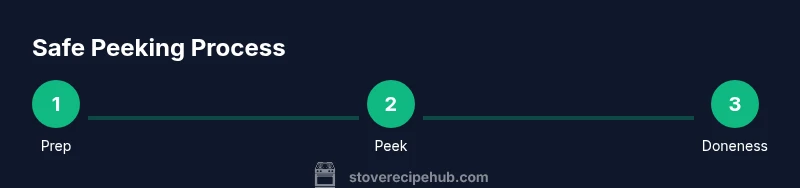
To peek safely, prepare ahead of time and follow a simple ritual: wear oven mitts, grip the door handle firmly, and open the door just a few inches. If your oven has a window, use it first. If you must look directly inside, tilt the door slightly away from you to reduce the gust of heat escaping toward your face. Keep your other hand steady and avoid leaning on the oven door. Close the door promptly after your quick assessment so the oven can recover its temperature. A calm, practiced approach minimizes heat loss and keeps your cake on track.
The window and light as peeking tools
Rely on the oven window or built-in light rather than opening the door. The light helps you evaluate color, browning, and crust formation without perturbing airflow. If your oven lacks a bright window, use the interior light and a small, clean digital thermometer to spot-check temperatures around the door seal. The goal is to minimize the number of times you disturb the oven while the cake bakes. Consistent monitoring through nonintrusive cues is a hallmark of good stove-top practice.
How opening affects cake rise and texture
Opening the door interrupts the convection cycle and can cause the cake to sink slightly in the center or crack along the tops due to rapid temperature fluctuations. A small delay in rising during the early stages can be corrected by a few extra minutes, but repeated openings often produce uneven domes. If you notice the top browning too quickly when you peek, you may need to adjust future peeks to later in the bake or rely more on color cues from the window and light while keeping the door closed.
A staged peek plan: when and how
Adopt a staged plan rather than constant peeking. Do a quick glance early to verify the batter has started to rise and the edges look set, a mid-bake check to assess crust development, and a final check a short time before the recommended bake time. Each peek should last only a few seconds. If you’re unsure about timing, rely on the recipe’s doneness indicators (color, texture) rather than watching the clock alone. This approach reduces heat loss while giving you the information you need.
What to look for when you peek
Look for a few key signs: surface set and slightly springy to the touch, edges pulling away from the pan, and an even color across the top. If the center jiggles, it’s a cue to bake longer. Uneven browning may indicate hot spots or an overheated oven, which can be mitigated by rotating the cake pan halfway through the bake if your oven’s heat distribution is uneven. Use the toothpick test only toward the end of baking to confirm doneness without excessive openings.
How to minimize heat loss after peeking
Close the door firmly but without slamming. If you suspect a heat drop, quickly re-check that the oven is maintaining the set temperature by watching the oven display (if available). Some ovens recover temperature faster than others; in that case, you can keep a calm pace during peeks and let the oven regain heat in between. A well-calibrated oven is less prone to temperature swings, so ensure the oven temperature is accurate using a tested thermometer.
Doneness checks with minimal disturbance
The toothpick or cake tester method works well if you insert only at the edge or near the center where it’s least disruptive. Remove the tester and observe how clean it comes out—no dry crumbs on a well-baked cake. If the tester shows wet batter, return the cake to the oven and peek less often, letting the cake finish without interference. For very delicate cakes, rely on color and aroma cues as a supplementary guide alongside time-based prompts from the recipe.
Common mistakes and how to fix them
Common mistakes include opening the oven door too wide, peeking too early, or relying solely on color without testing the center. Each mistake can affect texture and evenness. Fixes include reserving peeks for later in the bake, using the oven light, rotating the pan if your oven distributes heat unevenly, and allowing adequate rest time after removing the cake to prevent collapse from sudden cooling.
Safety essentials and maintenance reminders
Always ensure your oven door seals well, keep the door glass clean for clear viewing, and inspect the door hinges and latches regularly. A worn seal can cause unnecessary heat loss, increasing bake time and potentially affecting texture. Maintain a consistent baking environment by keeping the oven clean and ensuring racks are properly positioned before you start the bake. Regular maintenance reduces surprises during peak moments of baking and keeps peeking to a minimum.