Can you swap a gas stove for an electric stove? A practical guide
Can you swap a gas stove for an electric stove? Learn safety checks, permits, and a step-by-step path to a compliant, safe installation with practical tips for home cooks.


Yes. You can place an electric stove where a gas stove was, but you must verify electrical capacity, ensure a safe gas shutoff and cap, and confirm local codes allow the swap. This quick guide outlines the main checks and the step-by-step path to a compliant installation, including permits if needed.
Can you put an electric stove where a gas stove was: is it feasible?
The direct answer to the question can you put an electric stove where a gas stove was is often yes, but success depends on safety, codes, and your kitchen's infrastructure. According to Stove Recipe Hub, a swap is feasible in many homes when electrical capacity exists for a dedicated stove circuit and the gas line has been appropriately decommissioned. Stove Recipe Hub's analysis emphasizes safety, indoor air quality, and maintenance advantages as primary motivators for the swap. Before committing to a unit, inspect space constraints: is there a suitable outlet or hardwired connection for an electric range? Are cabinets, countertops, and toe kicks compatible with the new footprint? Do you live in a jurisdiction that requires permits or inspections for electrical work or gas line modifications? In most cases, a licensed electrician and a licensed gas technician will be involved to ensure a code-compliant installation and a safe outcome.
Electrical readiness: capacity, circuits, and connections
Electric stoves demand a dedicated circuit and proper wiring. If your current kitchen layout has only a gas line and no dedicated stove circuit, you may need service upgrades or a reconfiguration of your panel. Have a licensed electrician assess panel capacity, wire gauge, grounding, and outlet or hardwired connection requirements. They should verify that the wiring meets local code and the stove's installation guidelines, and confirm whether a plug-in model or a hardwired connection is appropriate for your home. Additionally, check whether building codes require GFCI or AFCI protection near countertops, sinks, or moisture-prone zones. If remodeling is planned, consider the impact on other kitchen loads (refrigerator, microwave, dishwasher) and whether a subpanel upgrade would improve overall safety and reliability. The objective is a safe, future-proof electrical setup that avoids nuisance tripping or overheating.
Gas line handling and ventilation considerations
Shutting off the gas supply at the main valve is essential when removing a gas range. A licensed gas technician should safely isolate and cap the line, and verify there are no leaks. Do not attempt DIY gas-line modifications; improper work can cause leaks, fires, or carbon monoxide exposure. Ventilation remains important with any stove, so ensure the kitchen hood or exhaust system is adequate for an electric range. If your current hood was sized for a gas burner, confirm compatibility with the new electric model and adjust as necessary. Examine duct routing, vent fan performance, and clearance around the hood to maintain efficient air exchange and reduce moisture buildup.
Physical fit, clearance, and cabinet considerations
Measure the opening precisely for width, depth, and height, and compare with the electric range footprint. Electric stoves may differ in footprint from gas models, so cabinet cutouts or countertop edges may require adjustments. Maintain safe clearances from combustible surfaces, walls, and overhead cabinetry. Use anti-tip brackets and secure the appliance per the manufacturer’s instructions to prevent tipping. Verify the electrical outlet location relative to water sources and ensure cords and connections stay away from hot surfaces. If the kitchen layout uses a slide-in design, align the appliance with the adjacent cabinetry and the range hood for a seamless look and safe operation. A level installation ensures even heating and stable operation during cooking.
Planning, permits, and hiring pros
Permitting rules vary by locale, and some authorities require electrical and gas-related permits for a stove swap. Start by checking with your city or county building department to determine what permits are needed and whether inspections are required. If permits are necessary, obtain them before work begins and keep copies of all paperwork. Hiring licensed professionals—an electrician for electrical work and a gas technician for gas-line work—helps ensure compliance with safety standards and warranty terms. Request a written scope of work, expected timelines, and post-installation inspection details from your contractor. After installation, perform a thorough test of all functions and verify oven temperature accuracy, burner ignition, and hood operation. Keeping records of permits, inspections, and manuals will simplify future service or resale.
Quick checks after installation and ongoing safety
Once installed, run a full power-on test: verify ignition (for gas, ensure the gas line is capped; for electric, confirm the heating elements heat evenly), check the venting system, and ensure there are no unusual smells or noises. Install a functional smoke and carbon monoxide detector in the kitchen area for added safety. Schedule periodic maintenance checks and keep the appliance’s warranty documentation in a known place. If anything seems off—like erratic heating, unusual odors, or tripped breakers—contact your installer or a licensed professional promptly.
Tools & Materials
- Licensed electrician(Assess panel capacity and install the dedicated stove circuit)
- Licensed gas technician(Shut off and cap the gas line safely)
- Electrical outlet or approved hardwired connection(Depending on stove model and local code)
- Ventilation hood or range hood(Ensure compatibility with the electric stove and proper ducting)
- Measuring tape and level(Accurate fit and level installation are essential)
- Safety gear (gloves, eye protection)(During gas line work and electrical connections)
- Anti-tip brackets and mounting hardware(Secure installation per manufacturer instructions)
- Floor protection (optional)(Protect flooring during installation)
Steps
Estimated time: 2-6 hours
- 1
Power down and prep
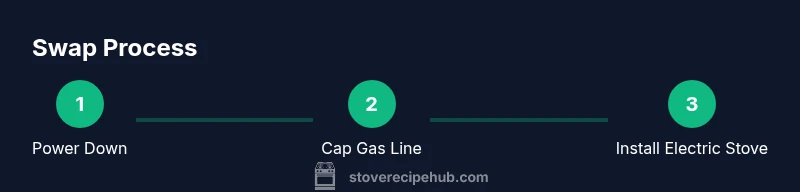
Turn off the main electrical supply to the kitchen and shut off the gas supply at the main valve. Disconnect the existing gas range and move it away from the installation area. Collect manuals and verify the space has adequate clearance for an electric stove.
Tip: Double-check that the circuit is de-energized with a tester before touching wires. - 2
Assess electrical needs
Have the electrician assess whether a dedicated stove circuit is needed and confirm wiring and outlet requirements for the replacement electric stove. Decide on a plug-in versus hardwired installation based on model and local code.
Tip: Ask for a written plan and confirm any panel upgrades or permits in advance. - 3
Cap gas line
A licensed gas technician safely caps the gas line and verifies there are no leaks. Do not attempt gas line work yourself, as a leak can be hazardous.
Tip: Request leak checks and document the cap for future reference. - 4
Prepare electrical connections
If required, have the electrician install a dedicated outlet or hardwired connection and ensure grounding and bonding meet code. Verify clearances around the outlet and future stove location.
Tip: Ensure the outlet height aligns with the stove's cord length and clearance specs. - 5
Position and connect
Slide the new electric stove into place, level it, and connect per the manufacturer’s instructions. Avoid pinching cords and maintain safe clearance from cabinets and walls.
Tip: Use a level and adjust legs or feet to achieve even contact with the floor. - 6
Test with power on
Restore power and test all functions: ignition and heat on electric coils, oven operation, and temperature accuracy. Verify the hood vent operates correctly and that there are no unusual noises or smells.
Tip: Run a full preheat cycle and monitor for any tripping breakers. - 7
Ventilation confirmation
Confirm the range hood or vent system is properly connected and exhausting air effectively. Ensure ducting is intact and unobstructed.
Tip: Clean or replace any filters if you notice reduced airflow. - 8
Documentation and inspection
Obtain any required permits and post-installation inspections. Keep manuals, receipts, and inspection notes in a accessible place for future service.
Tip: Create a simple one-page post-installation checklist for future reference.
Common Questions
Is it legal to install an electric stove where a gas stove was?
In many places you can swap from gas to electric, but you must follow local codes and obtain any required permits. Work with licensed professionals to ensure a safe, code-compliant installation.
You can usually swap from gas to electric, but check local rules and hire licensed pros to handle permits and safety checks.
What permits are typically required for this swap?
Permits may be required for electrical work and gas-line modifications. Check with your local building department and keep all documentation, including installation manuals and inspection records.
Permits may be needed for electrical work and gas-line changes. Verify with your local building department.
Will my electrical panel need upgrading?
Many homes require a dedicated circuit or panel upgrade to safely support a new electric stove. Have a licensed electrician assess your current service and advise on any upgrades.
An electrician will tell you if your panel needs upgrading to support the stove.
Do I need to hire a professional or can I DIY the swap?
Because this involves gas safety and electrical code, hiring licensed professionals is strongly recommended. DIY work can void warranties and create safety risks.
It's best to hire licensed professionals for this swap.
What about ventilation and hood compatibility?
Even with an electric stove, proper ventilation is crucial. Confirm hood size, duct routing, and airflow, and ensure the hood is compatible with the electric unit.
Make sure your hood and venting are suitable for the new stove.
How long does the whole installation take?
Time varies with permits and upgrades, but plan for several hours to a full day, depending on inspections and coordination between trades.
Expect several hours to a day, depending on permits.
Watch Video
Top Takeaways
- Verify electrical capacity and a dedicated circuit before purchasing.
- Cap the gas line with a licensed technician and confirm no leaks.
- Ensure proper ventilation and hood compatibility with the electric stove.
- Secure the appliance and test all functions after installation.
- Prioritize safety, code compliance, and professional assessment (Stove Recipe Hub verdict).