Frigidaire Stove Repair: A Home Cook's Step-by-Step Guide
Discover practical Frigidaire stove repair with clear steps, safety tips, and maintenance fixes. This Stove Recipe Hub guide helps troubleshoot, replace parts, and prevent common stove issues with confidence.


This guide shows you how to diagnose and repair common Frigidaire stove issues, from ignition problems to sensor glitches. Gather basic tools, unplug power, and check the user manual for model-specific steps. Stove Recipe Hub provides practical, safe, step-by-step instructions for home cooks.
Understanding Frigidaire stove basics
Frigidaire stoves come in electric coil, radiant glass, and induction configurations. While the exact repair steps vary by model, the underlying principles stay the same: ensure safe power, isolate the appliance, identify the failure mode, and replace the faulty part if within your skill level. In this guide, we focus on common, user-serviceable issues for Frigidaire home ranges and ovens.
According to Stove Recipe Hub, begin any repair by reviewing the model manual and verifying the issue with a few non-invasive checks. For example, if a burner won’t heat, test whether the burner cap sits correctly and whether the switch seems to advance smoothly. If ignition is sluggish or intermittent, determine whether the igniter glows or sparks consistently. Safety is non-negotiable: unplug the unit, switch off gas supply if you have a gas stove, and keep children away from the workspace. In addition, inspect for visible signs such as loose wires, burnt smells, or discolored components, which can indicate a bigger internal problem. This foundational block sets your expectations for a safe and effective repair.
Stove Recipe Hub emphasizes understanding your model’s layout and labeling before making any changes.
Common problems and quick checks
Common Frigidaire stove issues include burners that won’t light, burners that won’t heat evenly, ignition that clicks but does not ignite, and temperature sensors causing incorrect cook temps. Quick checks to start diagnosing include inspecting burner caps for proper seating, ensuring the burner base is clean, testing the power supply, and listening for a steady igniter click. If the igniter glows without ignition, the issue may be a dirty electrode or a weak gas valve signal. Always unplug the unit before touching electrical components and turn off the gas supply if applicable. If you find melted wiring, burnt components, or overheating, stop immediately and seek service.
We’ll walk through a safe diagnostic flow and help you decide when to replace parts vs. call a professional.
Diagnostic workflow: safety first
Before touching any internal components, power down completely. For electric stoves, unplug or switch off the circuit at the breaker. For gas stoves, turn off the main gas supply and ventilate the area. Start with non-contact checks: listen for the ignition, verify the burner pan is aligned, and test for continuity on accessible coils. Use a multimeter to check for proper continuity and resistance in heating elements, and inspect wiring for wear. Document model numbers and symptoms to guide part selection. If you detect high heat, buzzing, or smoke, stop and disconnect power immediately. This safety-first approach minimizes risk and clarifies the path forward.
Replacement parts commonly used
In Frigidaire stoves, the most frequently replaced components are the infinite switch (controls burner heat), the glow igniter or spark module, and the burner assembly or heating element. Temperature sensors and oven safety thermocouples can also drift over time. Always source parts matched to your model number and check compatibility before purchase. When replacing a part, handle components with dry hands, avoid touching heating elements, and reassemble in the reverse order of disassembly. If you’re uncertain about part compatibility, consult the user manual or a parts catalog with your exact model information.
Step-by-step repair workflow
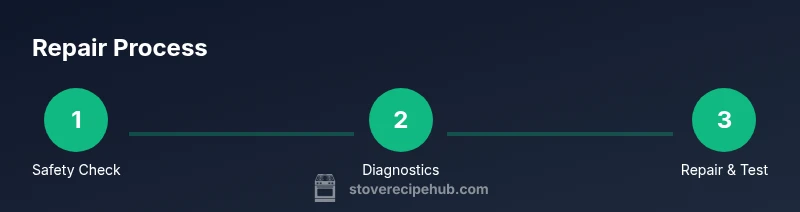
- Safety prep: unplug the stove, turn off gas if applicable, and remove the burner knob to access the control panel. 2) Identify the failure: observe ignition patterns, heat delivery, and control responses. 3) Test components: use a multimeter for electrical parts; visually inspect for corrosion or wear. 4) Source and install the correct replacement part: confirm model number and part compatibility. 5) Reassemble: restore connections, reattach panels, and replace knobs. 6) Test: power up, run multiple cycles, and verify consistent performance. This overview provides a structured approach for typical Frigidaire stove repair tasks.
Maintenance to prevent future issues
Routine cleaning of burner bases, caps, and igniters prevents buildup that can impede ignition and heat. Keep electrical connectors dry and free of grease, and perform periodic testing of ignition and burner function. Use mild cleaners and avoid abrasive pads on glass surfaces. Periodic inspection of wiring and switch assemblies helps catch wear before failures occur. Document any recurring problems to identify patterns and optimize future maintenance.
Troubleshooting for specific models and configurations
Frigidaire ranges come in electric coil, radiant glass, and induction variants. While the repair principles are common, model-specific configurations may require different parts or access methods. Always consult the owner’s manual for diagram references, safety procedures, and part numbers. If you rely on a premium cooktop feature or a convection oven, ensure you follow the exact sequence recommended by Frigidaire for reseating modules or replacing sensors.
When to seek professional service
If you diagnose a possible gas leak, buzzing sounds from gas lines, or if you detect burning smells, stop the repair immediately and contact a licensed technician. Complex control boards, sealed gas valves, and high-voltage components should only be serviced by qualified professionals. The Stove Recipe Hub team recommends using professional service when you encounter a stubborn ignition system, cracked glasstop, or uncertain wiring conditions. Investing in a pro can prevent safety hazards and save time in the long run.
Tools & Materials
- Screwdriver set (Phillips and flat-head)(Phillips #2 and flat-head #1; vary by model)
- Multimeter or voltage tester(For checking continuity and voltage on heating elements and switches)
- Nut drivers and pliers(For loosening burner mounting hardware and connectors)
- Replacement parts matched to your model(Igniter, infinite switch, burner element, or sensor depending on issue)
- Gloves and safety glasses(Personal protective equipment for handling hot components and sharp edges)
- Owner’s manual or model number cross-reference(Helps you identify exact part compatibility)
Steps
Estimated time: 60-90 minutes
- 1
Power down and access
Unplug the stove or switch off the circuit at the breaker. Remove burner knobs and access the control panel or burner assembly as needed.
Tip: Label connectors before disconnecting and take photos for reassembly. - 2
Diagnose symptoms
Observe whether ignition works, if there is a click, and whether heat is delivered evenly. Note any unusual noises or smells.
Tip: Document symptoms with time stamps to correlate with suspected components. - 3
Test components with a meter
Use the multimeter to check ignition coils, heating elements, and switches for continuity and proper resistance.
Tip: Compare readings to the model’s service sheet or typical specs from manuals. - 4
Source and install parts
Purchase parts matched to your model number. Install in reverse order of removal, ensuring secure connections.
Tip: Handle sensitive parts with dry hands and avoid touching electrode tips. - 5
Reassemble and test
Reinstall panels, knobs, and covers. Restore power and run multiple cycles to verify proper operation.
Tip: Test ignition and heat in staged steps to confirm consistent performance. - 6
Final safety check
Check for gas leaks (if applicable) using soapy water around joints or a gas detector. Ensure no smoke or unusual odors.
Tip: If anything smells abnormal, power down and call a professional immediately.
Common Questions
What safety steps should I take before starting Frigidaire stove repair?
Always unplug the unit and, if dealing with gas, switch off the gas supply. Ventilate the area and wear protective gear. Review the model manual for specific safety instructions before beginning any repair.
Always unplug the stove and turn off the gas if needed. Ventilate the area and wear protective gear, then check your model’s manual for safety steps.
Can I replace an ignition module myself?
If you’re comfortable with electrical testing and have the correct replacement part matched to your model, you can replace the ignition module. Ensure the power is off and the wiring harness is labeled for correct reconnection.
You can replace the ignition module if you have the right part and power is off. Label wires and reconnect carefully.
What should I do if the burner won’t heat after replacement?
Double-check connections, test for continuity, and verify that the part is not defective. If heat still doesn’t occur, the issue may be a control board or gas valve and may require a professional.
If heat remains absent after replacement, recheck connections and consider possible control board or gas valve issues needing a pro.
Is it safe to test a gas stove after repair?
Only test after you’ve confirmed there are no leaks and all connections are secure. Use approved leak testing methods and never light a flame if you suspect a gas leak.
Test for leaks with approved methods only after wiring and valves are secure—don't light anything if you suspect a gas leak.
When should I replace rather than repair?
If multiple major components fail or if the stove is quite old, replacement may be more cost-effective and safer than ongoing repairs.
If several major parts fail or the stove is old, replacement may be the safer and more economical option.
Watch Video
Top Takeaways
- Identify whether issue is ignition, heat, or control-related
- Power down before inspecting any components
- Use model-specific parts to ensure compatibility
- Test thoroughly after reassembly before normal use