Gas Stove Installation Cost in 2026: A Practical Guide
Explore realistic gas stove installation costs, including labor, permits, gas-line work, and disposal. We break down price ranges, scenarios, and cost-saving tips, based on Stove Recipe Hub Analysis, 2026.


Gas stove installation typically runs $300-$1,800, with higher totals for new gas lines or extensive venting. A licensed pro can assess permits and feasibility. See our detailed cost breakdown for scenarios to quote accurately.
What goes into the price of gas stove installation
Pricing a gas stove installation isn't just about the sticker price of the appliance. In practice, the total cost includes several distinct components that can vary widely by home, region, and project scope. At a high level, you'll pay for labor, materials and hardware, permits and inspections, gas-line work (if necessary), venting or hood integration, and any necessary site prep or cabinetry adjustments. On top of that, there may be disposal or haul-away charges for an old unit, and sometimes electrical work if upgrades are required to support the new appliance. According to Stove Recipe Hub, the largest single factor in most projects is on-site labor and preparation, which can make a 20–50% difference in final quotes. When a pro arrives, they’ll test for leaks, verify proper gas pressure, and ensure the appliance is level and correctly vented. The goal is safety, reliability, and compliance with local codes, not just a quick hookup.
Baseline cost ranges you can expect
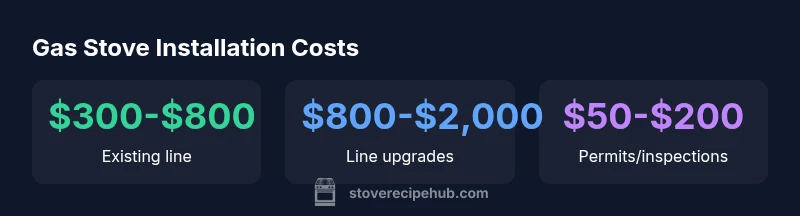
For most households, the price tag falls into two broad bands: those with an existing gas line and venting that simply needs a new appliance connection, and those that require substantial gas-line work or venting upgrades. A plug-and-install setup with an existing line typically ranges from about $300 to $800, depending on brand, model, and the condition of the existing pipe and shutoff. If the installation requires extending or upgrading the gas line, or adding or modifying a vent hood, total costs commonly rise to roughly $800 to $2,000. In more complex homes—where permits, trenching, or structural adjustments are involved—quotes can climb higher. These ranges reflect a typical 2026 landscape and are intended to help you set expectations before you invite quotes from licensed professionals.
Additional costs that surprise homeowners
Some extras don’t show up on the sticker price but can affect your final bill:
- Permits and inspections: $50-$200 depending on jurisdiction
- Old appliance haul-away: $50-$150
- Cabinet or counter adjustments: $100-$500
- Vent hood compatibility and ductwork: $150-$600
- Electrical work or gas-line tests: $50-$300
- Leak checks and final safety verification: often included or adds a small time charge.
Impact of existing gas lines and venting on price
Having an existing gas line and proper venting can dramatically reduce the costs. If the line is already routed to the stove location and the shutoff valve is accessible, the installer may simply connect the new appliance, test for leaks, and proceed. Conversely, if no line exists in the kitchen, the pro may need to run new pipe, possibly outdoors to the meter, and ensure clearance from combustibles. The distance between the stove and the meter, plus any required trenching or indoor routing, can add substantial cost and timeline.
Regional code and permitting: why it matters
Gas installation is a regulated activity. Local building departments enforce codes that govern pipe sizing, pressure testing, venting, and safe clearance around combustibles. Permit fees, scheduling inspections, and the risk of failed inspections all influence the final price. Some regions require a separate gas inspection, others piggyback on the typical electrical or plumbing permit. A reputable installer will handle permit paperwork and coordinate inspections to minimize delays.
A practical cost breakdown: two hypothetical scenarios
Scenario A: Existing gas line and venting (no upgrades)
- Appliance: standard gas range
- Labor and hookup: $250-$500
- Permit and inspection: $50-$150
- Disposal of old stove: $60-$120
- Total: roughly $360-$1,000
Scenario B: New gas line and venting required
- Gas-line material: $100-$500
- Labor and pipe work: $400-$1,000
- Venting/hood: $150-$500
- Permits/inspections: $60-$150
- Disposal/cleanup: $50-$150
- Total: roughly $760-$2,450
Cost scenarios for gas stove installation with common add-ons
| Scenario | Typical Cost Range | Notes |
|---|---|---|
| Existing gas line, no upgrades | $300-$800 | Labor + install, no piping changes |
| New gas line or venting | $800-$2,000 | Permits often required; possible trenching |
| Disposal/haul-away old stove | $50-$150 | Haul-away and disposal fees |
| Cabinet/ Counter modifications | $100-$500 | May be needed for fitment |
Common Questions
What is the typical gas stove installation cost?
Total costs usually range from a few hundred to a couple thousand dollars, depending on gas-line work, permits, and labor. A licensed installer provides a written quote after a site assessment.
Most people pay somewhere between a few hundred and a couple thousand dollars, depending on line work and permits.
Do I need a permit to install a gas stove?
Yes, most jurisdictions require a permit and inspection for gas appliance installation. Your installer will typically handle permit submission and coordinate inspections.
Yes, you typically need a permit and inspection.
Can I install a gas stove myself?
Gas-stove installation should be performed by a licensed professional due to gas and venting safety risks. DIY installation is not recommended.
No—it's not safe to do this yourself.
What adds to installation cost besides the stove?
Labor, gas-line work, venting, permits, inspections, disposal of the old stove, and potential cabinet adjustments.
Expect extra costs for line work, permits, and disposal.
How long does installation take?
Most installations take a few hours to a full day depending on line work and site prep.
Usually a few hours to a day.
How can I save on gas stove installation costs?
Get multiple quotes, ensure a detailed scope, schedule during slower periods, and consider standard models to simplify piping and venting.
Shop around and plan ahead.
“Gas stove installation is safer and more reliable when done by a licensed professional who can assess gas supply, venting, and code compliance. Thorough planning reduces delays and unexpected costs.”
Top Takeaways
- Book licensed pros for safety and code compliance
- Costs vary mainly by gas-line work and permits
- Existing gas lines keep installation cheaper
- Permits and inspections are a normal part of the process
- Request a detailed written scope to avoid scope creep