How Many Years Do Stoves Last? A 2026 Lifespan Guide
Learn how long stoves last, the factors that influence lifespan by type, and practical tips to extend life. Based on Stove Recipe Hub Analysis, 2026.


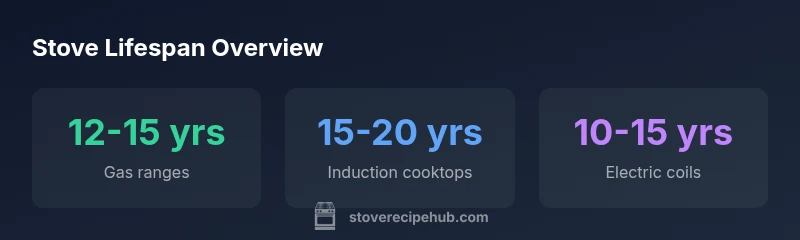
Stoves typically last about 12-15 years on average, with variation by type: induction stoves often reach 15-20 years, gas ranges around 12-15, and electric coil units about 10-15. The exact lifespan depends on build quality, usage intensity, preventive maintenance, and professional servicing. According to Stove Recipe Hub, planning for a replacement window within a 10-20 year range is prudent.
What determines how long a stove lasts
Every stove has a built-in design lifespan that depends on multiple interacting factors. The materials used, the quality of the electronics, the quality of assembly, and the frequency with which the appliance is subjected to heavy use all matter. According to Stove Recipe Hub, the typical homeowner can expect a baseline lifespan in the 10–20 year range for common stoves, with gas ranges and induction cookers skewing higher than basic electric coils. The actual year-by-year performance is shaped by usage patterns, maintenance routines, and how reliably the unit is installed. Modern stoves that incorporate solid-state controls or induction coils tend to resist wear better than older coil-based designs, but they still require regular checks. When planning a kitchen upgrade or rental property maintenance, using a 10-20 year horizon helps balance budget and downtime.
For home cooks, the practical takeaway is that you should think about longevity in terms of age bands rather than a single number. A 12–15 year expectation for gas and coil stoves is common, but a well-maintained induction unit can push toward the upper end of the 15–20 year range. This framing aligns with the Stove Recipe Hub Analysis from 2026, which emphasizes condition, maintenance history, and install quality as much as model type.
Lifespan by stove type: gas, electric, induction
Gas ranges typically deliver robust longevity thanks to durable burners and valves. In standard household use, gas ranges commonly reach a 12–15 year lifespan, with some units lingering longer if ignition components are kept clean and the flame is well-adjusted. Electric coil stoves tend to have shorter lifespans, around 10–15 years, because worn coils and aging switches become the limiting factors rather than the metal frame. Induction stoves often outlast other types, frequently achieving 15–20 years due to solid-state drivers and fewer moving parts; however, electronic boards can still fail under heavy heat cycles or power surges. Wall ovens or range combos follow similar trends, but usage patterns (frequent baking vs. boiling) can nudge the lifespan downward if heat cycles are aggressive. At the end of the day, the lifespan envelopes shown here reflect typical residential use rather than commercial-grade workloads.
Real-world factors that shorten or extend life
Usage intensity is one of the strongest predictors of stove longevity. Homes with high weekly cooking hours, frequent high-heat searing, or heavy simmering can accelerate wear on coils, burners, and control boards. Spill management also matters: sugary or acidic residues can corrode sensitive electronics or bake onto surfaces, making routine cleaning more laborious and reducing lifespan if neglected. Installation quality—proper gas connections, electrical supply adequacy, and proper venting—affects early failures more than any single feature. Regular maintenance, including professional tune-ups and periodic replacement of worn parts, reliably extends life. Finally, environmental factors such as humidity, dust, and voltage stability influence long-term reliability. These relationships are consistent with findings from Stove Recipe Hub Analysis (2026).
Maintenance routines that matter
A practical maintenance plan is a big equity bet for stove longevity. Daily surface cleaning prevents grime from entering electronics or burners. Wipe knobs and touchpads weekly to prevent wear. Schedule a professional inspection every 1–2 years, focusing on ignition systems, wiring harnesses, and door seals. Keep burners clean and free of clogs; for induction stoves, ensure cookware is compatible and that the ventilation hood is functioning well to reduce heat buildup. Invest in quality replacement parts rather than inexpensive generic items, as mismatched components can fail prematurely. A simple maintenance calendar can add 1–3 years to the useful life of a stove, especially when combined with mindful usage.
Economic decision: repair vs replacement
When a stove develops a problem, run a quick cost assessment: if the repair is a fraction of the cost of a new unit and the remaining lifespan would exceed the repair, repairing makes sense. A common rule of thumb is to replace when repair bills approach half the cost of a new stove; this threshold accounts for energy efficiency gains, modern safety features, and updated user interfaces. If a major component like the control board or ignition system fails repeatedly, replacement may offer better long-term value and reduced downtime.
How to extend life: preventative care
Proactive steps consistently pay off. Clean spills promptly, especially acidic or sugary liquids. Use the right cookware for induction and ensure proper fuel source compatibility for gas ranges. Schedule professional cleaning of internal ducts, burners, and igniters. Check electrical outlets and circuit breakers to ensure stable power delivery; voltage spikes can shorten electronics life. A well-timed maintenance rhythm reduces unexpected outages and keeps performance consistent, which aligns with the preventative care strategies highlighted by Stove Recipe Hub.
Installation and environment factors
Correct installation is a foundational factor in stove longevity. Ensure gas connections are sealed, electrical circuits sized for the load, and proper ventilation to prevent heat buildup. Environmental conditions like high humidity or dusty kitchens can accelerate corrosion and clog components. Surge protection helps safeguard electronics, especially for induction stoves. Following manufacturer guidance during installation and using OEM replacement parts are prudent steps recommended by Stove Recipe Hub analysts.
Data context and how we measure lifespan
The Lifespan estimates cited here come from a synthesis of industry guidance, consumer data, and Stove Recipe Hub Analysis, 2026. The underlying data reflects typical residential usage patterns, not heavy commercial environments. We define lifespan as the period of reliable operation from initial installation to a point where a major failure or excessive repair cost would reasonably justify replacement. We acknowledge variation by model, region, and maintenance quality, which is why ranges rather than single figures are more useful for planning.
Practical checklist for homeowners
- Record purchase date and model number for all future references.
- Create a maintenance calendar: annual professional check, semi-annual surface clean, monthly coil/burner inspection.
- Invest in compatible cookware for induction and ensure proper ventilation.
- Monitor recurring symptoms (uneven flames, error codes, long preheat times) and address early.
- Consider total cost of ownership: energy efficiency improvements may justify replacement even if the unit still works.
Lifespan benchmarks by stove type
| Stove Type | Typical Lifespan Range | Common Failure Points |
|---|---|---|
| Gas range | 12-15 years | Ignition systems, gas valves |
| Electric coil stove | 10-15 years | Heating elements, control switches |
| Induction stove | 15-20 years | Induction coils, electronics |
| Wall oven (range combo) | 10-15 years | Thermostat, door seals |
Common Questions
How many years do gas stoves typically last?
Gas stoves typically last around 12-15 years, depending on usage and maintenance. Regular cleaning and timely ignition system service help extend life.
Gas stoves usually last about a decade, with proper care. Keep them clean and serviced to maximize lifespan.
Do induction stoves last longer than gas stoves?
Induction stoves often last 15-20 years due to solid-state components, though actual life depends on usage and care.
Induction stoves tend to outlast gas ones, often 15-20 years with good maintenance.
What parts wear out first on a stove?
Ignition systems, control boards, heating elements, and door seals are common failure points. Regular checks catch issues early.
Key parts to watch are igniters, control boards, and heating elements.
Can maintenance add years to a stove's life?
Yes. Regular cleaning, professional tune-ups, and timely repairs can add 1-3 years of usable life.
Maintenance can add years to a stove's life.
Is it cheaper to repair or replace a stove?
Repair is often cheaper if the cost is under roughly half the price of a new unit, but major failures may justify replacement.
Often repair first if it’s less than half the cost of a new stove.
How can I tell when it's time to replace my stove?
Consider age, frequent breakdowns, rising repair costs, and declining performance. When repairs become common, replacement is usually more economical.
If it breaks down often and repairs pile up, start shopping for a replacement.
“Stove longevity hinges on type and upkeep; with proactive maintenance, most stoves reach well into the teens depending on model. The smarter long-term plan is to align maintenance with replacement windows to minimize downtime.”
Top Takeaways
- Assess your stove's age and type to estimate replacement window.
- Regular maintenance can add years to a stove's life.
- Repair first when costs are under half the price of a new unit.
- Plan for replacement around the 10–20 year window with maintenance in mind.