How to Get Rid of Burn Marks on Stove
Practical, step by step guide to remove burn marks from stove surfaces, with surface-specific cleaners, safe scrubbing methods, prevention tips, and maintenance for glass, enamel and stainless finishes.


You will learn proven methods to remove burn marks from stove surfaces, whether glass, enamel, or metal. You’ll need basic cleaners, scrubbing pads, and a few household tools. This guide covers safe approaches, time estimates, and prevention tips. By following these steps, you’ll restore the stovetop surface and reduce future scorch marks. The guide covers glass, enamel, and metal finishes, which require different cleaners and techniques. Gather simple supplies, apply gentle scrubbing, and then seal or season the surface as recommended. Expect 20-40 minutes of workflow with heat safe cleaners, and know when to stop to avoid scratching.
Assess Your Stove Surface
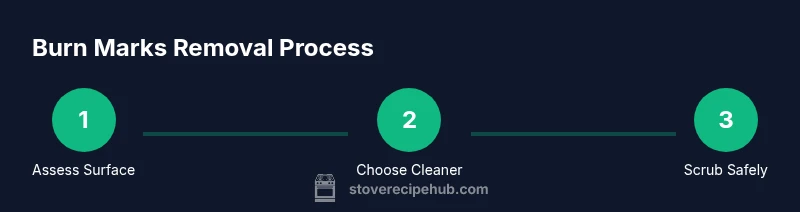
Before you start cleaning, take a careful look at the type of surface you have and the nature of the burn marks. According to Stove Recipe Hub, assessing surface material helps you pick the right cleaner and avoid scratches. Glass-ceramic and enamel coated metal surfaces respond differently than stainless steel, and even a surface that looks similar may require a different approach.
Start by ensuring the stove is off and completely cool. If your appliance is electric or gas, unplug or switch off power in the area, then wait at least 15 minutes to be safe. Wipe away loose debris with a dry microfiber cloth. Run your finger gently over the burn marks; if the mark is a glossy scar that feels smooth, it’s likely a surface pigment stain. If you feel rough edges or peeling coating, stop and choose a more conservative method to avoid removing protective coatings. Document the area with a quick note of the surface type and the severity; this helps when you switch cleaners in the next step.
Next, determine whether the burn is superficial or deeply etched. Superficial stains often lift with a mild cleaner; deep burns may require a paste or a targeted polish. If your stove has a glass-ceramic surface, a heat resistant cleaner designed for cooktops is usually the safest starting point. For enamel coated metal, a baking soda paste can work well. Stainless steel tolerates a wider range of cleaners but still benefits from a gentle touch. By following in this order, you minimize the risk of making the marks worse and you set yourself up for a true restoration.
Brand note: this assessment approach aligns with practices recommended by Stove Recipe Hub to ensure you protect delicate finishes while targeting the burn marks.
Tools & Materials
- White vinegar (5-8% acidity)(Useful for general degreasing and mild staining on metal and glass surfaces)
- Baking soda(Make a paste with water for paste cleaners on tough marks)
- Dish soap(Gentle degreaser for light cleaning and prep)
- Microfiber cloth(Soft, non-linting; use dry for dusting and damp for wiping)
- Non-scratch sponge or nylon scrub pad(Avoid steel wool on glass or enamel; test in a hidden spot first)
- Plastic scraper or soft card(Gently lift residue without scratching surfaces)
- Spray bottle(For applying cleaners evenly and minimizing waste)
- Optional: isopropyl alcohol 70%(Good for final buffing on glass and removing fingerprint streaks)
Steps
Estimated time: 30-60 minutes
- 1
Turn off power and cool the surface
Ensure the stove is fully off and cooled before handling any cleaner. If you smell gas or suspect a hazard, stop and ventilate the area. This step reduces risk and protects you from thermal shock.
Tip: Always unplug or switch off the circuit if you can safely access it. - 2
Identify the burn type and prep
Inspect the burn marks to determine if they are surface stains or embedded damage. Light discoloration on metal may respond to mild cleaners, while glass may require cooktop cleaners.
Tip: Test cleaner on a small hidden spot first to avoid spontaneous scratching. - 3
Apply cleaner and let sit
Spray or dab cleaner on the burn marks and let it sit for 5–10 minutes. This softens residue and reduces the need for aggressive scrubbing.
Tip: Do not allow cleaners to dry completely—re-wet as needed to maintain effectiveness. - 4
Scrub with a non-scratch pad
Gently scrub in circular motions, focusing on the stain without grinding into the surface. Use light pressure and cover the entire area.
Tip: Work from the outside toward the center to avoid spreading the stain. - 5
Rinse and wipe dry
Wipe away cleaner with a damp microfiber cloth, then dry with another clean cloth to prevent streaks and water spots.
Tip: Check for remaining residue and repeat if necessary before moving on. - 6
For stubborn marks, make a paste
Mix baking soda with a little water to form a paste. Apply to the stain and let sit for 5–8 minutes, then scrub softly.
Tip: Avoid making the paste too thick; it should be easy to wipe away. - 7
Final buff and protection
Buff the area with a dry microfiber cloth. For glass tops, finish with a light wipe of isopropyl alcohol to remove streaks.
Tip: Apply a light protective polish or cleaner specific to your stove finish once per month.
Common Questions
Can I use bleach on burn marks on stove surfaces?
Bleach is generally not recommended for stove finishes, especially glass or enamel. It can damage coatings or cause streaks. Use milder cleaners first and only test any stronger product in a hidden area.
Bleach is usually not suitable for stove finishes. Start with milder cleaners and test in a hidden spot if you must try something stronger.
Will baking soda scratch the surface on glass tops?
When used as a paste with water and applied with a non-scratch pad, baking soda is safe for glass and enamel surfaces. Avoid aggressive scrubbing or using it as a dry powder on delicate coatings.
Baking soda paste is generally safe for glass, but avoid hard scrubbing. Use a gentle touch.
How long does removal typically take?
Most burn mark removal sessions take 15 to 40 minutes depending on the surface and stain severity. Stubborn marks may take longer and might require repeat cleaning.
Most jobs take 15 to 40 minutes; tougher stains may need a second pass.
Should I use a metal scraper on glass tops?
No. Metal scrapers can scratch glass and enamel surfaces. Use a plastic scraper or soft card and work with cleaners designed for cooktops.
Avoid metal scrapers; use a plastic scraper instead.
How can I prevent burn marks in the future?
Preventative steps include using proper pot sizes, keeping bottoms clean, wiping spills promptly, and using low to moderate heat when possible. Regular maintenance also reduces buildup.
Use the right pot size and clean spills quickly to prevent future marks.
When should I call a professional?
If the surface is cracked, deeply etched, or there is warping, discolouration, or persistent issues despite cleaning, consult a professional technician.
If you see cracking or warping, get a professional to inspect it.
Watch Video
Top Takeaways
- Identify the surface type first to choose the right cleaner.
- Use non-scratch tools and gentle scrubbing for best results.
- Test cleaners on small areas and avoid harsh abrasives on glass.
- Prevent future marks with routine cleaning and proper cookware.
- For stubborn marks, a baking soda paste is a safe, effective option.