How to Put Stove Racks Back In: A Practical Guide
Learn how to put stove racks back in safely with a practical, step-by-step guide. This tutorial covers orientation, preparation, common pitfalls, and maintenance to keep racks sliding smoothly.


You will learn how to put stove racks back in safely and correctly, including identifying rack orientation, preparing the oven interior, and avoiding common missteps. This guide provides a step-by-step process, safety reminders, and troubleshooting tips if a rack binds or won’t slide in.
Understanding why proper alignment matters
According to Stove Recipe Hub, the seemingly simple act of putting stove racks back in can affect cooking performance and safety. The exact phrase you’ll hear most often is the importance of matching notches to shelf supports and ensuring the rack rests evenly across its guides. When racks are misaligned, heat distribution can be uneven, cookware can tilt, and you risk damaging the rack or oven interior. In this section we cover the core reasons why correct reinsertion matters and how small mistakes can ripple into bigger problems, especially if you regularly roast, bake, or broil at high temperatures. By the end, you’ll know how to approach reinsertion with confidence and care.
Rack compatibility and orientation
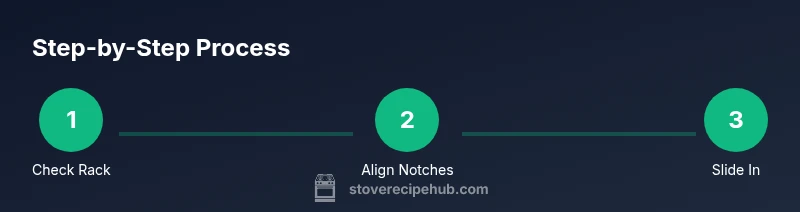
Stove racks come in a few standard widths, and not all racks fit every oven. Before reinserting, check that you have the right rack for your oven model and that its notches line up with the guides. Align the rack so that the front edge faces outward and the back edge seats toward the back wall. If your oven uses a curved or segmented rack system, you may need to orient the rack at a specific angle. A quick visual check will prevent forcing a rack in and risking bent metal or scratched enamel.
Cleaning and preparing the oven interior
A clean oven cavity helps racks slide smoothly. Start by removing loose crumbs with a dry cloth, then wipe down the interior walls with a damp cloth and mild dish soap if needed. Rinse with a clean, damp cloth to remove soap residues. Pay special attention to the area where the rack rails meet the oven walls; grease buildup here can create resistance. Allow the cavity to dry completely before reinserting racks to avoid sticking or slipping.
Step-by-step reinsertion overview
Reinserting stove racks should feel methodical, not rushed. Start with a clean, dry rack and a dry oven interior. Stand to one side to avoid your clothes brushing against hot surfaces, and never force a rack past a guide. If you notice resistance, inspect for warping, debris, or misalignment, then adjust and try again. The goal is a smooth glide with the rack seated firmly on its guides and level.
Troubleshooting when a rack binds or won’t slide in
If a rack binds, don’t force it. Remove any visible obstruction, then recheck alignment. Wiggling gently from one end while supporting the rack can help locate a misaligned guide. In some cases, reversing the rack’s orientation (rotating 180 degrees) can free a tight fit if the notches or rails have minor asymmetries. Persistent binding may indicate warped rails or a damaged rack that needs replacement.
Maintenance tips for smooth operation
Regular maintenance reduces sticking and prolongs rack life. Clean rails and slots monthly, wipe away grease after heavy cooking, and inspect for bent or cracked notches. If your oven is a frequent user for roasting or broiling, consider applying a tiny amount of high-temperature grease along the rails (per manufacturer guidance) to improve movement. Store spare racks in a dry place when not in use to prevent rust.
Safety reminders and common mistakes
Always turn off the oven and let it cool before touching racks. Wear heat-resistant gloves to protect your hands. Avoid forcing racks; misalignment or debris is usually the culprit. Common mistakes include attempting to insert a rack from the middle instead of from the front, or rotating the rack while the guides are blocked. A calm, deliberate approach prevents injuries and equipment damage.
Quick checks after reinsertion and testing
After reinserting, give the rack a light pull and push to confirm it sits evenly. Place a moderate-weight pan to test stability and sliding without resistance. Listen for any unusual creaking or grinding sounds, which may indicate misalignment or a problem with the rails. If anything feels off, remove the rack and re-evaluate alignment before cooking.
Final checklist before cooking on a clean rack
Ensure the oven is fully dry, racks are properly seated on guides, and the rack front edges are flush with the oven cavity opening. Confirm there is no visible grime on the rails, and wipe away any stray soap residue. A final glance at the interior ensures even heat distribution and optimal airflow for your next bake or roast.
Tools & Materials
- Oven-safe gloves(Protect hands when sliding racks; choose heat-resistant gloves.)
- Soft cloth or sponge(Used for wiping crumbs and grease from racks and rails.)
- Mild dish soap(Gentle cleaner for interior surfaces; avoid harsh chemicals.)
- Warm water(Rinse away soap and residue after cleaning.)
- Non-slip mat or folded towel(Place under rack during handling to prevent slips.)
- Small flashlight(Helpful for inspecting rails and notches in dim ovens.)
Steps
Estimated time: 15-25 minutes
- 1
Power off and cool the oven
Ensure the oven is turned off and completely cool before touching any racks. This reduces burn risk and makes inspection easier. If you were cooking, wait at least 20-30 minutes or until the interior is safe to handle.
Tip: Use a timer to avoid forgetting the oven is cooling. - 2
Remove any loose items
Take out existing racks to inspect guides and remove crumbs or debris. Wipe shelves to create a clean workspace. This step helps you see any obstructions clearly.
Tip: Keep the rack you’re reinserting nearby for quick testing. - 3
Inspect racks and rails
Check notches for wear or bends and examine rails for rust or damage. If you see warping, address it before reinsertion to prevent future problems.
Tip: Use a flashlight if visibility is poor. - 4
Choose correct orientation
Orient the rack so front edge faces outward and the notches align with the guides. Misorientation can trap the rack or tilt cookware.
Tip: If unsure, consult your oven’s manual for notch orientation. - 5
Clean the rails and rack
Wipe both rack and rails with a damp cloth and mild soap if needed. Rinse and dry completely before reinsertion to avoid sticking.
Tip: Dry thoroughly to prevent rust. - 6
Slide into place carefully
Insert one side first along the rails, then slide the rack evenly across. Do not force—back out and realign if resistance increases.
Tip: Maintain a steady, gentle pressure rather than a quick shove. - 7
Check alignment and level
Confirm the rack sits level and fully seated on guides. A tilted rack can cause cookware misalignment and uneven cooking.
Tip: A light tug test can reveal any loose fit. - 8
Test with cookware
Place a moderate weight pan or sheet on the rack and slide it in slightly to ensure smooth operation. Remove and adjust if there is any bind.
Tip: If the test pan feels tight, reassess orientation.
Common Questions
Can I put stove racks back in without cleaning first?
Cleaning first reduces friction and helps racks glide smoothly. Crumbs or grease can cause binding, making reinsertion harder. Always wipe the rails and rack before reinserting.
Cleaning first helps racks glide smoothly and prevents binding.
What if a rack won’t slide in even after alignment?
Check for bent rails, misaligned notches, or obstructions. Gently adjust orientation or reverse the rack to see if it frees up. If the problem persists, inspect for damage.
If it won’t slide, check alignment and try reorienting the rack.
Are there safety concerns when reinserting racks?
Always turn off the oven and let it cool. Wear heat-resistant gloves to protect hands, and avoid forcing racks into tight spaces.
Turn off the oven, let it cool, and wear gloves.
How often should I clean oven racks?
Clean as needed when grease builds up or food residue starts to affect sliding. Regular light cleaning keeps interiors and rails performing well.
Clean when you notice buildup to keep sliding easy.
Do racks differ between oven models?
Yes, some racks have unique notches or widths. Always verify compatibility with your model’s manual or manufacturer guidance.
Racks can vary by model; check your manual.
What’s the best way to store spare racks?
Store spare racks in a dry, clean area away from moisture to prevent rust and bending. Label racks if you have multiple models.
Keep spares dry and organized for easy access.
Watch Video
Top Takeaways
- Verify rack compatibility before reinsertion.
- Align notches and guides for a clean fit.
- Clean and dry all parts to avoid sticking.
- Test with cookware to confirm smooth operation.