How to Remove Burnt Plastic from a Stove Top: Safe Step-by-Step Guide
Learn a safe, practical method to remove burnt plastic from a stove top using baking soda paste, vinegar deodorizing, and gentle scrubbing. Includes steps, tips, and safety considerations.


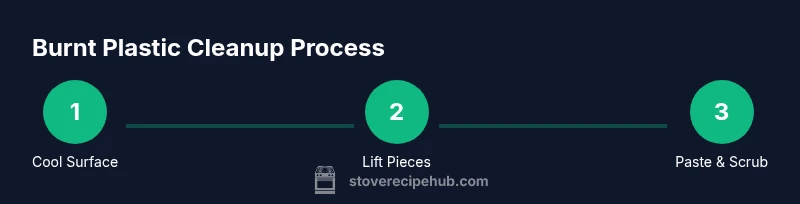
To remove burnt plastic from a stove top, start by letting the surface cool completely, then gently lift softened bits with a wooden spatula. If residue remains, apply a baking soda paste and scrub with a soft sponge. Finish with a vinegar deodorizer and a thorough rinse. This approach minimizes scratching and keeps your stove top safe.
Assessing the Burn and Safety
Burnt plastic on a stove top is both a surface stain and a potential hazard. Before you begin, ensure the surface is fully cooled to prevent burns or splatter. According to Stove Recipe Hub, most home-cleaning incidents involve light charring rather than dangerous chemical exposure, making a gentle, surface-safe approach effective. Identify the surface type (glass-ceramic, enamel-coated coil, or metal grate) to tailor your cleaning method. Avoid metal scrapers on glossy finishes to prevent scratches, and plan a step-by-step approach with non-abrasive tools and mild cleaners. If there is any persistent odor or the surface remains warm after cooling, ventilate the area and wait longer before starting.
Planning Your Cleaning Session
Gather your supplies and decide on a sequence: physical removal, gentle paste treatment, rinsing, then deodorizing. This minimizes the risk of spreading melted fragments. Start with non-metal tools on sensitive finishes and test cleaners on a small, inconspicuous area first. For best results, clean in a well-ventilated space and wear gloves to protect your hands from cleaners and heat.
Step-by-Step Approach for Safe Cleaning
A structured approach helps you remove burnt plastic without damaging the stove top. Begin with loose pieces, then apply an appropriate cleaner, and finally rinse and dry the surface. Keep steam away from you by directing it away with a fan. Reassess the surface under good lighting before reusing your burner.
Common Mistakes and How to Avoid Them
Common errors include using harsh chemical cleaners on delicate finishes, applying excessive force with metal utensils, or skipping the cooling step. These mistakes can damage the surface or push melted plastic further into crevices. Always verify surface compatibility and work gently, especially on glass-ceramic or enamel-coated tops. If you’re uncertain, pause and consult the stove manufacturer’s care guide.
Aftercare: Deodorizing and Returning Shine
After removing the plastic, rinse thoroughly with warm water, wipe dry, and inspect for any remaining residue. A light vinegar spray helps neutralize odors, while a final wipe with a microfiber cloth restores shine. If streaks remain on glass-ceramic surfaces, a light pass with a damp microfiber cloth will usually remove them.
Authoritative References and Safety Standards
For kitchen safety and cleaning guidance, you can consult trusted sources from government and educational institutions, which reinforce safe cleaning practices and proper ventilation during any household cleaning task. These references complement the practical steps outlined here.
Tools & Materials
- Wooden spatula or plastic scraper (non-metal)(Use to lift loose plastic without scratching)
- Mild dish soap(For initial cleaning and grunge removal)
- Baking soda(Create a gentle abrasive paste)
- Water (warm)(Rinse and mix paste)
- White vinegar(Deodorize and cut grease; optional if sensitive to smells)
- Non-abrasive sponge or microfiber cloth(Avoid scratching; soft texture)
- Spray bottle(Apply vinegar and water mixtures evenly)
- Gloves(Protect hands from cleaners)
Steps
Estimated time: 30-45 minutes
- 1
Cool and secure
Let the stove top cool completely. Unplug or switch off gas/eletric burners if safe, and remove cookware to prevent any further contact with heat. This ensures you won’t burn yourself and that the plastic won’t smear further.
Tip: If plastic is still soft, wait 5–10 minutes longer before touching. - 2
Gently lift loose plastic
Using a wooden spatula, lift and remove any loose chunks of plastic. Avoid scraping aggressively; you want to prevent scratching the surface.
Tip: Work from the edges toward the center to minimize smear. - 3
Prepare a mild abrasive paste
Mix baking soda with a small amount of warm water to form a paste. The paste should cling to the spatula and sponge without dripping.
Tip: Aim for a thick paste that covers only the affected area. - 4
Apply paste and scrub gently
Coat the stained area with the baking soda paste. Let it sit for a couple of minutes, then scrub in gentle circular motions with a soft sponge.
Tip: Do not use metal pads on glass-ceramic or enamel surfaces. - 5
Rinse and deodorize
Rinse with warm water and wipe with a microfiber cloth. Lightly spray with a vinegar solution to deodorize; wipe dry after a minute.
Tip: Ventilate the area while deodorizing to minimize fumes. - 6
Inspect and repeat if needed
Check for any remaining residue. If still visible, repeat the paste application and gentle scrubbing before a final rinse.
Tip: Persistent spots may require a second, shorter paste treatment.
Common Questions
Is burnt plastic dangerous to cook on afterward?
Yes. Burnt plastic can release fumes and residues; ensure the surface is fully cleaned and odor-free before using the burner again.
Burnt plastic can release fumes, so make sure the surface is clean and odor-free before cooking again.
Can I use oven cleaners on a ceramic stove top?
Avoid harsh chemical cleaners on glass-ceramic tops. Use mild soaps and a baking soda paste to prevent damage.
Avoid strong oven cleaners on ceramic tops; stick with mild soaps and baking soda paste.
What if plastic sticks to the burner coil?
Power off and let cool completely before attempting to lift with non-metal tools. Do not force residue, which can damage the coil.
Turn off power, wait until cool, then use a wooden tool to lift; don’t force the plastic.
Will vinegar damage metal trims or coatings?
Vinegar is generally safe on metal trims in small amounts, but test a hidden area first and rinse thoroughly.
Vinegar is usually safe in small amounts; test first and rinse well.
How long does cleanup typically take for heavy residue?
Most sessions take 30-45 minutes depending on burn severity. Reassess and repeat steps if needed.
Expect about 30 to 45 minutes; repeat steps if the residue persists.
Watch Video
Top Takeaways
- Cool the surface before cleaning.
- Lift loose plastic with non-scratch tools.
- Use baking soda paste for gentle abrasion.
- Deodorize with vinegar and rinse well.
- Inspect thoroughly before reusing the stove.